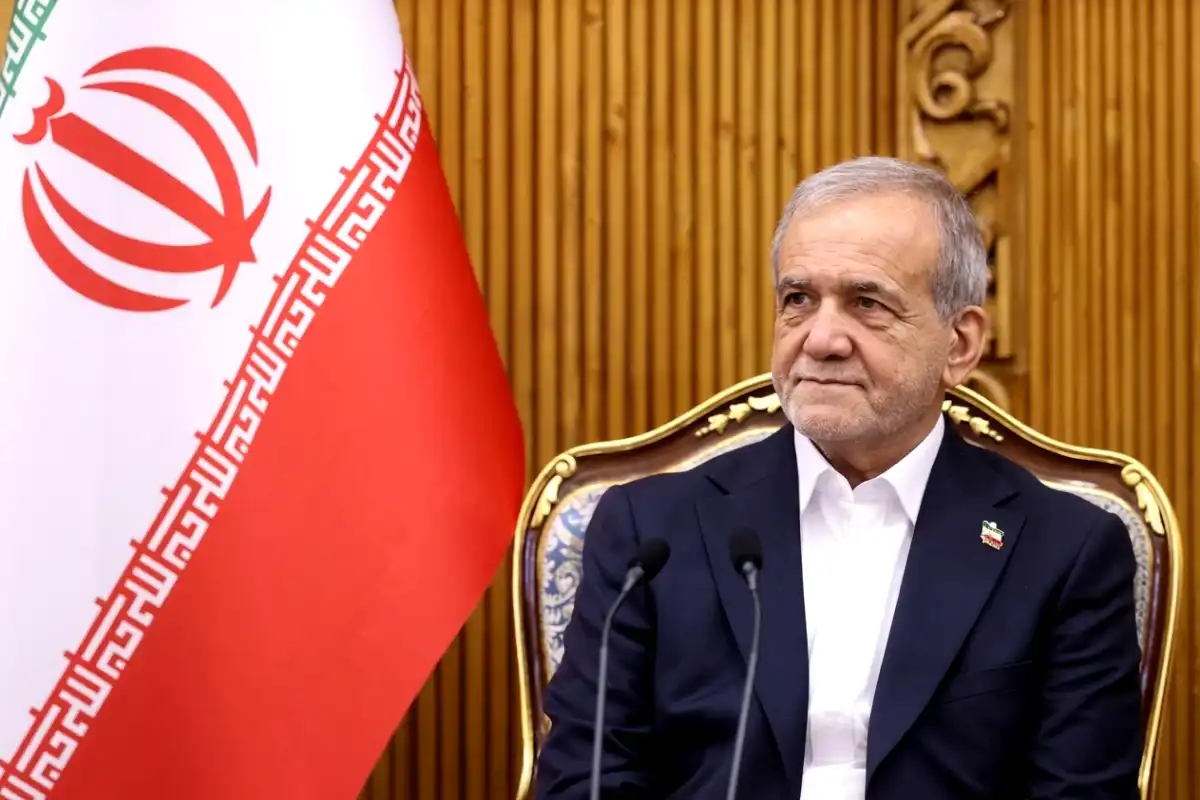
Iranian President Masoud Pezeshkian has said Iran negotiations will continue as Tehran seeks to protect what it describes as the rights and interests of its people while maintaining its resistance during the ongoing conflict. Speaking at a cabinet meeting, Pezeshkian described the situation as an all-out war in all dimensions and said Iran would pursue dialogue from what he characterized as a position of dignity and strength.
His comments come as diplomatic efforts continue alongside heightened military tensions in the region. Recent reporting indicates that negotiations involving Iran and the United States remain difficult, with disagreements over issues including sanctions, security and Iran’s nuclear programme.
Pezeshkian Calls for Continued Dialogue
Pezeshkian said Tehran would not abandon negotiations despite the pressure created by the conflict. At the same time, he stressed that Iran would maintain its resistance and continue relying on its own capabilities.
The Iranian president presented dialogue and resistance as parallel elements of Tehran’s approach. Rather than describing negotiations as a departure from Iran’s position, he framed diplomatic engagement as a way to defend the country’s interests while maintaining national resolve.
The comments come at a time when diplomatic channels remain active but progress has been difficult. Reuters reported earlier this month that Iranian officials were continuing diplomatic efforts even as Tehran prepared for the possibility of renewed military confrontation.
National Unity Becomes a Key Message
A major part of Pezeshkian’s remarks focused on national unity and domestic cohesion.
The president said cooperation, solidarity and public confidence would be essential for Iran to deal with the challenges created by the conflict. His comments suggest that Tehran sees internal stability as an important component of its ability to withstand external pressure.
Iranian officials have repeatedly emphasized national unity during the conflict. Earlier, Iran’s judiciary chief also called on officials and the public to avoid divisions and preserve national cohesion.
For Pezeshkian, maintaining cooperation inside the country is closely connected with his broader message of resilience. The government faces pressure from the conflict as well as economic difficulties, making domestic stability an important issue alongside foreign policy.
Cooperation With Neighbouring Countries
Pezeshkian also called for greater multilateral engagement with neighbouring countries.
According to his remarks, Tehran is working with regional states to address some of its needs while continuing to prioritize domestic capabilities. The approach reflects Iran’s efforts to maintain regional diplomatic relationships during a period of heightened tensions.
Regional diplomacy has become increasingly important as the conflict has affected neighbouring countries, maritime routes and energy markets.
The Strait of Hormuz, in particular, has become a major part of the wider diplomatic dispute. Reuters reported in August that Iran and Oman were discussing arrangements for maritime traffic through the strategic waterway, although Tehran said reopening the route would depend on other conditions.
Nuclear Issue Remains Central to Talks
The future of Iran negotiations is also closely connected to the country’s nuclear programme.
The United States has demanded a significant reduction in Iran’s enrichment capabilities as part of any agreement to end the conflict. US Vice President JD Vance said in an October 6 Reuters interview that Washington wanted meaningful reductions in Iran’s nuclear enrichment capacity. Iranian officials, meanwhile, have maintained that the country’s right to enrichment remains an important issue.
These differences have made the diplomatic process more complicated. Tehran and Washington continue to communicate through diplomatic channels, but their positions on key issues remain far apart.
Diplomacy Alongside Military Tensions
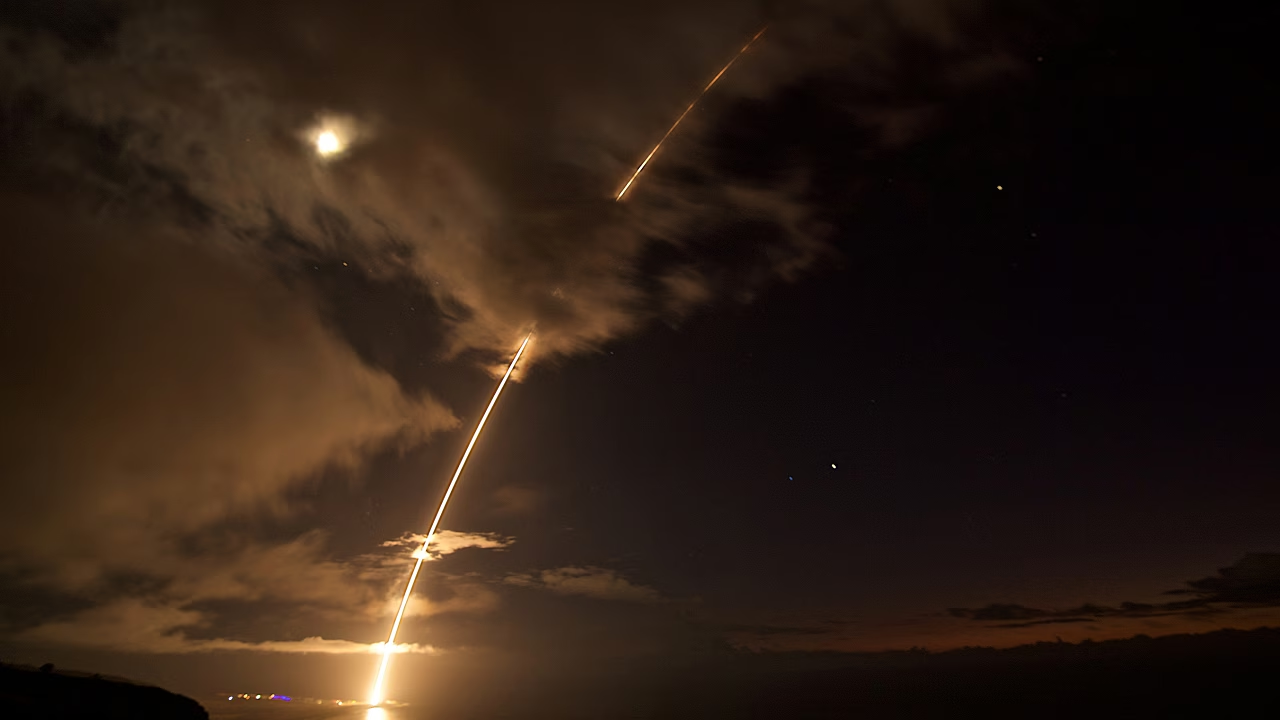
The continuation of Iran negotiations comes against a backdrop of military preparations and threats of further escalation.
Reuters reported that Iranian officials were preparing for a stronger response if the United States resumed large-scale attacks, while Tehran was simultaneously pursuing diplomatic options. The report also noted that Iranian officials privately viewed the chances of negotiations succeeding as uncertain.
This combination of diplomacy and military preparedness illustrates the difficult environment surrounding the current talks. Both sides continue to communicate while also maintaining positions intended to strengthen their leverage.
Pezeshkian’s latest remarks indicate that Iran intends to keep diplomatic engagement open while maintaining its stated resistance and focus on national unity.
The next phase of Iran negotiations will depend on whether Tehran and Washington can narrow their differences over the conditions for ending the conflict. Issues involving nuclear enrichment, sanctions, security guarantees and regional arrangements remain significant obstacles.
Pezeshkian’s message is that diplomacy remains an available path, but Iran does not intend to separate negotiations from its broader position on national sovereignty and security.
As regional tensions continue, the effectiveness of diplomatic efforts will depend on whether the parties can move beyond competing demands and establish practical conditions for a longer-term settlement.