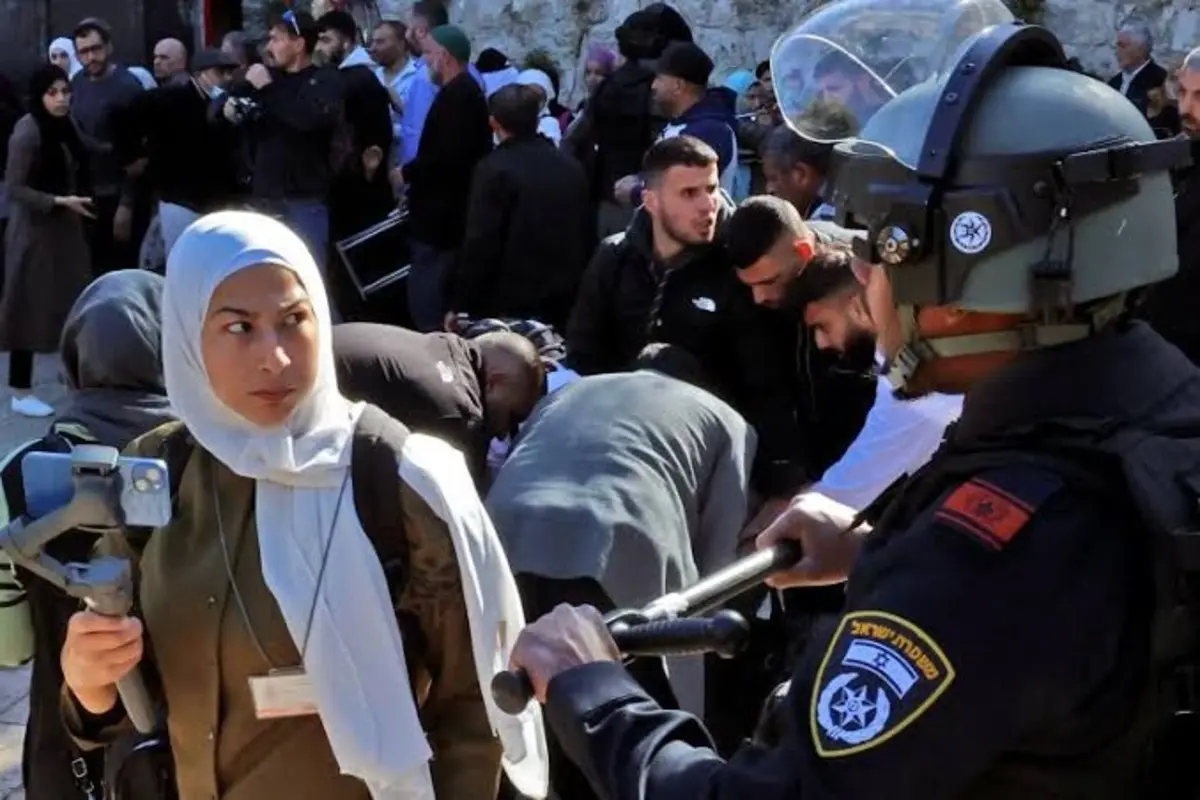
The latest Al-Aqsa Mosque incursions have drawn renewed attention after around 1,500 Israeli settlers entered the compound in occupied East Jerusalem under Israeli police protection, according to the Jerusalem Governorate. The settlers entered in groups through the Mughrabi Gate on Sunday, while Palestinian worshippers faced tighter restrictions around the holy site and in the surrounding Old City.
The incident occurred during the Jewish holiday of Sukkot, when Israeli authorities increased security measures around the Old City and Al-Aqsa. Palestinian officials said the settlers carried out religious rituals inside the compound before authorities closed the gate.
Large Group Enters Al-Aqsa Compound
According to Palestinian sources, the settlers entered the compound in successive groups while Israeli police provided security. Reports said rituals and prayers were performed in parts of the mosque compound, including the area near Bab al-Qattanin.
The latest Al-Aqsa Mosque incursions are part of a pattern that Palestinian authorities say has intensified during Jewish religious holidays. WAFA reported that approximately 40,661 settler incursions had been recorded between January and the end of August 2026. The Jerusalem Governorate also reported that around 800 orders restricting Palestinians from entering the mosque had been issued between the beginning of the year and early September.
The figures come from Palestinian authorities and describe recorded entries and restrictions from their perspective.
Restrictions Around the Old City
Alongside the settler entries, Palestinian sources reported increased restrictions around Al-Aqsa and the Old City.
Access to the area is a particularly sensitive issue because Al-Aqsa Mosque is one of Islam’s most important holy sites. Restrictions on movement during periods of heightened religious activity have repeatedly become a source of tension between Palestinians and Israeli authorities.
The Arab League said on September 27 that it was concerned about what it described as an escalation across the occupied Palestinian territory, including East Jerusalem. Its General Secretariat criticized closures, military measures and restrictions on Palestinian movement and warned against attempts to establish new practices inside Al-Aqsa.
The latest Al-Aqsa Mosque incursions have therefore become part of a wider dispute over access, religious practices and the longstanding arrangements governing the holy site.
Hamas Condemns the Developments
Hamas also condemned the reported incursions and restrictions. The movement said the actions would not change what it described as the Islamic identity of Jerusalem and Al-Aqsa Mosque.
The group also pointed to activity involving Israeli officials and settlers around the compound. Among those mentioned in reports were Israeli National Security Minister Itamar Ben-Gvir and Knesset member Amit Halevi.
Ben-Gvir has previously visited the Al-Aqsa compound, while Palestinian and Arab officials have repeatedly criticized such visits and other activities by Israeli politicians at the site.
The statements from Hamas represent the group’s political position and should be distinguished from independently verified facts about the events on the ground.
Longstanding Status Quo Remains at the Center
At the heart of the dispute is the historical and legal status quo at Al-Aqsa Mosque and the broader Haram al-Sharif compound.
The issue has attracted repeated international diplomatic attention. In July, foreign ministers from several Arab and Muslim countries, including Pakistan, reaffirmed their rejection of attempts to alter the historical and legal status quo in Jerusalem. They also called for unrestricted access for Muslim worshippers to Al-Aqsa.
The United Nations Alliance of Civilizations also expressed concern in July over developments around Al-Aqsa and emphasized the importance of preserving the historical and legal arrangements governing Jerusalem’s holy sites.
These positions demonstrate why new Al-Aqsa Mosque incursions can quickly become an international diplomatic issue rather than remaining solely a local dispute.
Arab League Warns of Wider Escalation
The Arab League’s latest statement extended beyond Al-Aqsa to broader developments in the occupied West Bank and East Jerusalem.
The organization criticized road closures, checkpoints and other restrictions that it said were affecting Palestinians’ movement and access to workplaces and places of worship. It also warned against what it described as efforts to create new realities at Al-Aqsa.
The statement comes amid repeated reports of settler activity at the holy site. Earlier in September, Palestinian sources reported separate groups entering Al-Aqsa during Jewish religious occasions, including the Hebrew New Year and Yom Kippur.
Tensions Continue Around the Holy Site
The latest Al-Aqsa Mosque incursions highlight the continuing sensitivity surrounding Jerusalem’s holy sites. The reported participation of large groups of settlers, police protection and simultaneous restrictions on Palestinian movement have prompted strong reactions from Palestinian representatives and regional organizations.
For Palestinians, the issue is closely connected to access to worship and the status of Jerusalem. For Israeli authorities and supporters of Jewish access to the site, religious and security considerations are presented differently. The competing positions remain a major source of tension.
With the Arab League warning against further escalation and Palestinian officials continuing to document settler entries, Al-Aqsa remains at the center of a wider dispute over Jerusalem, religious access and the preservation of existing arrangements.
The latest Al-Aqsa Mosque incursions show how developments at the compound can quickly generate reactions beyond Jerusalem, drawing statements from Palestinian groups, Arab institutions and international bodies concerned about the future of the city’s contested holy sites.