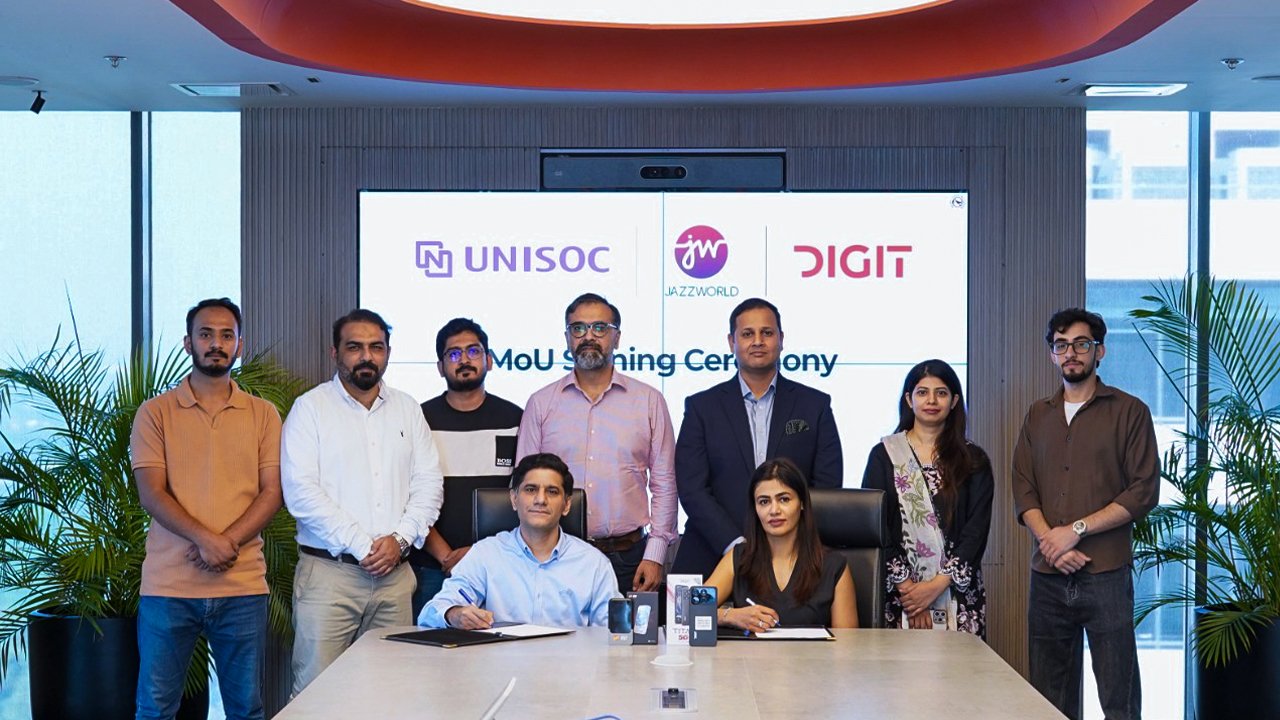
Pakistan is moving into a new phase of mobile connectivity as Jazz, DIGIT and UNISOC announce a strategic collaboration to introduce affordable 5G devices Pakistan consumers can use for everyday digital needs. The partnership combines Jazz’s connectivity network and market reach with DIGIT’s device expertise and UNISOC’s semiconductor technology to make 5G more accessible to a wider audience.
The initial collaboration will focus on two products: a 5G MiFi device and a 5G smartphone powered by UNISOC platforms. The companies say the products are designed to provide consumers with faster and more reliable connectivity while keeping access to next-generation technology within reach of a broader section of the market.
Jazz, DIGIT and UNISOC Join Forces
The partnership brings together three different parts of the technology ecosystem.
Jazz contributes its extensive connectivity infrastructure and understanding of Pakistan’s mobile market. DIGIT brings experience in developing and positioning consumer devices, while UNISOC provides the semiconductor platforms that power the upcoming 5G products.
Asad Maqbool, Head of Jazz Consumer Growth, said wider access to capable and affordable devices would be essential for consumers to fully benefit from 5G technology.
He said the collaboration aims to combine Jazz’s connectivity ecosystem with DIGIT’s device expertise and UNISOC’s technology to give consumers access to faster connectivity for their everyday digital activities.
For Pakistan, the availability of affordable 5G devices Pakistan users can easily adopt could become an important part of the wider 5G rollout.
Two Devices Planned Initially
The first phase of the partnership will introduce two products.
The first is a 5G MiFi, a portable mobile broadband device that can provide high-speed internet access to multiple connected devices. Such a product could be useful for households, students, remote workers and small businesses that need flexible internet connectivity without relying entirely on fixed broadband.
The second product is a 5G smartphone designed to provide a more accessible entry point into next-generation mobile connectivity.
Both devices will use UNISOC platforms. The company said its V510 platform will support the mobile broadband product, while the UMS9621 platform will power the smartphone.
The introduction of these products is expected to expand the range of affordable 5G devices Pakistan consumers can consider as 5G adoption develops.
Focus on Everyday Connectivity
The companies are positioning the new devices around practical uses rather than connectivity speeds alone.
5G can support activities such as video streaming, online education, remote work, digital communication, cloud-based applications and other internet services that require reliable mobile connections.
For consumers, faster connectivity can also improve the experience of using smartphones and connected devices in locations where mobile networks are available.
The 5G MiFi could be particularly useful where several devices need internet access simultaneously. Instead of connecting each device through a separate mobile connection, users can connect multiple devices to the portable hotspot.
Meanwhile, the smartphone is expected to provide consumers with a direct way to experience 5G services through a compatible handset.
Making 5G More Accessible
One of the biggest challenges for 5G adoption is not only network availability but also the availability of compatible devices at accessible prices.
As 5G networks expand, consumers need smartphones, routers and other hardware capable of connecting to those networks. Without reasonably priced devices, network expansion may not immediately translate into widespread consumer adoption.
That is where the partnership’s focus on affordable 5G devices Pakistan users can access becomes significant.
DIGIT CEO Abdul Rehman Mahmood said the company is focused on bringing reliable and affordable products to market that address local consumer requirements. He added that the collaboration would allow DIGIT to expand its portfolio and support the adoption of next-generation connectivity.
UNISOC Technology Behind the Products
UNISOC is providing the semiconductor platforms for the planned devices.
Xian Miao, General Manager of the company’s IoT Product Line, described Pakistan as an important and rapidly developing digital market. He said the V510 and UMS9621 platforms would enable 5G connectivity across mobile broadband and smartphones.
The semiconductor component is an important part of the partnership because device performance, connectivity capabilities and power efficiency depend heavily on the underlying chipset technology.
By combining UNISOC platforms with locally targeted devices and Jazz’s connectivity ecosystem, the companies aim to create a broader pathway for 5G adoption.
More 5G Products Could Follow
The initial launch is only the beginning of the collaboration. Jazz, DIGIT and UNISOC said they will explore additional opportunities involving 5G smartphones, mobile broadband products and other connected solutions for the Pakistani market.
This could eventually give consumers more choices across different device categories and price segments.
However, the companies have not yet announced commercial availability dates, prices or specific sales channels for the first two products. Those details will be released separately.
What the Partnership Means for Pakistan
The arrival of affordable 5G devices Pakistan consumers can realistically purchase could play an important role in turning 5G network expansion into everyday usage.
The collaboration demonstrates how network operators, device manufacturers and semiconductor companies can work together to address different parts of the connectivity ecosystem.
As Pakistan enters the next stage of mobile technology, access to compatible hardware will remain just as important as network availability. The Jazz, DIGIT and UNISOC partnership is aimed at addressing that requirement through a 5G MiFi and smartphone, with the possibility of more connected products in the future.
For consumers, the next major questions will be pricing, availability and when these devices will officially reach the Pakistani market.