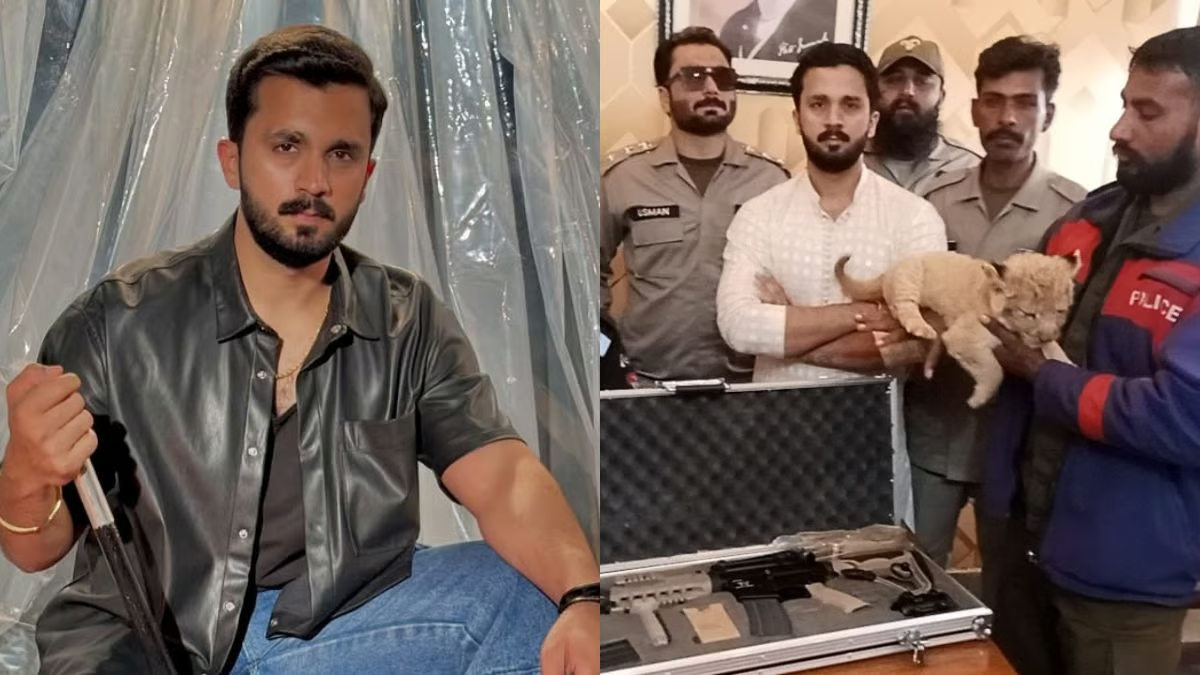
Pakistani rapper and singer Ali Gul Pir has opened up about the early struggles of his career and recalled how one of his most famous songs, Waderay Ka Beta, was rejected by music channels before becoming an overnight hit online.
Speaking during a private television program, Ali Gul Pir discussed the challenges he faced when he was starting his career and explained why he chose to use rap as a platform for discussing social issues rather than focusing primarily on romance.
Why Ali Gul Pir Chose Social Issues
According to Ali Gul Pir, most popular songs in society traditionally revolve around love and affection. However, he believed music could be used to communicate other ideas and highlight issues affecting ordinary people.
This perspective influenced his decision to focus many of his songs on social and cultural issues. Through rap, he found a way to express observations about society that he felt were not being addressed through conventional romantic music.
His approach eventually helped him develop a distinctive identity within Pakistan’s music scene.
Rather than following the themes that dominated mainstream music, Ali Gul Pir experimented with humour, social commentary and satire. His work demonstrated how rap could be used not only for entertainment but also as a way of discussing serious subjects.
The Story Behind Waderay Ka Beta
One of the most memorable examples of this approach was Waderay Ka Beta. Ali Gul Pir recalled that the inspiration came from what he observed during his school days.
He said the school he attended was also attended by the sons of influential landlords. According to his recollection, they would arrive at school in one group while their security guards followed separately.
The experience inspired him to write the song, and he said he completed it in just one hour.
The song reflected the social differences he had observed around him and turned those observations into a satirical rap track.
A Low-Budget Production
Despite eventually becoming widely recognised, Waderay Ka Beta was not created with a large production budget.
Ali Gul Pir revealed that he and his friends produced the song with approximately Rs15,000. After completing the track, they approached music channels in the hope of getting it broadcast on television.
However, the response was not what they expected.
According to Ali Gul Pir, music channels rejected the song because it did not contain the conventional elements they were looking for. He recalled being told that there was no girl in the song and that it did not revolve around sweet romantic themes.
The channels therefore believed the song would not attract viewers.
Music Channels Rejected the Song
The rejection was particularly disappointing for Ali Gul Pir, who had invested considerable effort into creating the track.
He said he requested that the channels give the song a chance and allow audiences to decide whether they liked it. Despite his efforts, the song was reportedly not given television exposure.
The experience left the rapper feeling disappointed, especially after putting time and limited resources into the project.
Instead of abandoning the song, however, he decided to take another route.
YouTube Changed Everything
Ali Gul Pir eventually uploaded the song to YouTube. What happened next transformed the track’s fortunes.
He recalled that the song received around 100,000 views within just four hours. As more people discovered it and shared it online, the number of views continued to increase.
The song quickly became popular, turning into a major breakthrough for the young artist.
For Ali Gul Pir, the experience demonstrated that traditional media was not the only path to success. While television channels had rejected the track, online audiences responded strongly to its message and unconventional style.
The rapid growth of the song also highlighted the increasing importance of digital platforms for Pakistani musicians and independent artists.
A Turning Point in His Career
The success of Waderay Ka Beta became an important moment in Ali Gul Pir’s career. A song created on a modest budget and rejected by established music channels had managed to reach a large audience through the internet.
Its popularity showed that audiences could embrace material that did not fit traditional entertainment formulas.
Ali Gul Pir’s story also illustrates the difficulties artists can face when introducing unconventional ideas. His decision to focus on social issues rather than relying on familiar romantic themes initially created obstacles, but the same approach eventually became an important part of his identity.
Today, the story of Waderay Ka Beta remains a notable example of how persistence and digital platforms can give unconventional creative work a second chance.
For Ali Gul Pir, what began as a one-hour song written from personal observations eventually became a defining moment in his musical journey — proving that rejection from traditional media does not necessarily mean an idea has no audience.