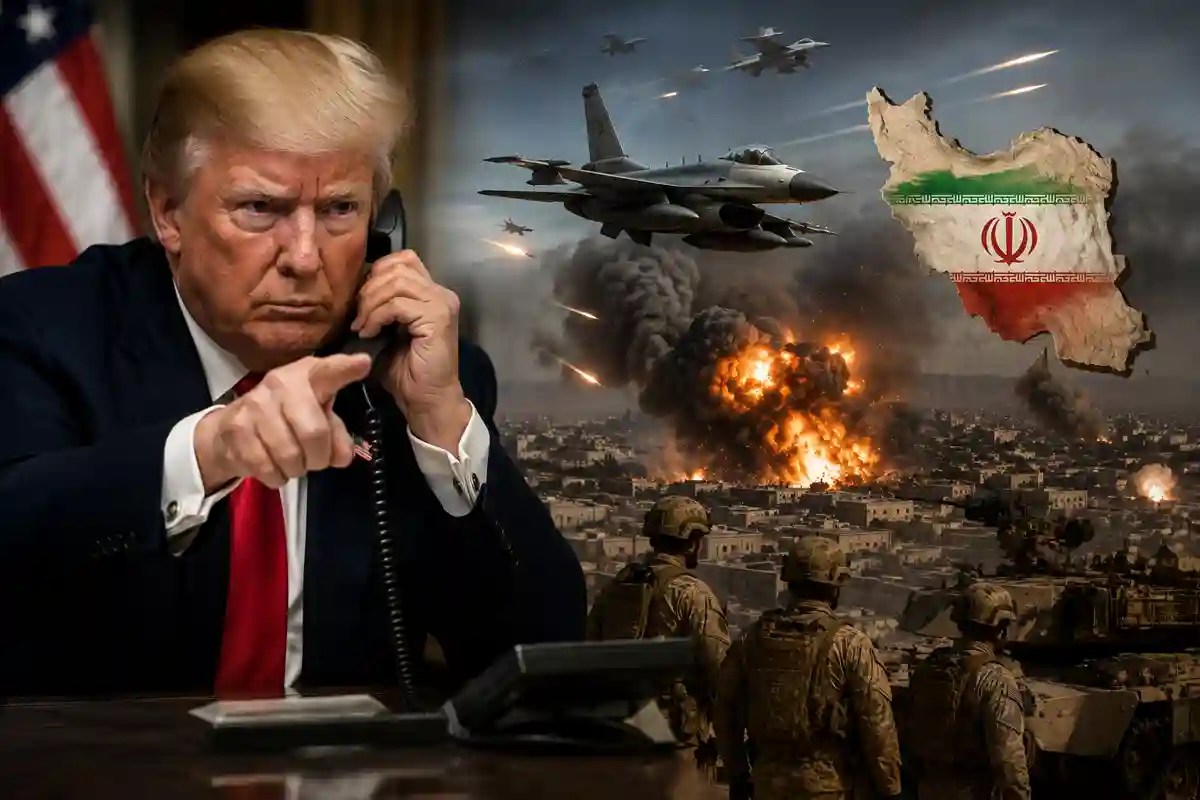
US President Donald Trump is privately considering whether to formally declare an end to the Trump Iran war, while the Pentagon is reportedly preparing to extend the deployment of American military forces in the Middle East. The contrasting developments suggest Washington may be considering a shift away from direct military confrontation while maintaining economic and military pressure on Tehran.
According to a report by The Wall Street Journal, Trump has discussed the possibility of formally ending the conflict with senior advisers and is supportive of the idea. However, no final decision has been announced, meaning the future of the conflict and US military presence in the region remains uncertain.
Trump Considers Ending the Conflict
The possibility of formally ending the Trump Iran war comes as the US administration considers alternative ways to pressure Iran.
Trump reportedly believes that continued economic pressure could force Tehran to make major decisions concerning its nuclear programme. Under this approach, Washington could reduce its reliance on direct military confrontation while using economic measures to encourage Iran to make significant concessions.
The strategy would represent a potentially important change in the way the United States is approaching its conflict with Tehran. Rather than maintaining the same level of direct military confrontation, the administration appears to be considering economic pressure as a central tool.
US Expands Economic Pressure on Iran
The report said the United States launched “Operation Economic Outcast” last week as part of a broader campaign targeting Iran’s economy.
The measures reportedly cover several major sectors, including oil, maritime trade, aviation, gold, technology and digital assets. The objective is to increase the economic costs facing Tehran and put additional pressure on the Iranian government.
Trump is said to believe that sustained economic pressure could eventually push Iran toward major concessions related to its nuclear activities.
The approach reflects a broader effort to use financial and economic restrictions as leverage. Washington appears to be betting that pressure on key areas of Iran’s economy could influence Tehran’s calculations without requiring an extended military confrontation.
Pentagon Plans Continued Military Presence
While Trump considers formally ending the Trump Iran war, the Pentagon is reportedly moving ahead with plans to extend the deployment of US forces in the Middle East.
The simultaneous developments create a complicated picture for US policy. A formal declaration that the war has ended would suggest a reduction in direct hostilities, but keeping American forces in the region would allow Washington to maintain significant military capabilities.
The continued deployment could provide the United States with the ability to respond quickly to potential security threats while maintaining pressure on Iran.
It also indicates that declaring an end to the conflict would not necessarily mean an immediate withdrawal of American military forces from the Middle East.
Shift From Military Action to Economic Pressure
The latest developments suggest the Trump administration may be weighing a transition from direct military confrontation toward intensified economic pressure.
Such a shift could allow Washington to pursue its objectives through sanctions and other economic measures while avoiding the risks associated with continued military operations.
However, the strategy also depends heavily on how Tehran responds. If Iran refuses to make concessions regarding its nuclear programme, the administration could face pressure to reconsider its approach.
The future direction of the Trump Iran war will therefore depend on developments surrounding Iran’s nuclear activities, the effectiveness of US economic measures and the wider security situation across the region.
No Final Decision Yet
Despite the reported discussions, the United States has not formally announced an end to the conflict. The Wall Street Journal report makes clear that decisions regarding both the war and US military deployments remain under consideration.
This leaves Washington with several possible paths. The administration could formally declare the conflict over while keeping American forces stationed in the region. It could also continue economic pressure while monitoring Iran’s response to the new measures.
For now, the Trump Iran war remains closely tied to the broader dispute over Iran’s nuclear programme and US efforts to influence Tehran through economic pressure.
The coming period could determine whether Washington’s strategy develops into a lasting change in its approach toward Iran.
A formal end to the conflict, combined with continued military deployments and economic pressure, would create a new phase in US-Iran relations. Such a policy could allow the United States to maintain leverage while reducing the emphasis on direct combat.
At the same time, Iran’s response will be crucial. Tehran’s decisions regarding its nuclear programme and its reaction to the expanding economic measures could determine whether tensions decrease or rise again.
The Trump Iran war therefore appears to be entering an uncertain phase. While the US president is reportedly considering formally ending the conflict, Washington is simultaneously preparing to maintain its military capabilities in the Middle East and intensify economic pressure on Tehran. With no final decisions announced, the next steps will depend on diplomatic, economic and security developments in the region.