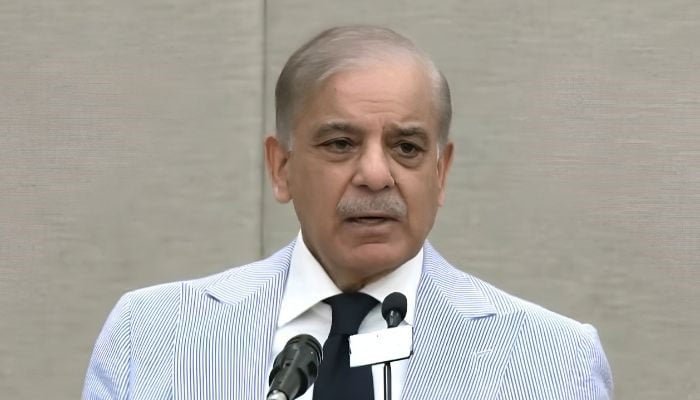
Prime Minister Shehbaz Sharif has called for a grand dialogue on Balochistan, stressing that genuine grievances in the province should be addressed through peaceful discussion and practical solutions. Speaking at the Balochistan National Workshop in Islamabad, the prime minister said the federal government was ready to listen to legitimate concerns and work with provincial stakeholders to resolve them.
Focus on Peaceful Dialogue
Shehbaz Sharif said all genuine issues facing Balochistan should be discussed through peaceful and civilised means. He also urged those who were willing to abandon violence and return to a peaceful path to be welcomed into society.
The prime minister’s call for dialogue comes as Balochistan continues to face a combination of economic, social, geographical and security challenges. He suggested that political engagement and development should go together, with the government addressing legitimate public concerns while encouraging peaceful participation in the country’s political process.
The grand dialogue on Balochistan would therefore need to focus not only on political questions but also on improving the everyday lives of people across the province.
Development as a Key Priority
The prime minister highlighted Balochistan’s importance to Pakistan’s economic future, particularly because of its strategic location and natural resources. He specifically referred to Gwadar Port, saying that development in Balochistan was essential for the progress of the entire country.
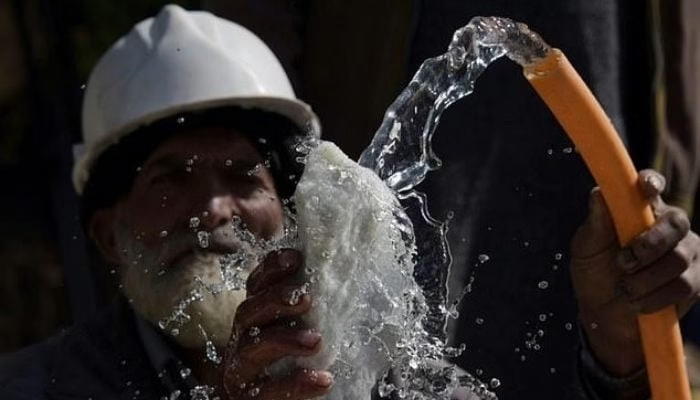
Shehbaz also outlined government efforts to improve the province’s agricultural energy infrastructure. He said the federal government had contributed Rs40 billion to a Rs70bn project aimed at solarising agricultural tube wells.
According to the prime minister, more than 20,000 tube wells in Balochistan have already been converted to solar power under the initiative.
The shift toward solar energy could help farmers reduce dependence on conventional electricity and fuel while lowering agricultural operating costs. For a province where agriculture remains important to many communities, reliable and affordable energy can have a direct impact on rural livelihoods.
Greater Financial Support for Balochistan
Shehbaz Sharif also recalled discussions surrounding the 2010 National Finance Commission arrangements, saying that all four provinces had agreed to increase funding for Balochistan.
He noted that Punjab contributes Rs11 billion annually as part of the broader spirit of cooperation and solidarity between the provinces.
The prime minister said Balochistan’s share in various development and welfare schemes had been kept above its population-based proportion. He stressed that the province needed greater participation in national development initiatives.
Financial support, however, is only one part of the challenge. Because Balochistan covers a vast geographical area, delivering basic services can be significantly more difficult than in densely populated regions.
Education and Basic Services
The prime minister acknowledged difficulties in providing education, healthcare, roads and other essential services across the province.
Balochistan’s large distances and dispersed population make the delivery of public services particularly challenging. Shehbaz said these issues should be addressed through consultation and fair resource distribution so that people across the country could benefit from national development.
Education was another area highlighted during the workshop. The prime minister said several Daanish Schools were being completed in different parts of Balochistan to provide quality education to deserving children.
Improving access to education could play an important role in creating long-term opportunities for young people in the province, particularly in areas where educational facilities remain limited.
Making Natural Resources Benefit Local Communities
Balochistan possesses significant mineral and natural resources, making the province strategically important to Pakistan’s economy. However, the question of how these resources are developed and who benefits from them remains highly important.
Shehbaz Sharif stressed that the province’s natural wealth primarily belongs to its people. He said development should take place through cooperation between the federal and provincial governments, with local communities benefiting first and the wider Pakistani population benefiting afterward.
This principle could become an important component of any grand dialogue on Balochistan. Economic development is more likely to create lasting benefits when local communities have meaningful participation and see tangible improvements in employment, infrastructure and public services.
A Broader Approach Needed
The government’s emphasis on dialogue, development and resource sharing reflects an attempt to address multiple dimensions of Balochistan’s challenges simultaneously. Political engagement alone may not be enough without improvements in education, healthcare, infrastructure and economic opportunities.
Similarly, development projects are unlikely to resolve deeper grievances unless communities feel included in decision-making.
The proposed grand dialogue on Balochistan could provide an opportunity for federal and provincial authorities, political representatives and other stakeholders to discuss these concerns openly.
For such an initiative to produce lasting results, consistent implementation, transparency and meaningful participation will be crucial. Balochistan’s development is closely connected to Pakistan’s broader economic and political stability, making the province’s future an important national issue rather than a regional concern alone.