Strait of Hormuz tensions have once again become a major topic of discussion after an Iranian lawmaker accused the United States of failing to honor key commitments outlined in the Islamabad Memorandum of Understanding (MoU). The remarks come amid growing geopolitical uncertainty in the Middle East, where concerns over energy security, maritime trade, and regional stability continue to dominate international attention.
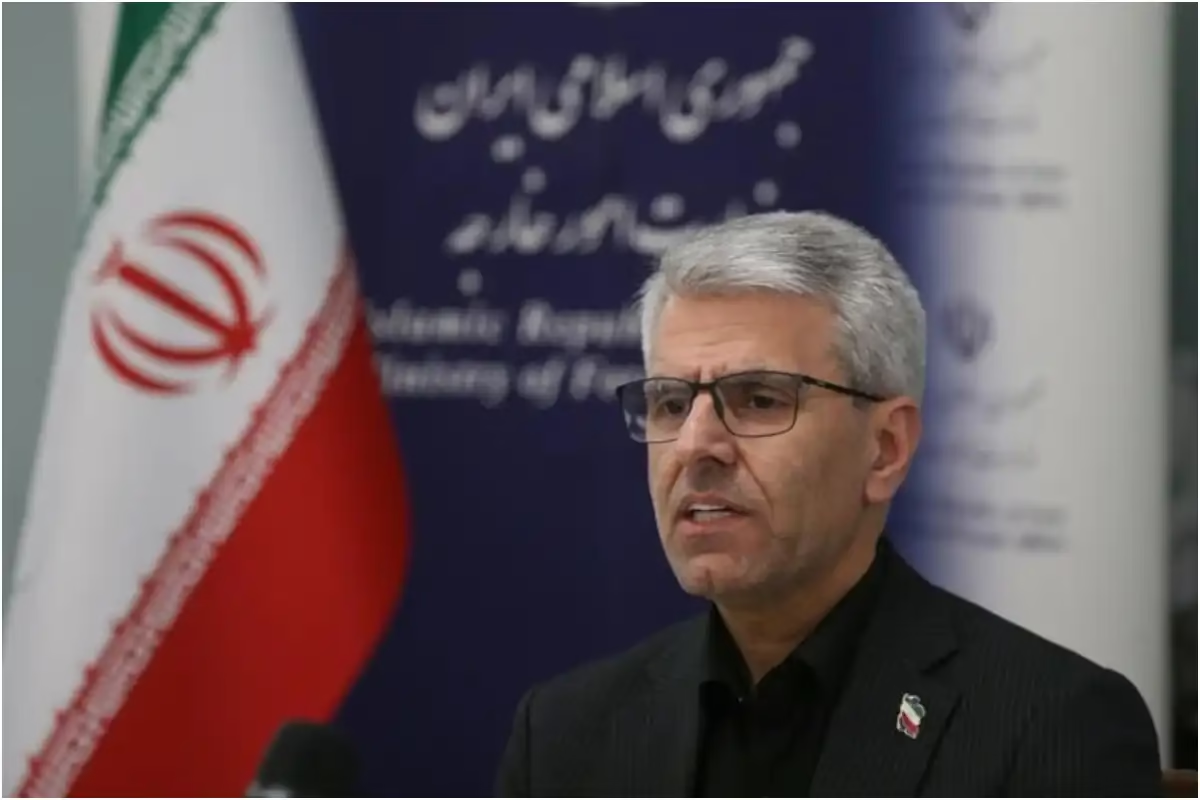
Ahmad Bakhshayesh Ardestani, a member of Iran’s Parliament’s National Security and Foreign Policy Committee, claimed that the United States had not fully implemented parts of the agreement that, according to him, acknowledged Iran’s role in managing shipping arrangements through the Strait of Hormuz. His comments have reignited debate over one of the world’s most strategically important waterways.
Why the Strait of Hormuz Matters
The Strait of Hormuz is one of the busiest maritime trade routes in the world. Located between Iran and Oman, it connects the Persian Gulf to the Gulf of Oman and the Arabian Sea. Every day, millions of barrels of crude oil and liquefied natural gas pass through this narrow waterway, making it essential to global energy markets.
Any disruption in the Strait of Hormuz can have immediate consequences for international oil prices, shipping costs, and overall economic stability. Because of its importance, developments involving the waterway are closely monitored by governments, businesses, and financial markets worldwide.
Allegations Against the United States
Speaking to Iranian media, Bakhshayesh Ardestani alleged that the United States failed to comply with commitments related to the Islamabad MoU. According to his claims, Washington attempted to develop an alternative maritime corridor through Oman during a 60-day implementation period.
He argued that such a move was intended to reduce Iran’s strategic influence over shipping routes in the region. While these claims reflect the lawmaker’s perspective, there has been no independent confirmation regarding the specific provisions he referenced.
The remarks highlight the continuing mistrust between Tehran and Washington despite diplomatic efforts aimed at reducing regional tensions.
Regional Diplomacy Continues
The Iranian parliamentarian also stated that several Arab countries are working diplomatically to prevent further escalation in the Gulf region. Many regional governments have consistently emphasized dialogue as the preferred path toward maintaining stability and protecting commercial shipping.
Countries across the Gulf understand that prolonged instability could affect not only oil exports but also investment, tourism, and international trade.
Diplomatic engagement remains an important tool for reducing misunderstandings and preventing military confrontations that could impact the wider Middle East.
Oil Prices and Global Markets
One of the central concerns raised during the interview involved the potential impact of higher oil prices.
Energy analysts have long warned that geopolitical instability in the Gulf often leads to increased volatility in international energy markets. Even the possibility of disruptions in the Strait of Hormuz can influence crude oil prices due to uncertainty surrounding future supplies.
Higher energy prices can affect transportation costs, manufacturing, inflation, and household expenses across both developed and developing economies.
As a result, international markets closely monitor every political and military development involving the Gulf region.
Alternative Shipping Routes
According to Bakhshayesh, several Gulf countries, including the United Arab Emirates, are investing in alternative trade corridors and expanding port infrastructure to reduce dependence on traditional shipping routes.
Over recent years, Gulf states have invested heavily in logistics projects, modern ports, and transportation networks designed to strengthen regional trade and improve supply chain resilience.
However, the Iranian lawmaker argued that these alternatives would still remain vulnerable during any major regional conflict because of their geographic proximity.
His comments reflect Iran’s assessment of regional security dynamics rather than independently verified military evaluations.
Concerns Over Kharg Island
Another topic discussed during the interview was Kharg Island, Iran’s primary oil export terminal.
Bakhshayesh dismissed speculation suggesting that foreign forces could maintain long-term control over the island in the event of military action. He claimed Iran possesses sufficient defensive capabilities to prevent any prolonged occupation.
Kharg Island plays a critical role in Iran’s oil exports, making it one of the country’s most strategically significant energy facilities.
Any threat to the island would likely attract global attention because of its importance to international energy markets.
Warnings of Wider Regional Conflict
The Iranian parliamentarian also warned that any direct ground conflict involving Iran could extend beyond its borders.
He claimed such a scenario could affect neighboring countries and increase instability across the wider Gulf region.
Security experts have repeatedly cautioned that military escalation involving major regional powers carries significant risks, including disruptions to commercial shipping, energy supplies, and international trade.
For this reason, diplomatic negotiations continue to be viewed by many governments as the most effective way to prevent further escalation.
The Strategic Importance of Stability
The Gulf region remains one of the world’s most strategically sensitive areas because of its energy resources and vital shipping lanes.
Maintaining stability benefits not only regional countries but also the broader global economy. Secure maritime routes allow uninterrupted trade, stable energy supplies, and greater investor confidence.
As geopolitical competition continues, governments are balancing national security priorities with economic interests that depend heavily on peaceful commercial navigation.
International organizations and major global powers continue encouraging dialogue to reduce tensions and avoid actions that could threaten maritime security.
The latest statements from Iranian lawmaker Ahmad Bakhshayesh Ardestani have once again brought Strait of Hormuz tensions into the international spotlight. His allegations regarding the Islamabad Memorandum of Understanding, concerns over alternative shipping routes, and warnings about possible regional conflict illustrate the complex geopolitical environment surrounding one of the world’s most important maritime corridors.
Although many of the claims remain unverified and reflect the views of an individual Iranian official, they underscore the continuing importance of diplomacy in preserving regional stability. As governments monitor developments closely, the Strait of Hormuz will remain a key focal point for global energy security, international trade, and Middle East geopolitics.