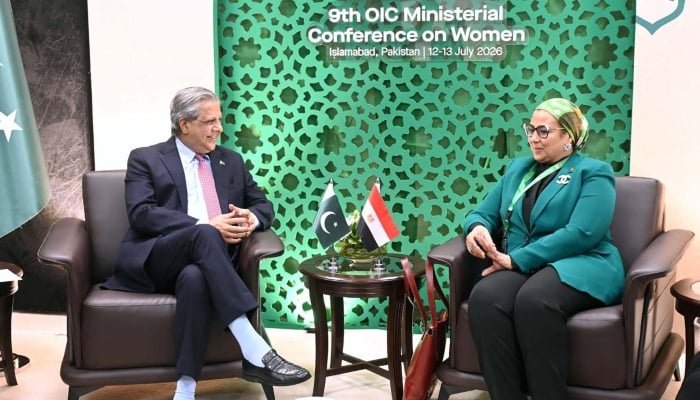
OIC Women’s Empowerment entered a new chapter as Pakistan officially assumed the chairmanship of the 9th Ministerial Conference on Women in Islamabad. The event brought together representatives from member states to discuss practical ways of improving the lives of women and girls across the Islamic world. By taking on this leadership role, Pakistan has reaffirmed its commitment to advancing gender equality, expanding opportunities for women, and encouraging stronger cooperation among OIC member countries.
Speaking at the conference, Federal Minister for Law, Justice and Human Rights Azam Nazeer Tarar described Pakistan’s chairmanship as both an honor and a responsibility. He emphasized that the country would work closely with fellow member states to transform shared commitments into meaningful action. The focus, he said, would be on practical initiatives that promote women’s participation in economic, social, and political life.
The conference serves as an important platform for governments to exchange ideas, share successful policies, and develop collaborative strategies for addressing challenges faced by women across OIC countries. From education and healthcare to entrepreneurship and leadership, the discussions are expected to contribute to long-term progress throughout the Muslim world.
One of the key priorities highlighted during the event was OIC Women’s Empowerment through stronger legal and institutional reforms. Pakistan emphasized that women’s rights are protected under its Constitution and remain an essential part of the country’s national development strategy. Government officials noted that improving opportunities for women is not only a matter of equality but also a requirement for sustainable economic growth and social progress.
Pakistan has introduced several initiatives aimed at strengthening women’s participation in different sectors of society. These include efforts to expand women’s leadership roles, increase financial inclusion, encourage entrepreneurship, improve access to education, and create safer working environments. Such measures are designed to help women contribute more actively to national development while achieving greater economic independence.
Financial inclusion remains one of the most important aspects of OIC Women’s Empowerment. Access to banking services, digital payments, business financing, and investment opportunities enables women to establish businesses, support their families, and participate fully in the economy. Many OIC member states are now introducing policies that encourage women-owned enterprises and improve access to financial resources.
Another major area of focus is education. Providing equal educational opportunities equips women and girls with the knowledge and skills needed to pursue careers, participate in public life, and become future leaders. Investment in education also contributes to healthier communities, stronger economies, and reduced poverty over the long term.
The conference also addressed the growing importance of digital inclusion. As technology continues transforming economies worldwide, access to digital tools and online learning has become increasingly important. Reducing the digital divide ensures that women can benefit from technological innovation, remote work opportunities, digital entrepreneurship, and online education.
Justice and legal protection were also highlighted as essential components of OIC Women’s Empowerment. Strengthening legal frameworks helps safeguard women’s rights, improve access to justice, and ensure equal treatment under the law. Effective institutions play a critical role in creating environments where women can participate confidently in every aspect of society.
Minister Azam Nazeer Tarar emphasized that no woman or girl should be left behind because of conflict, poverty, discrimination, or inequality. His remarks reflected the broader objective of ensuring that development initiatives reach vulnerable communities while promoting equal opportunities for everyone.
The conference also featured remarks from OIC Assistant Secretary General for Humanitarian, Cultural and Social Affairs Tarig Ali Bakheet, who called for collective and concrete action to improve the lives of women and girls across member states. His message reinforced the importance of regional cooperation in addressing common social and economic challenges.
The success of OIC Women’s Empowerment initiatives depends not only on government policies but also on collaboration among educational institutions, civil society organizations, businesses, and international development partners. Working together allows countries to exchange successful experiences and implement solutions that have proven effective in different social and cultural contexts.
Pakistan’s assumption of the conference chairmanship also strengthens its role within the Organisation of Islamic Cooperation. By leading discussions on women’s development, the country has the opportunity to encourage greater regional cooperation while supporting policies that contribute to inclusive and sustainable growth across the Islamic world.
The outcomes of the conference are expected to guide future collaboration among OIC member states. Continued dialogue, policy reforms, and shared development programs can help improve access to education, healthcare, employment, leadership opportunities, and financial services for millions of women throughout member countries.
The new chapter in OIC Women’s Empowerment reflects a growing recognition that empowering women benefits entire societies. Stronger participation by women contributes to economic prosperity, social stability, innovation, and community development. Through practical cooperation and sustained commitment, OIC member states can work together to create more inclusive societies where every woman and girl has the opportunity to achieve her full potential and contribute meaningfully to national and regional progress.