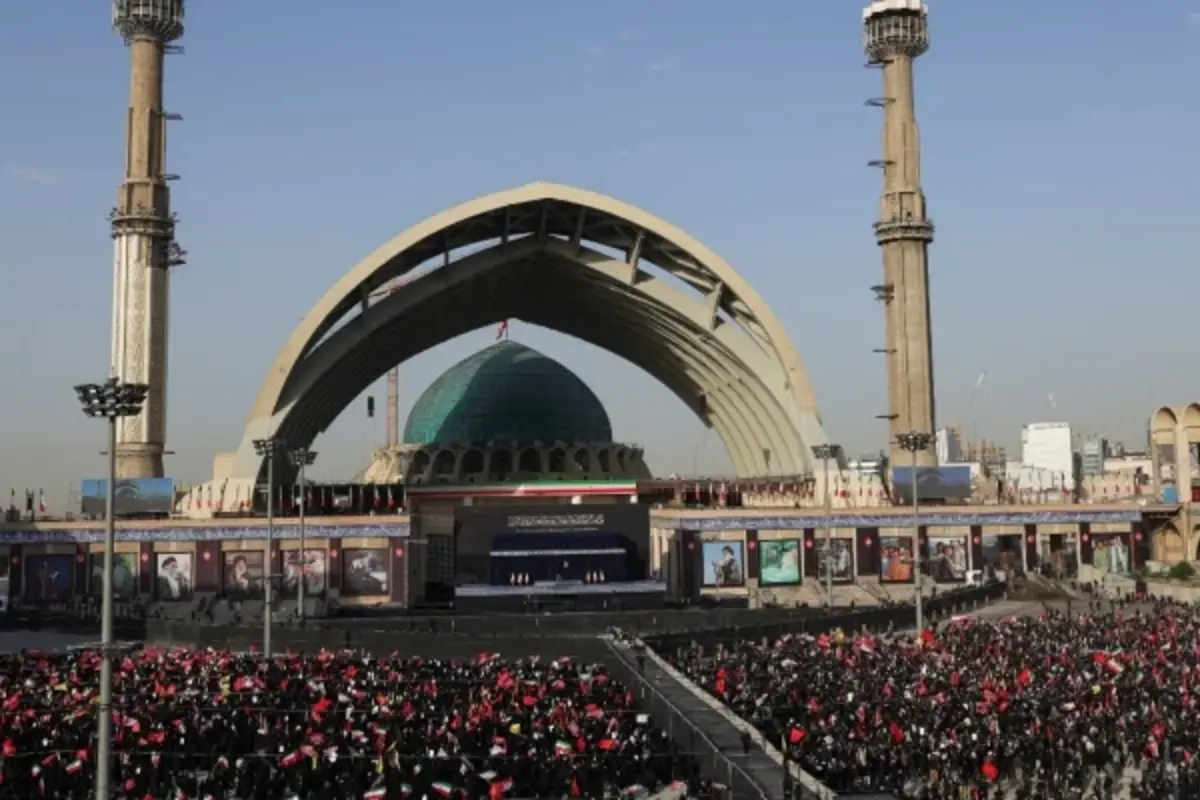
The Iran Farewell Ceremony for the late Supreme Leader Ayatollah Seyyed Ali Khamenei began on Saturday at Tehran’s Grand Imam Khomeini Mosalla, bringing together thousands of mourners from across the country. The large-scale gathering marks one of the most significant public events in Iran’s recent history, as citizens, government officials, religious scholars, and supporters gathered to pay their final respects. The two-day ceremony has attracted widespread attention both within Iran and internationally due to its political, religious, and symbolic importance.
From the early hours of the morning, people arrived at the Grand Imam Khomeini Mosalla to participate in prayers and official memorial services. Authorities had prepared extensive security measures and logistical arrangements to accommodate the expected crowds. Volunteers, medical teams, transportation services, and security personnel were deployed throughout the venue to ensure the ceremony proceeded in an organized manner.
The Iran Farewell Ceremony is scheduled to continue through Sunday, allowing visitors from different provinces to attend and participate in the national mourning events. Iranian officials described the gathering as a demonstration of unity and respect for a leader who played a central role in shaping the country’s political and religious landscape for decades.
According to Iranian state media, the funeral is one of the largest official memorial gatherings held in recent years. Large crowds carrying flags, banners, and portraits of Ayatollah Khamenei filled the prayer complex, while religious recitations and prayers continued throughout the day. Many participants traveled long distances to attend the farewell ceremony, highlighting the event’s national significance.
The passing of Ayatollah Khamenei has become a defining moment in Iran’s contemporary history. Throughout his leadership, he remained one of the country’s most influential political and religious figures, guiding Iran through numerous regional and international challenges. His leadership left a lasting impact on Iran’s domestic policies, foreign relations, and religious institutions.
The Iran Farewell Ceremony has also become an important symbol of continuity. Iranian officials have repeatedly emphasized that the country’s institutions remain stable and committed to preserving national unity during this period of transition. Government representatives attending the ceremony reiterated messages of resilience and solidarity while encouraging citizens to remain united.
International attention surrounding the funeral has remained high. News organizations and political observers around the world continue monitoring developments, recognizing the significance of leadership changes in one of the Middle East’s most influential countries. Analysts believe the ceremony carries both symbolic and diplomatic importance as regional governments closely watch Iran’s political transition.
Religious traditions remain at the center of the farewell events. The program includes Quran recitations, collective prayers, speeches by senior religious figures, and memorial gatherings that reflect Iran’s long-standing cultural and Islamic customs. These ceremonies provide citizens with an opportunity to honor the late leader while participating in national expressions of remembrance.
Beyond Tehran, memorial events have also been organized in several other cities across Iran. Local mosques, religious centers, and community organizations have arranged prayer services and gatherings for those unable to travel to the capital. These nationwide commemorations demonstrate the widespread participation surrounding the official mourning period.
Security has remained a major priority throughout the Iran Farewell Ceremony. Authorities implemented comprehensive traffic management plans, increased police presence, and established emergency response units around major gathering points. Public transportation services were expanded to facilitate travel for thousands of attendees arriving from different regions of the country.
Observers have noted the scale of public participation as one of the ceremony’s defining features. Families, students, veterans, religious scholars, and public officials all joined the memorial events, reflecting the broad range of people taking part in the farewell. The atmosphere throughout the gathering combined solemn reflection with public expressions of national identity and religious devotion.
The funeral also highlights Iran’s ability to organize large public events under complex logistical conditions. Officials coordinated transportation, crowd management, healthcare services, and security operations to support one of the country’s largest memorial gatherings in recent years.
As the official mourning period continues, discussions surrounding Ayatollah Khamenei’s legacy are expected to remain prominent both inside Iran and internationally. His influence on regional politics, religious leadership, and Iran’s strategic direction has made his passing a subject of significant global interest.
The Iran Farewell Ceremony represents more than a state funeral. It reflects a moment of national remembrance, religious observance, and political significance. While different countries and observers may interpret recent developments from varying perspectives, the ceremony itself stands as one of the most important public events in Iran’s modern history.
With thousands of mourners continuing to arrive in Tehran and additional commemorative events scheduled across the country, the farewell ceremonies remain a powerful expression of collective remembrance. As the nation pays tribute to one of its most influential leaders, the event will likely remain a defining chapter in Iran’s historical and political narrative for years to come.