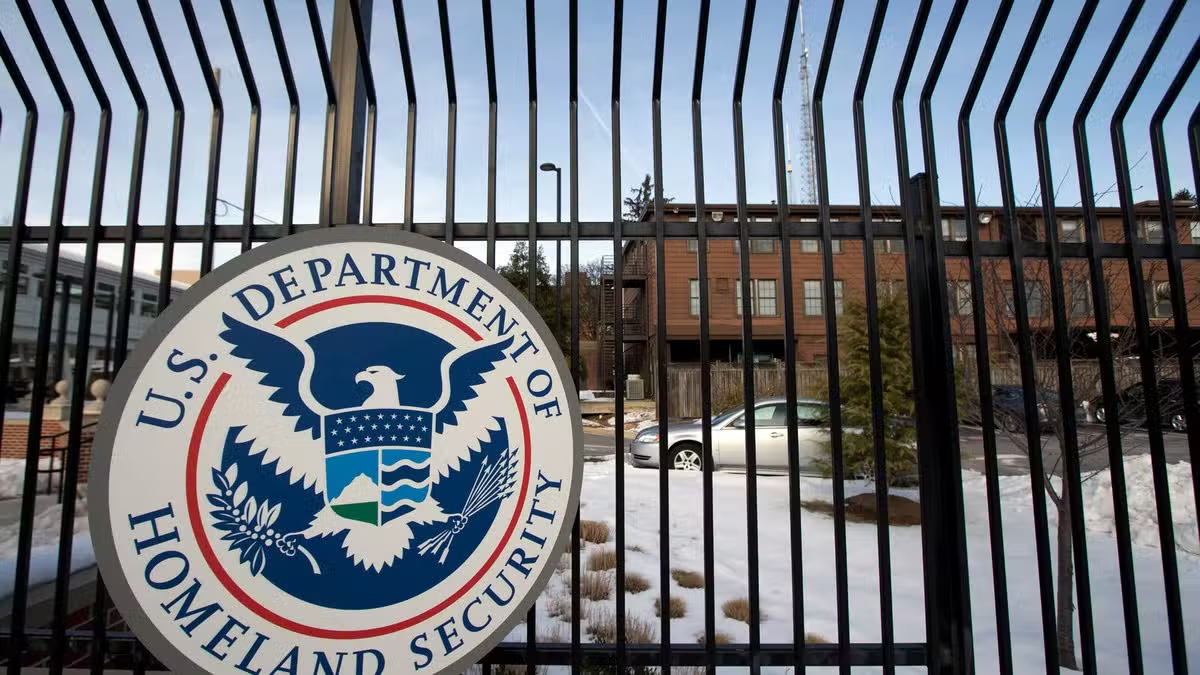
The DHS cyberattack investigation has become a major topic of discussion after the US Department of Homeland Security confirmed it is investigating a security breach involving the Homeland Security Information Network (HSIN). The incident has raised fresh concerns about the protection of government communication platforms and the growing sophistication of cyber threats targeting critical infrastructure. As digital attacks continue to evolve, government agencies face increasing pressure to strengthen cybersecurity and safeguard sensitive information.
What Happened During the DHS Cyberattack Investigation?
The Department of Homeland Security confirmed that attackers gained unauthorized access to a legacy information-sharing environment used by federal, state, and local agencies. The affected platform, known as the Homeland Security Information Network (HSIN), enables approved government organizations to exchange sensitive but unclassified information securely.
According to officials, suspicious activity occurred between late May and early June. Once the breach was discovered, DHS isolated the affected systems, addressed the identified vulnerability, and launched a full forensic investigation.
Although the DHS cyberattack investigation is ongoing, officials have not confirmed whether confidential files were downloaded or stolen by the attackers.
Why HSIN Is an Important Government Platform
HSIN plays a vital role in communication between government agencies across the United States. It allows law enforcement, emergency management teams, and federal departments to coordinate responses during emergencies and major public events.
The platform supports several important functions, including:
- Secure document sharing
- Real-time communication
- Incident management
- Threat intelligence exchange
- Emergency coordination
Because thousands of authorized users rely on HSIN daily, any security incident involving the system naturally attracts national attention.
What Information May Have Been Exposed?
One of the biggest concerns surrounding the DHS cyberattack investigation is the uncertainty over what information may have been accessed.
Officials have not released details regarding:
- The exact data affected
- Whether files were copied or stolen
- The identity of the attackers
- The motivation behind the intrusion
Reports suggest the attackers targeted both HSIN servers and a SharePoint collaboration environment. Investigators are currently assessing the full scope of the incident to determine potential damage.
National Security Concerns Continue to Grow
Although HSIN does not store classified information, experts argue that the data shared through the platform remains highly sensitive.
Government agencies use HSIN to exchange intelligence about:
- Security threats
- Law enforcement operations
- Emergency response plans
- Persons of interest
- Public safety coordination
Security experts warn that access to this type of operational information could provide valuable intelligence to hostile actors even if the information is technically unclassified.
Several lawmakers have also called for a thorough investigation to identify those responsible and determine whether additional government systems may have been affected.
Major Events Could Be Impacted
HSIN currently supports coordination for several high-profile national events.
Government agencies rely on the system during:
- International sporting events
- National celebrations
- Disaster response operations
- Public safety coordination
- Multi-agency investigations
Because these events involve cooperation between numerous organizations, any disruption to secure communication platforms could create operational challenges.
Fortunately, DHS stated that the affected systems were isolated quickly after the breach was detected.
This Is Not HSIN’s First Security Incident
The current DHS cyberattack investigation follows an earlier security issue involving HSIN.
In 2023, a configuration mistake reportedly exposed restricted intelligence to thousands of unauthorized users. That incident resulted from a coding error that accidentally expanded access permissions across the platform.
The earlier exposure highlighted weaknesses in system management and prompted calls for stronger cybersecurity controls.
The latest incident reinforces concerns that government information-sharing platforms require continuous monitoring and regular security improvements.
Growing Cybersecurity Challenges for Government Agencies
Cyber threats targeting public institutions have increased significantly over recent years.
Government organizations now face attacks ranging from phishing campaigns to ransomware and advanced network intrusions.
Several factors contribute to the growing challenge:
Increasing sophistication of cybercriminals
Attackers are using advanced techniques to bypass traditional security defenses and exploit overlooked vulnerabilities.
Expanding digital infrastructure
Government agencies now depend on cloud services, collaboration platforms, and interconnected systems more than ever before.
Human error
Misconfigurations, weak passwords, and phishing attacks remain among the leading causes of successful cyber incidents.
Resource limitations
Many agencies continue modernizing legacy systems while balancing cybersecurity investments with operational needs.
DHS Response and Ongoing Investigation
The Department of Homeland Security says it has already taken several important steps following the incident.
These actions include:
- Isolating affected systems
- Fixing identified vulnerabilities
- Launching forensic investigations
- Conducting damage assessments
- Monitoring for additional suspicious activity
Officials have also indicated that updates will be shared once investigators determine the full extent of the breach.
Until then, many questions remain unanswered regarding who carried out the attack and whether any sensitive information left government systems.
The Bigger Picture
The DHS cyberattack investigation serves as another reminder that cybersecurity remains one of the most critical challenges facing governments worldwide. Even systems designed for secure communication can become targets for sophisticated attackers seeking intelligence or operational advantages.
While there is currently no confirmation that highly sensitive information was stolen, the incident demonstrates why continuous monitoring, timely software updates, and strong security practices are essential for protecting government infrastructure.
As digital threats continue evolving, agencies must invest not only in advanced cybersecurity technologies but also in employee training, threat detection capabilities, and proactive risk management. The outcome of this investigation may lead to further security improvements that strengthen government communication systems and reduce the risk of similar incidents in the future.