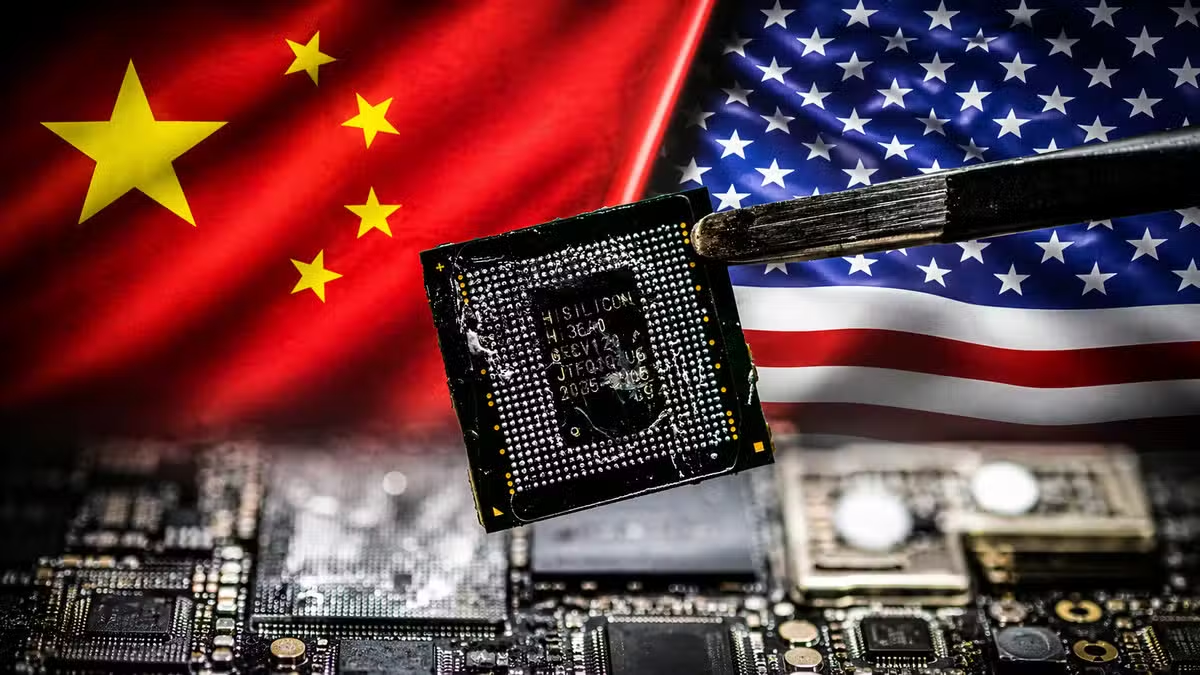
The Chip Security Act is gaining momentum as several technology-tracking and logistics companies publicly support proposed legislation designed to strengthen the security of advanced artificial intelligence chips exported from the United States. The bill aims to prevent sensitive semiconductor technology from reaching countries that are subject to export restrictions, particularly through indirect shipping routes and third-party intermediaries.
As artificial intelligence becomes increasingly important in global economic and military competition, policymakers are paying closer attention to how advanced chips are distributed around the world. Supporters of the legislation argue that stronger safeguards are necessary to protect national security while maintaining confidence in international technology trade.
What Is the Chip Security Act?
The Chip Security Act is a proposed piece of legislation intended to improve oversight of advanced semiconductor exports. The main goal is to ensure that powerful AI chips do not end up in restricted destinations through loopholes in the current export-control system.
Under existing regulations, certain countries face restrictions on purchasing advanced AI hardware directly from American manufacturers. However, concerns have emerged that some products may still reach restricted destinations after being purchased by companies in third countries.
The proposed law seeks to close these gaps by introducing stronger tracking and verification requirements for sensitive chip shipments.
Why Advanced AI Chips Matter
Modern artificial intelligence systems depend heavily on advanced semiconductor technology. These specialized chips provide the computational power required for training large language models, running AI applications, and processing massive amounts of data.
Because of their strategic importance, governments around the world closely monitor the movement of advanced AI hardware. The Chip Security Act reflects growing concerns that unrestricted access to such technology could influence global technological competition.
Experts argue that advanced chips are no longer just commercial products. They are increasingly viewed as critical assets with implications for national security, economic growth, and technological leadership.
Industry Support for Stronger Controls
Several companies involved in monitoring and tracking international shipments have expressed support for the Chip Security Act. These organizations believe enhanced verification measures could strengthen confidence in global supply chains.
Supporters argue that stronger oversight would benefit both manufacturers and customers by reducing uncertainty regarding compliance with export regulations.
According to advocates, businesses often face challenges when navigating complex export-control requirements. A more transparent verification system could make it easier for companies to demonstrate compliance and complete transactions with confidence.
This perspective contrasts with concerns raised by some semiconductor industry groups that worry additional regulations could slow growth and create administrative burdens.
Addressing Export-Control Loopholes
One of the primary motivations behind the Chip Security Act is the existence of potential export-control loopholes.
Although direct sales of advanced AI chips to restricted countries may be prohibited, companies in other regions can legally purchase these products and later redirect them elsewhere. This creates challenges for regulators seeking to enforce export restrictions effectively.
Recent legal cases involving alleged attempts to divert advanced technology have highlighted the complexity of monitoring international semiconductor trade.
Supporters of the legislation believe stronger verification mechanisms can help reduce these risks and ensure that advanced chips remain within approved supply chains.
How Location Verification Could Work
A key component of the Chip Security Act involves improved location verification for exported chips. Proposed measures could require exporters to use specialized tracking technologies that help confirm where products are ultimately deployed.
These solutions may include software-based monitoring tools or hardware systems capable of verifying a chip’s location after shipment.
The objective is not simply to track products during transportation but also to ensure they remain in approved markets after delivery.
Advocates argue that such measures could provide a practical balance between maintaining global trade opportunities and protecting sensitive technologies from misuse.
Benefits for Semiconductor Companies
Supporters believe the Chip Security Act could ultimately benefit American semiconductor manufacturers rather than restrict them.
Enhanced transparency and stronger compliance systems may allow exporters to access additional markets while reducing concerns about unauthorized technology transfers.
Companies that can demonstrate reliable tracking and verification may also experience faster approval processes for certain international transactions.
By increasing confidence among regulators, customers, and manufacturers, the proposed framework could create a more stable environment for advanced technology exports.
Some industry observers suggest that stronger safeguards could support long-term competitiveness by helping American firms maintain trust in global markets.
Balancing Security and Innovation
One of the central debates surrounding the Chip Security Act is how to balance security requirements with innovation and commercial growth.
The semiconductor industry has become one of the most important sectors in the global economy. Regulations that are too restrictive could potentially slow expansion or increase operational costs.
At the same time, policymakers argue that failing to protect advanced technologies could create significant risks in an increasingly competitive geopolitical environment.
Finding the right balance will likely remain a key challenge as governments continue to update technology policies in response to rapid advancements in artificial intelligence.
The future of the Chip Security Act will depend on legislative discussions and industry feedback. However, the growing support from companies involved in international technology tracking suggests that many stakeholders recognize the need for stronger safeguards.
As AI capabilities continue to evolve, advanced semiconductors will remain at the center of global technology competition. Policymakers, manufacturers, and regulators will need to work together to ensure that innovation can thrive while sensitive technologies remain protected.
The debate surrounding the Chip Security Act highlights a broader reality: in the age of artificial intelligence, controlling access to powerful computing hardware has become just as important as developing the technology itself.