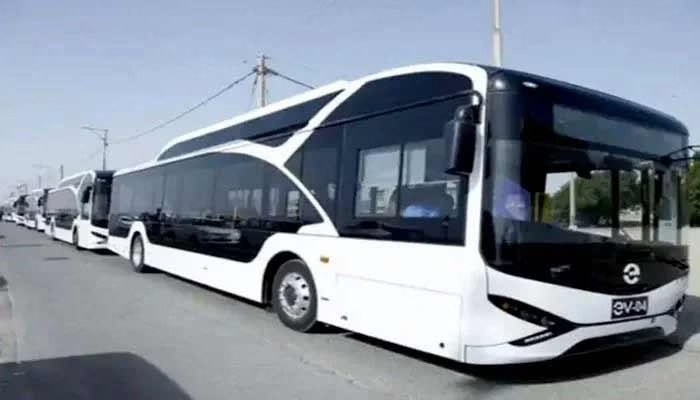
The launch of Sindh electric buses marks another major step toward improving public transportation and modernizing urban travel across the province. Senior Minister Sharjeel Inam Memon recently announced that the Sindh government has approved the procurement of 500 electric vehicle buses under a public-private partnership model. The initiative is expected to strengthen transport infrastructure, reduce pollution, and provide affordable commuting options for thousands of daily passengers.
The announcement came during a Sindh Assembly session where lawmakers discussed transportation challenges in Karachi and other cities. Residents of several areas, especially Manghopir, have long complained about the shortage of reliable public transport. In response, the government promised to expand routes and improve access for underserved communities.
The decision to introduce more Sindh electric buses reflects a growing focus on sustainable urban mobility and environmentally friendly transportation solutions.
Expansion of Karachi’s Bus Network
Karachi, Pakistan’s largest city, has struggled with transportation problems for years. Rapid population growth, traffic congestion, and limited public transit options have made daily commuting difficult for millions of residents.
During the assembly session, Sharjeel Memon said that new bus services would soon begin operating in areas such as Orangi, Banaras, and other densely populated neighborhoods. These routes are expected to improve connectivity and provide relief to people who rely heavily on public transport for work, education, and daily activities.
The expansion of Sindh electric buses is also being viewed as an important effort to reduce the pressure on Karachi’s overcrowded roads. Electric buses can transport large numbers of passengers efficiently while lowering fuel consumption and carbon emissions.
The government believes that modern public transportation can improve the overall quality of life in urban areas by making travel safer, faster, and more affordable.
A Shift Toward Eco-Friendly Transport
One of the biggest advantages of introducing Sindh electric buses is their environmental impact. Traditional diesel-powered buses contribute significantly to air pollution in major cities. Karachi already faces serious environmental challenges due to traffic emissions, industrial pollution, and poor air quality.
Electric buses offer a cleaner alternative because they produce fewer harmful emissions compared to conventional vehicles. This shift toward green transportation aligns with global trends where cities are increasingly adopting electric mobility solutions to combat climate change and improve urban air quality.
Experts say electric public transport systems can also reduce long-term operating costs because electric vehicles generally require less maintenance and consume less energy than fuel-powered buses.
For a city like Karachi, where fuel costs and pollution remain major concerns, the move toward electric transportation could have long-term economic and environmental benefits.
Public-Private Partnership Model
The Sindh government plans to acquire the buses through a public-private partnership arrangement. This model allows private companies to participate in financing, operations, and maintenance while the government provides policy support and oversight.
Officials believe this partnership approach can help speed up the implementation process and ensure better service quality. Many countries have successfully used similar transport models to improve public transit systems without placing the full financial burden on the government alone.
The expansion of Sindh electric buses under this framework could also encourage more private investment in Pakistan’s growing transport and infrastructure sector.
If the project succeeds, it may serve as a model for other provinces looking to modernize their public transportation systems.
Transport Services Beyond Karachi
While Karachi remains the primary focus, the Sindh government is also extending transportation services to smaller cities and towns. During the assembly session, Sharjeel Memon confirmed that new transport routes had already been launched in Tando Allah Yar, Khairpur, and Rohri.
Additionally, a new route in Karachi’s Gulshan-e-Maymar area has become operational, helping residents access better transportation services.
The broader expansion of Sindh electric buses shows that the government is trying to address transportation needs across the province rather than concentrating only on major urban centers.
Improved public transport in smaller cities can support economic activity, reduce travel difficulties, and improve access to education and healthcare facilities.
Concerns Over Law and Order
The assembly session also highlighted concerns unrelated to transport but equally important for residents of Karachi. MQM-P lawmaker Maaz Mehboob raised concerns about the widespread sale of gutka and drugs in several neighborhoods.
He alleged that illegal narcotics were being sold openly in some areas and called for stronger action from law enforcement agencies. According to the lawmaker, these activities were affecting local communities and needed urgent government attention.
Although the discussion shifted briefly toward public safety issues, the primary focus remained on expanding transportation infrastructure and improving public services.
Challenges Ahead
Despite the positive announcement, the success of the Sindh electric buses project will depend on effective implementation. Karachi’s transport system has faced operational challenges in the past, including route management issues, maintenance problems, and delays in project execution.
Experts say the government must ensure proper charging infrastructure, trained staff, and reliable maintenance systems for the electric bus fleet. Without proper planning, even modern transport projects can struggle to meet public expectations.
Another important factor will be affordability. Public transport must remain accessible for low- and middle-income commuters who depend on buses as their primary mode of travel.
A Step Toward Modern Urban Mobility
The approval of 500 electric buses signals a significant shift in Sindh’s transportation strategy. As cities grow and environmental concerns increase, modern public transport systems are becoming more important than ever.
The expansion of Sindh electric buses could improve daily commuting, reduce pollution, and create a more organized urban transport network across the province.
For Karachi residents who spend hours dealing with traffic and transport shortages every day, the project offers hope for a more efficient and sustainable future.