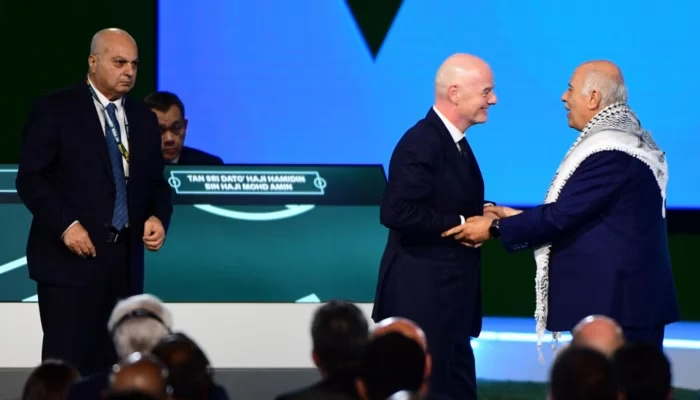
A tense moment unfolded at the FIFA Congress on Thursday in Vancouver when Palestinian Football Association President Jibril Rajoub declined to take part in a joint photo opportunity with Israeli football official Basim Sheikh Suliman, highlighting ongoing political and sporting tensions linked to the Israel-Palestine conflict.
The incident occurred after both officials had addressed delegates at the global football governing body’s annual gathering. FIFA President Gianni Infantino attempted to bring the two representatives together on stage for a symbolic gesture of unity, inviting them to stand alongside him for a photograph. However, Rajoub firmly refused, despite repeated encouragement from Infantino to participate.
At one point during the exchange, Rajoub was heard saying, “We are suffering,” underscoring the emotional and political weight behind his decision. His refusal reflected deep grievances held by Palestinian sporting authorities regarding FIFA’s handling of issues related to Israeli football activities in contested territories.
The Palestinian Football Association (PFA) has recently escalated its dispute with FIFA by appealing to the Court of Arbitration for Sport (CAS). The appeal challenges FIFA’s refusal to impose sanctions on Israel over football clubs operating in West Bank settlements. According to the PFA, clubs based in these settlements should not be permitted to compete in leagues governed by Israeli football authorities, as their presence violates international sporting regulations and broader legal principles regarding occupied territories.
The issue has gained further international attention following comments from United Nations experts in 2024. A group of UN-appointed specialists reported that at least eight football clubs were identified as operating in Israeli settlements in the West Bank. They called on FIFA to uphold its responsibility to respect human rights and take appropriate action in line with its statutes.
Speaking to reporters during the congress, Rajoub reiterated his position, urging FIFA to apply its rules “with fairness and logic.” He strongly criticized the situation facing Palestinian sports, describing widespread destruction of sporting infrastructure and the loss of athletes and sports personnel in Gaza. According to Rajoub, these developments reflect a broader humanitarian crisis that has severely impacted Palestinian sports communities.
“What’s going on in Palestine is terrible,” he said, referring to the destruction of sports facilities and the killing of hundreds of athletes and workers connected to sport. He emphasized that, in his view, the current circumstances require urgent international attention and corrective action from governing bodies like FIFA.
Rajoub also expressed disappointment with the Israeli representative’s remarks during the session, claiming that the concerns and suffering of Palestinians were not adequately acknowledged. He argued that there was a lack of empathy toward the situation faced by Palestinian athletes and sporting institutions.
In explaining his refusal to participate in the symbolic handshake and photo opportunity, Rajoub stated that it would not be appropriate under the current conditions. “I refused to shake hands,” he said. “How can I shake hands or have a photo with such a man?” His remarks highlighted the deep political divide that continues to influence interactions even within international sporting forums.
The incident reflects the broader challenges FIFA faces in maintaining neutrality while addressing politically sensitive issues involving member associations from conflict regions. While the organization often promotes sport as a unifying force, disputes such as this demonstrate how global politics frequently intersect with international football governance.
As legal proceedings continue at the Court of Arbitration for Sport and diplomatic tensions remain high, the situation underscores the complexity of balancing sporting regulations, political realities, and humanitarian concerns within global football institutions.