The Middle East conflict impact on Pakistan economy has become a growing concern as rising global oil prices continue to put pressure on the country’s financial stability. Prime Minister Shehbaz Sharif recently highlighted how the ongoing crisis has disrupted economic progress achieved over the past two years.
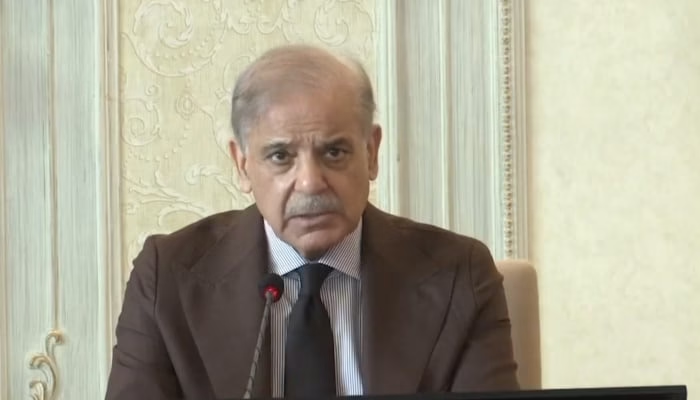
Speaking at a federal cabinet meeting, the prime minister explained that the Middle East conflict impact on Pakistan economy is primarily linked to a sharp increase in global energy prices. With Brent crude reaching as high as $114.64 per barrel, the cost of fuel imports has surged significantly, affecting both the government and consumers.
One of the most immediate effects of the Middle East conflict impact on Pakistan economy is the dramatic rise in the country’s oil import bill. According to official figures, Pakistan’s weekly oil import expenses have jumped from $300 million to nearly $800 million. This sudden increase is putting immense pressure on foreign exchange reserves and fiscal planning.
The root of the crisis lies in the escalation of tensions following attacks involving the United States, Israel, and Iran. These developments have destabilized the region and disrupted global energy markets. As a result, the Middle East conflict impact on Pakistan economy is being felt not only in fuel prices but across multiple sectors.
The government has responded by forming a task force to monitor the situation daily. This step reflects the seriousness of the Middle East conflict impact on Pakistan economy, as policymakers attempt to manage risks and plan timely interventions. Coordination with provincial governments is also underway to ensure that subsidies in public transport and other essential sectors can continue.
Another critical dimension of the Middle East conflict impact on Pakistan economy is inflation. Rising fuel prices often lead to higher transportation and production costs, which in turn increase the prices of goods and services. This chain reaction can directly affect the cost of living for ordinary citizens.
Despite these challenges, the prime minister noted that Pakistan has made some progress in stabilizing its economy. He shared that the country has repaid $3.5 billion in external debt, which is a positive sign amid difficult circumstances. However, the Middle East conflict impact on Pakistan economy threatens to slow down this progress if global conditions remain unstable.
Diplomatic efforts are also playing a role in addressing the situation. Pakistan has actively engaged in promoting peace in the region, hosting talks between Iran and the United States. These discussions, which reportedly lasted over 21 hours, are seen as an important step toward reducing tensions. A stable region could help ease the Middle East conflict impact on Pakistan economy by stabilizing energy markets.
The involvement of key figures like Abbas Araghchi in negotiations highlights the importance of dialogue in resolving conflicts. The prime minister expressed hope that these efforts would lead to a lasting ceasefire and ultimately reduce economic pressure on countries like Pakistan.
At the same time, internal measures are equally important. The government is encouraging collective efforts to deal with the crisis, emphasizing the need for efficient energy use and economic discipline. Addressing the Middle East conflict impact on Pakistan economy requires both external diplomacy and internal policy adjustments.
Support from international partners has also been acknowledged. The prime minister expressed gratitude to Saudi leadership for assisting Pakistan during challenging times. Such cooperation can help mitigate some aspects of the Middle East conflict impact on Pakistan economy, especially in managing energy supplies and financial stability.
The situation remains uncertain. Global oil prices are influenced by multiple factors, including geopolitical tensions, supply disruptions, and market speculation. As long as instability persists in the Middle East, the Middle East conflict impact on Pakistan economy is likely to continue affecting economic planning and growth.
The ongoing crisis has created a complex economic environment for Pakistan. From rising import bills to inflationary pressures, the Middle East conflict impact on Pakistan economy is being felt across various sectors. While the government is taking steps to manage the situation, long-term stability will depend on both regional peace and effective domestic policies.