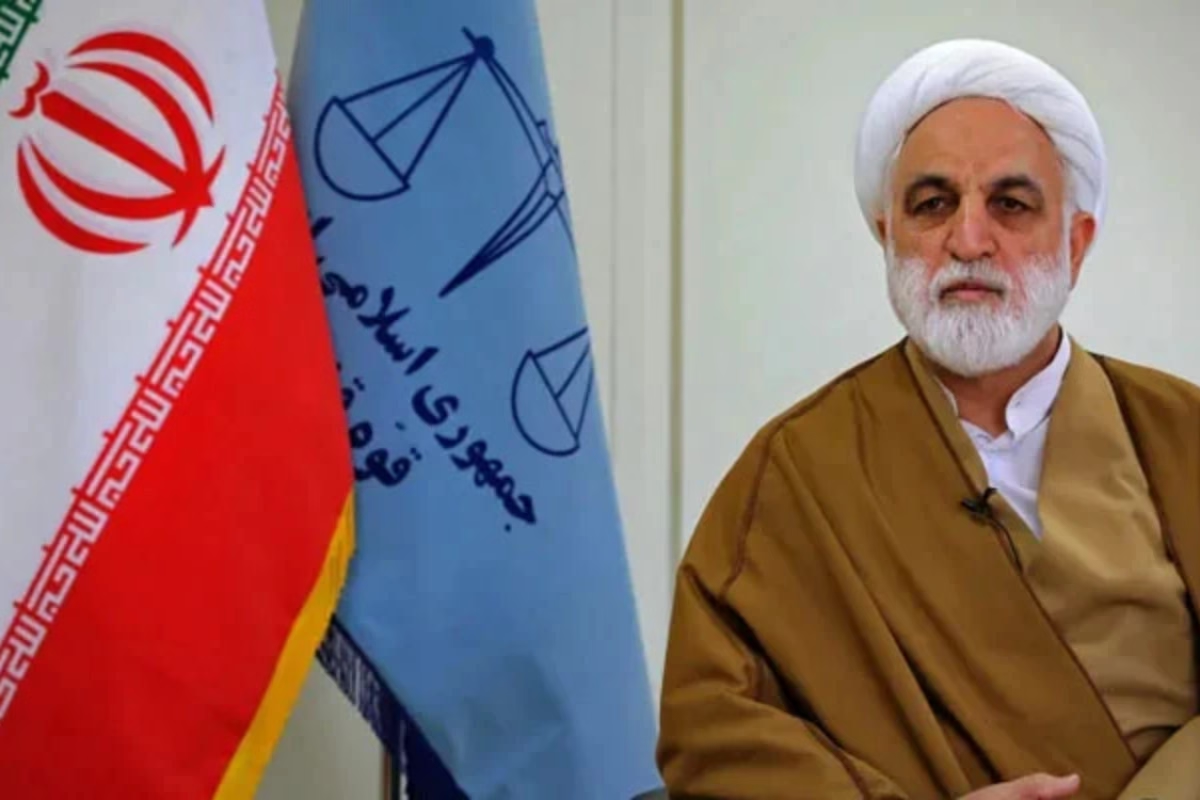
The ongoing Iran US naval blockade dispute has intensified as Iranian officials strongly rejected claims that the United States can effectively impose maritime restrictions on the country. The latest statement came from Gholam-Hossein Mohseni-Eje’i, who dismissed the idea that Washington has the power to enforce a naval blockade on Iran.
Speaking to local media, Mohseni-Eje’i emphasized that the Iran US naval blockade narrative does not reflect reality. According to him, the United States lacks the capability to control Iranian maritime activity in the region. He also warned that past failed operations could be repeated if tensions continue to rise in the Persian Gulf.
This statement comes at a time when geopolitical tensions between United States and Iran remain high. Reports suggest that the U.S. has maintained a naval presence near Iranian waters, with officials claiming that a blockade of southern ports is still in effect. These developments have further fueled the Iran US naval blockade debate, drawing global attention to the region.
The concept of a naval blockade is significant in international relations. It involves restricting access to ports and shipping routes, which can have serious economic and strategic consequences. In the case of the Iran US naval blockade, such measures could disrupt trade, limit oil exports, and increase tensions across the Middle East.
Iran, however, has consistently rejected the legitimacy of any blockade imposed by external powers. Officials argue that such actions would violate international law and provoke strong responses. The recent remarks by Mohseni-Eje’i reflect this stance, reinforcing Iran’s position that it will not accept restrictions on its maritime activities. This firm response has added another layer to the Iran US naval blockade situation.
One of the key concerns surrounding this issue is its potential impact on global energy markets. The Persian Gulf is a critical hub for oil transportation, and any disruption in the region could affect supply chains worldwide. The Iran US naval blockade tensions therefore extend beyond regional politics, influencing global economic stability.
In addition to economic concerns, the situation also raises security risks. Increased naval presence and strong rhetoric from both sides create an environment where misunderstandings could escalate quickly. The Iran US naval blockade dispute highlights how fragile the balance of power can be in strategically important regions.
Iranian officials have pointed to historical examples to support their argument. They claim that previous attempts to exert control in the Persian Gulf have not succeeded and warn that similar efforts today could lead to the same outcome. This perspective underscores Iran’s confidence in its ability to resist external pressure, further intensifying the Iran US naval blockade narrative.
From the U.S. perspective, maintaining a strong naval presence is often framed as a way to ensure regional security and protect international shipping routes. However, Iran views these actions differently, interpreting them as attempts to exert dominance and limit its sovereignty. This difference in perspective continues to drive the Iran US naval blockade conflict.
Diplomatic solutions remain uncertain. While both countries have engaged in indirect talks in the past, trust remains low. The ongoing tension suggests that resolving the Iran US naval blockade issue will require careful negotiation and mutual understanding, which has proven difficult to achieve so far.
The international community is closely monitoring the situation, as any escalation could have far-reaching consequences. Countries that rely on stable oil supplies are particularly concerned, as disruptions in the Persian Gulf could lead to higher energy prices and economic challenges. The Iran US naval blockade dispute is therefore not just a bilateral issue but a global one.
The Iran US naval blockade tension reflects deeper geopolitical divisions between Iran and the United States. With strong statements from Iranian leadership and continued U.S. naval activity in the region, the situation remains uncertain. As both sides hold firm to their positions, the risk of further escalation cannot be ignored. Finding a peaceful resolution will be essential to maintaining stability in one of the world’s most maritime regions.