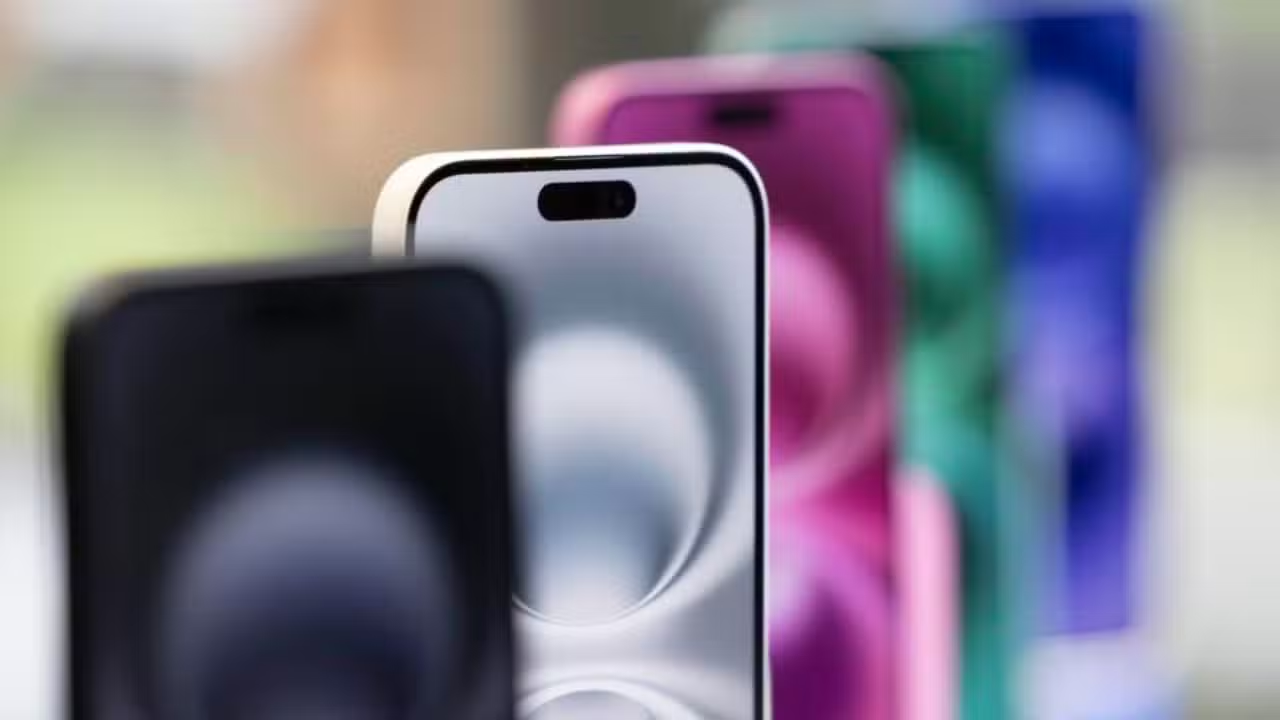
The latest leak surrounding Apple’s upcoming lineup suggests that the iPhone 18 launch delay may become a reality, shifting the company’s traditional September release cycle. Instead of arriving in the usual fall window, the standard model could reportedly be pushed to next spring, marking a significant change in Apple’s long-standing launch strategy.
According to the rumor, the iPhone 18 launch delay would mean that Apple’s September event will instead focus on higher-end models such as the iPhone 18 Pro, iPhone 18 Pro Max, and a rumored foldable device that some sources refer to as the iPhone Fold or iPhone Ultra. This potential restructuring signals a new product segmentation approach, where premium devices take priority in Apple’s annual showcase.
The leak also suggests that Apple is considering cost adjustments for the standard iPhone 18. Rising component prices, particularly for chips, are believed to be influencing these decisions. As a result, the iPhone 18 launch delay may come alongside internal hardware changes aimed at maintaining profitability while keeping the device competitively priced.
One of the most discussed points in the report is the possibility of downgraded specifications. The standard model could reportedly use a less advanced chip manufacturing process compared to its Pro counterparts. In addition, there are claims of weaker chip performance and potential changes in memory configuration. However, it remains unclear whether these changes refer to reduced storage capacity or slower memory speeds.
If these rumors prove accurate, the iPhone 18 launch delay may also indicate a shift in how Apple positions its entry-level flagship. Traditionally, the standard iPhone has served as a balanced option between affordability and performance. But this time, the device could be closer in specification to the more budget-friendly iPhone 18e, blurring the line between the two models.
This potential shift raises questions about Apple’s long-term product strategy. By separating launch timelines, the company may be aiming to increase attention on its premium devices first, while positioning the standard model as a secondary release. The iPhone 18 launch delay could therefore be part of a broader effort to maximize revenue from high-end sales before introducing more affordable options.
The report does not clearly specify whether these changes are being compared to the current iPhone 17 or the upcoming Pro models. This uncertainty makes it difficult to determine how significant the performance gap will be. However, if the comparison is indeed against the iPhone 17, some analysts suggest that older models might remain strong competitors in terms of value.
Apple’s strategy has often evolved with market conditions, and this rumored shift may reflect increasing pressure from rising production costs and global supply chain challenges. The iPhone 18 launch delay could be a response to these factors, allowing Apple more flexibility in managing its product lineup and pricing structure.
Another interesting aspect of the leak is the growing importance of foldable technology. With the rumored introduction of a foldable iPhone variant, Apple may be preparing to enter a segment already explored by competitors. If this happens alongside the Pro models in the September event, it could significantly reshape consumer expectations.
At the same time, the standard iPhone 18 appearing later in the year—or even next spring—might change purchasing behavior. Consumers who traditionally wait for Apple’s full lineup before upgrading may now face staggered release schedules. This could influence buying decisions, especially for those considering whether to wait for the iPhone 18 launch delay model or choose an earlier release.
It is also worth noting that none of these claims have been officially confirmed by Apple. Like many pre-launch leaks, details surrounding the iPhone 18 launch delay remain speculative. Apple is known for keeping its product plans highly confidential, and final decisions often differ from early reports.
Still, the possibility of a delayed standard model highlights how competitive and complex the smartphone market has become. Companies are constantly balancing innovation, cost efficiency, and consumer expectations. Any adjustment in release timing or specifications reflects deeper strategic decisions within the industry.
The rumored iPhone 18 launch delay points toward a potentially significant shift in Apple’s release strategy. Whether driven by cost pressures, product segmentation, or new technological ambitions, the changes suggest that the next iPhone cycle may look very different from previous years. As always, the final picture will only become clear once Apple officially announces its plans.