The recent ghee and oil price increase in Pakistan has added new financial pressure on households already struggling with rising inflation. Despite changes in petroleum prices, the ghee and oil price increase in Pakistan continues to impact daily essentials, making it harder for average consumers to manage their monthly budgets.
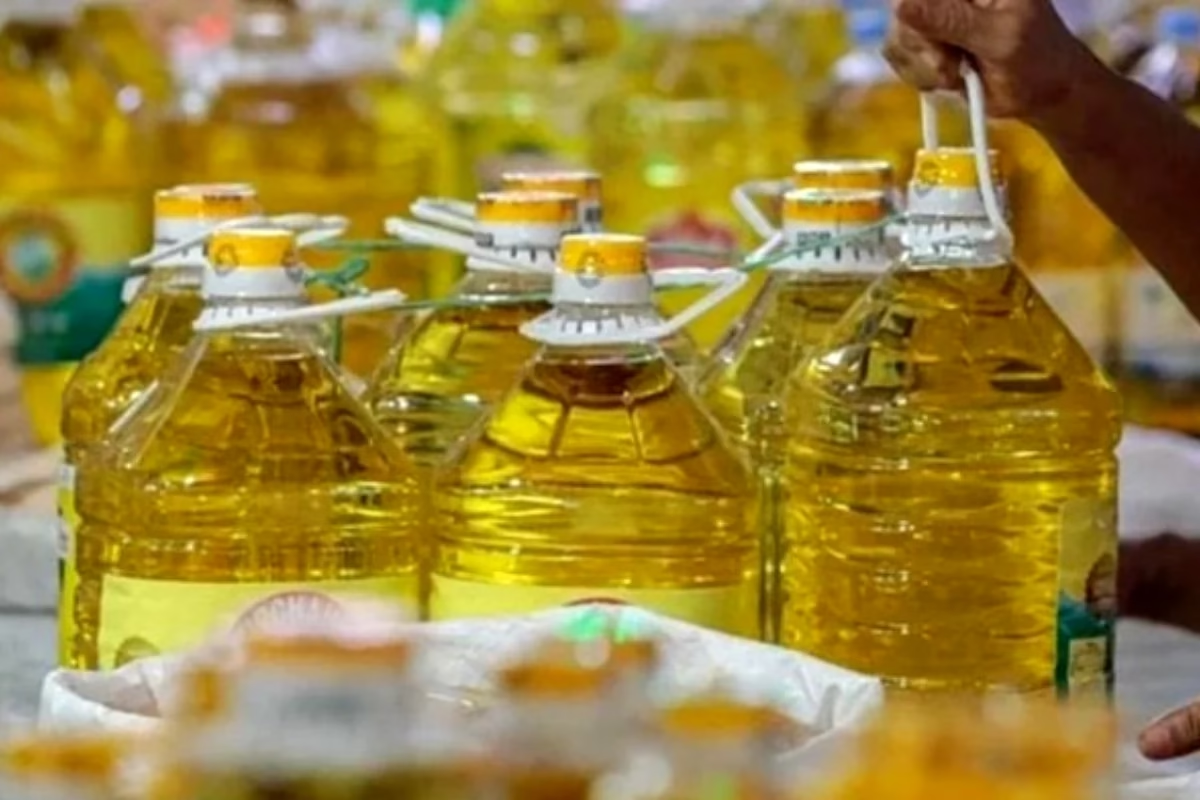
In wholesale markets, prices of cooking oil and ghee have seen a noticeable surge. Grocery traders report that Grade I ghee and oil have increased by Rs 30 per kilogram, rising from Rs 560 to Rs 590. This sharp jump highlights how the ghee and oil price increase in Pakistan is affecting even the most basic kitchen items.
Rising costs in essential commodities
The ghee and oil price increase in Pakistan is not limited to premium products. Grade II oil has also become significantly more expensive, with prices climbing by Rs 35 per litre—from Rs 510 to Rs 545. Similarly, second-quality ghee has increased by Rs 25 per kilogram, now being sold at Rs 535 compared to its previous price of Rs 510.
These increases may seem small individually, but for households that rely heavily on these items for daily cooking, the cumulative effect is substantial. The ghee and oil price increase in Pakistan is particularly concerning because these products are used in almost every meal.
Impact on household budgets
For middle- and lower-income families, the ghee and oil price increase in Pakistan has become a serious challenge. With food prices already high, any additional increase in staple items directly affects purchasing power.
Families are now forced to either cut down on consumption or compromise on quality by shifting to cheaper alternatives. In many cases, this also affects nutritional intake, as cooking oil and ghee are essential ingredients in traditional Pakistani cuisine.
The continuous ghee and oil price increase in Pakistan is pushing many households to rethink their spending priorities, often at the cost of other essential needs such as education, healthcare, and utilities.
Traders’ perspective on price hikes
Grocery traders have pointed out that the ghee and oil price increase in Pakistan is driven by multiple factors, including rising production costs, supply chain disruptions, and fluctuations in global edible oil prices.
They argue that despite petroleum price adjustments, the cost of importing raw materials and processing remains high. As a result, these expenses are passed on to consumers.
Traders also warn that if the current trend continues, the ghee and oil price increase in Pakistan may not stabilize anytime soon, leading to further financial strain on the public.
Inflation and market instability
The ongoing ghee and oil price increase in Pakistan is part of a broader inflationary trend affecting the country. Essential commodities such as flour, sugar, and vegetables have already seen price hikes, and now cooking oil and ghee are adding to the burden.
Market instability and unpredictable price movements make it difficult for consumers to plan their expenses. The ghee and oil price increase in Pakistan is particularly impactful because it directly affects daily consumption rather than occasional purchases.
Possible solutions and government role
Experts believe that addressing the ghee and oil price increase in Pakistan requires a combination of short-term relief measures and long-term policy reforms. The government may need to consider subsidies, better regulation of wholesale markets, and improved monitoring of supply chains.
Additionally, encouraging local production of edible oil could help reduce reliance on imports and stabilize prices over time. Without such measures, the ghee and oil price increase in Pakistan is likely to continue affecting consumers.
Consumer response and coping strategies
In response to the ghee and oil price increase in Pakistan, many consumers are adopting coping strategies such as buying in smaller quantities, switching brands, or reducing overall consumption.
Some households are also exploring healthier cooking methods that require less oil, which not only helps manage costs but also promotes better health. However, these adjustments are not always easy, especially for larger families.
The ghee and oil price increase in Pakistan is a growing concern that reflects the broader economic challenges facing the country. With prices of essential commodities rising steadily, consumers are finding it increasingly difficult to keep up with daily expenses.
Unless effective measures are taken to control inflation and stabilize markets, the ghee and oil price increase in Pakistan will continue to put pressure on households, making affordability a major issue for millions across the country.