
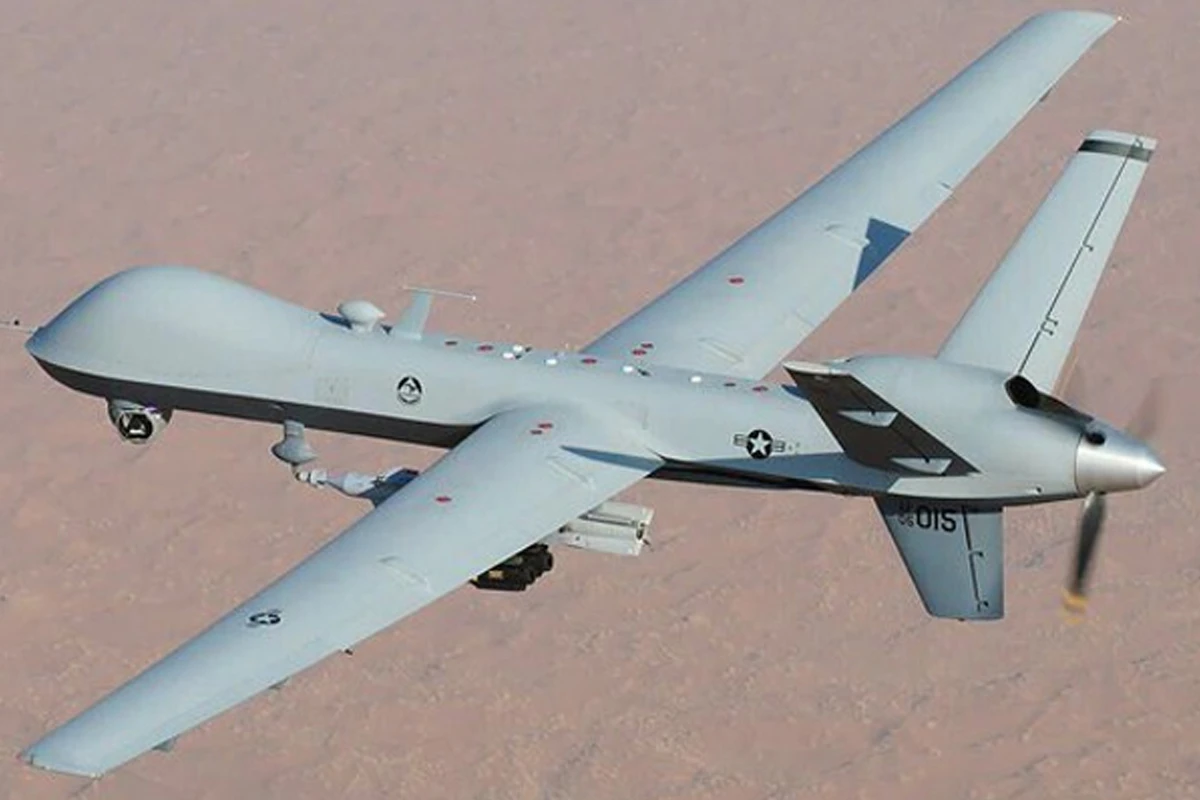
Iran has claimed that its naval forces shot down a US MQ-1 drone near the coastal area of Kuhestak in southern Hormozgan Province, using an advanced air defence system. The announcement comes amid continued tensions between Tehran and Washington following the US-Israeli conflict and growing security concerns around the Strait of Hormuz. The claim that Iran shoots down US MQ-1 drone highlights the continuing military confrontation and the importance of aerial surveillance in the strategically sensitive region.
In a statement issued on Friday, Iran’s Army Navy said its air defence system detected and tracked the unmanned aircraft before destroying it near the coast of Sirik, east of the Strait of Hormuz. According to the statement, the drone was intercepted in the Kuhestak area after being identified by Iranian defence systems.
Iranian officials described the operation as part of their responsibility to protect the country’s territory, maritime borders and national interests.
Iran Navy Says US Drone Was Destroyed Near Hormozgan
Iran’s Army Navy said its air defence capabilities successfully identified the US aircraft along the southern coastline before launching an interception.
The Navy also issued a strong warning about its commitment to defending the country’s territorial integrity and maritime boundaries.
“We will not hesitate for a moment in safeguarding and defending the territorial integrity, maritime borders, and interests of the Islamic Republic of Iran,” the statement emphasized.
The reported interception took place near Sirik, an area located along Iran’s southern coastline and close to one of the world’s most important maritime routes.
The Iran Shoots Down US MQ-1 Drone announcement has drawn attention because of the aircraft’s association with American military surveillance operations. However, the claim was made by Iranian authorities, and the supplied report does not include independent confirmation from the United States.
What Is the US MQ-1 Predator Drone?
The MQ-1 Predator is an unmanned aircraft developed by General Atomics and designed for remotely controlled military operations. It was primarily used by the US Air Force for intelligence gathering, surveillance and reconnaissance, as well as certain military missions.
The aircraft became an important part of American military operations because it could remain airborne for extended periods while monitoring activities across large areas.
The US Air Force retired its MQ-1 Predator fleet in 2018, replacing it with the more advanced MQ-9 Reaper. The newer aircraft offers improved capabilities and became a central platform for American unmanned military operations.
Despite its retirement from the US Air Force fleet, the MQ-1 has remained relevant in discussions about military surveillance and drone technology.
Why the US Is Reportedly Using MQ-1 Drones Again
According to the report, Iran’s Armed Forces have inflicted significant losses on the US MQ-9 Reaper fleet during the ongoing conflict. These reported losses have allegedly forced Washington to bring MQ-1 drones back into use for surveillance and reconnaissance activities.
The Iran Shoots Down US MQ-1 Drone claim comes against this background of reported drone losses and changing military operations.
The report also states that Iran’s Islamic Revolution Guards Corps (IRGC) announced last Friday that it had shot down its 16th MQ-1 drone since the beginning of what it described as US-Israeli aggression.
If confirmed, repeated drone interceptions could create additional challenges for American surveillance operations in the region. Unmanned aircraft are important for monitoring military movements, gathering intelligence and observing activity around strategic waterways.
However, the claims about the number of drones destroyed and the extent of losses to the MQ-9 fleet have not been independently verified in the supplied report.
Strait of Hormuz Remains a Major Point of Tension
The reported drone incident is particularly significant because of its location near the Strait of Hormuz.
The waterway connects the Persian Gulf with the Gulf of Oman and is one of the most important routes for international energy transportation. A substantial volume of global oil shipments passes through this narrow maritime corridor, making security in the area a major concern for international markets.
According to the report, Iran has restricted movement through the Strait of Hormuz since the beginning of the US-Israeli war on February 28.
The fighting was temporarily halted through a ceasefire in early April, following Iran’s retaliatory operations. However, the latest drone claim indicates that military tensions and security concerns remain significant.
Any escalation around the strait could affect commercial shipping, energy transportation and regional stability. This is why developments involving military aircraft and naval forces near the waterway attract international attention.
Regional Security Concerns Continue
The reported destruction of the MQ-1 drone adds another development to the continuing confrontation between Iran and the United States.
For Tehran, the incident represents its claimed ability to detect and intercept foreign military aircraft near its coastline. For Washington, reported drone losses and restrictions around the Strait of Hormuz raise concerns about surveillance capabilities and maritime security.
The Iran Shoots Down US MQ-1 Drone claim also highlights how unmanned aircraft have become increasingly important in modern military operations, particularly in regions where intelligence gathering and air defence systems operate in close proximity.
As tensions continue, further developments around Hormozgan and the Strait of Hormuz could have wider implications for regional security and international shipping. The situation will depend on how both sides respond to the latest claims and whether diplomatic efforts can prevent another escalation.