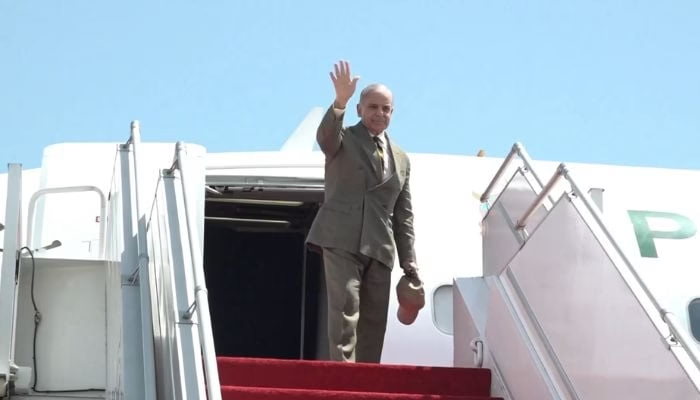
The Shehbaz Sharif Middle East visit marks a significant step in Pakistan’s ongoing efforts to promote peace and strengthen diplomatic ties in a rapidly evolving regional landscape. As Prime Minister Shehbaz Sharif embarks on a three-nation tour from April 15 to 18, his engagements in Saudi Arabia, Qatar, and Turkiye are being closely watched for their potential impact on regional stability and international cooperation.
The Shehbaz Sharif Middle East visit begins with Saudi Arabia, where the prime minister is expected to hold high-level meetings with the Kingdom’s leadership. These discussions are likely to focus on bilateral cooperation, economic partnerships, and shared concerns regarding peace and security in the Middle East. Saudi Arabia has long been a key ally of Pakistan, and this visit aims to further deepen strategic ties between the two nations.
Following Saudi Arabia, the prime minister will travel to Qatar, another important partner in the region. The Shehbaz Sharif Middle East visit in Qatar is expected to emphasize economic collaboration, energy cooperation, and diplomatic alignment on regional issues. Both countries share mutual interests in maintaining stability and fostering economic growth, making this leg of the visit particularly important.
The final stop of the Shehbaz Sharif Middle East visit will be Turkiye, where the prime minister is scheduled to participate in the Antalya Diplomacy Forum. This global platform brings together world leaders, policymakers, and experts to discuss pressing international challenges. During the forum, Prime Minister Shehbaz Sharif will join a Leaders’ Panel to present Pakistan’s perspective on global and regional issues, including ongoing tensions in the Middle East.
On the sidelines of the forum, the prime minister is expected to hold bilateral meetings with key leaders, including Recep Tayyip Erdogan. These interactions are likely to further strengthen Pakistan-Turkiye relations, which have historically been rooted in mutual respect and shared strategic interests. The Shehbaz Sharif Middle East visit thus serves as an opportunity to reinforce these ties while also engaging with other global stakeholders.
This diplomatic tour comes at a time when Pakistan has gained international attention for hosting high-level talks between the United States and Iran in Islamabad. These discussions, which marked the first direct engagement between the two countries in over a decade, have placed Pakistan at the center of global diplomatic efforts. The Shehbaz Sharif Middle East visit builds on this momentum, showcasing Pakistan’s commitment to facilitating dialogue and reducing tensions in the region.
Despite extensive negotiations lasting more than 20 hours, the recent US-Iran talks did not result in a formal agreement. However, they were seen as a positive step toward de-escalation, especially following a ceasefire aimed at ending weeks of conflict that disrupted energy supplies and heightened fears of a broader war. The Shehbaz Sharif Middle East visit is expected to further support such peace initiatives by engaging regional leaders and encouraging continued dialogue.
One of the key challenges facing the region is the fragile nature of the ceasefire between the United States and Iran. Reports of potential military actions, including plans for maritime restrictions, have raised concerns about the sustainability of the truce. In this context, the Shehbaz Sharif Middle East visit carries added importance, as Pakistan seeks to play a constructive role in maintaining peace and preventing further escalation.
The prime minister is accompanied by a high-level delegation, including Ishaq Dar, Attaullah Tarar, and Syed Tariq Fatemi. Their presence underscores the seriousness of the visit and the government’s commitment to advancing Pakistan’s diplomatic agenda on multiple fronts.
Pakistan’s participation in international forums and its active engagement with regional partners reflect a broader strategy of promoting multilateral cooperation. The Shehbaz Sharif Middle East visit is not just about bilateral relations but also about positioning Pakistan as a responsible global actor that contributes to peace, stability, and economic development.
The Shehbaz Sharif Middle East visit represents a crucial moment in Pakistan’s diplomatic efforts. By engaging with key regional players and participating in global discussions, Pakistan aims to strengthen its role as a mediator and advocate for peace. As tensions continue to shape the Middle East, such initiatives highlight the importance of dialogue, cooperation, and sustained diplomatic engagement.