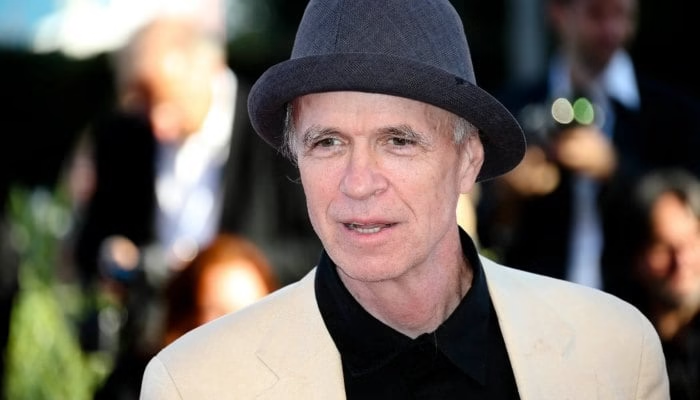
The Tom Noonan legacy is one defined by haunting performances, quiet intensity, and an unmatched ability to humanize some of cinema’s most unsettling characters. The acclaimed actor and filmmaker passed away on February 14 at the age of 74, leaving behind a body of work that continues to captivate audiences. News of his death was confirmed by longtime collaborator Karen Sillas and director Fred Dekker. No cause of death has been publicly announced.
Born in Brooklyn, New York, Tom Noonan carved out a distinctive career in film, television, and theatre. Tall, soft-spoken, and thoughtful, he often portrayed characters who were anything but. The Tom Noonan legacy is rooted in his rare ability to bring emotional complexity to villains and outsiders, making them both frightening and deeply human.
Breakthrough on the Big Screen
After early success in off-Broadway theatre, including the original production of Sam Shepard’s Buried Child, Noonan transitioned to film in the late 1970s. One of his earliest appearances was in Heaven’s Gate, but it was his chilling performance in Manhunter that cemented his place in cinematic history.
Directed by Michael Mann, Manhunter was the first screen adaptation of Thomas Harris’ Red Dragon. Noonan portrayed serial killer Francis Dollarhyde with eerie restraint, avoiding caricature and instead presenting a deeply disturbed yet vulnerable character. The performance became a defining moment in the Tom Noonan legacy, earning him lasting recognition as a master of psychological intensity.
He later reunited with Mann in Heat, further demonstrating his versatility and dedication to character-driven storytelling.
Cult Favorites and Memorable Roles
While Noonan excelled in dramatic roles, he also gained cult status through genre films. In The Monster Squad, he played Frankenstein’s Monster with surprising sensitivity, delivering a performance that resonated with younger audiences. Director Fred Dekker later described him as “the proverbial gentleman and scholar,” praising his professionalism and depth.
Another standout performance came in RoboCop 2, where he portrayed Cain, a charismatic cult leader who transforms into the mechanized villain RoboCain. The role showcased his ability to balance menace with complexity, reinforcing the Tom Noonan legacy as one of layered antagonists rather than one-dimensional villains.
He also appeared in Last Action Hero as The Ripper, further expanding his reach into mainstream Hollywood productions.
Beyond Acting: A Creative Force
The Tom Noonan legacy extends far beyond acting. He was also a respected playwright and filmmaker. His film What Happened Was…, which he wrote, directed, and starred in, won the Grand Jury Prize at the Sundance Film Festival in 1994. Adapted from his off-Broadway play, the film highlighted his talent for intimate, character-driven storytelling.
Karen Sillas, who starred alongside him in the project, described working with Noonan as a turning point in her career. Their creative partnership reflected his collaborative spirit and dedication to authentic storytelling.
Television and Later Work
Noonan’s talents were equally evident on television. He appeared in acclaimed series such as The X-Files, The Leftovers, Damages, and The Blacklist. Each role added new dimensions to the Tom Noonan legacy, demonstrating his ability to adapt across formats and genres.
He also collaborated with writer-director Charlie Kaufman in Synecdoche, New York and lent his voice to multiple characters in Anomalisa. These projects showcased his range, moving seamlessly between live-action and voice performance.
His final big-screen appearance came in Wonderstruck, a quiet yet meaningful conclusion to a remarkable on-screen journey.
A Lasting Impact
Reflecting on his career, Noonan once remarked that he was naturally quiet and subtle, despite often playing loud or unstable characters. This contrast became central to the Tom Noonan legacy — an actor who could embody chaos while remaining personally grounded and thoughtful.
Tributes from colleagues highlighted not only his talent but also his kindness and intellect. Michael Mann expressed deep sadness at his passing, while Fred Dekker remembered him as a career highlight.
In an industry often drawn to spectacle, Tom Noonan stood apart. He brought humanity to monsters, vulnerability to villains, and authenticity to every role he touched. His performances continue to resonate because they were never superficial; they were carefully crafted studies of complex individuals.
The Tom Noonan legacy is not merely about the characters he played, but about the depth he gave them. Through decades of work in film, television, and theatre, he proved that even the darkest roles can reveal something profoundly human.