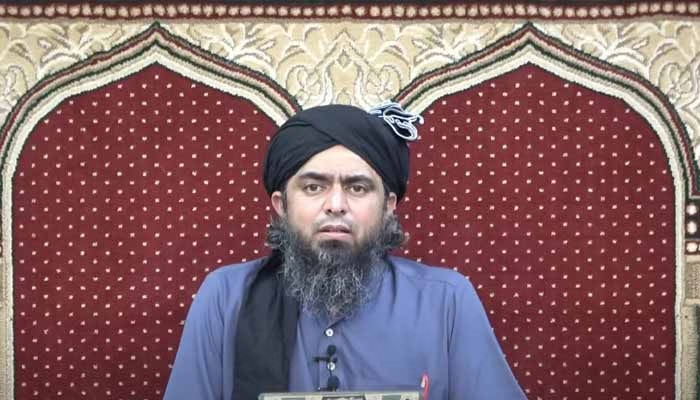
The approval of Engineer Muhammad Ali Mirza bail by the Lahore High Court’s Rawalpindi bench has become a major legal development in Pakistan, especially given the sensitivity of the blasphemy laws. The high-profile cleric, known for his outspoken views and large online following, received bail after the court reviewed the case record and heard arguments from both sides. This decision has once again placed his ongoing legal challenges under the national spotlight.
LHC Grants Bail After Reviewing Case Record
Justice Sadaqat Ali Khan presided over the hearing and granted bail to the cleric under strict conditions. The court ordered him to submit two surety bonds of Rs500,000 each. According to the court’s directive, these sureties must be deposited before the bail order becomes effective. This procedural requirement highlights the seriousness with which the judiciary is treating the case, even while approving Engineer Muhammad Ali Mirza bail.
The decision came after an examination of the allegations, case records and legal arguments presented by both the prosecution and the defense. The judge’s remarks during the hearing indicated that the court would allow protective relief only after fulfilling the mandatory surety conditions.
Background of the Case and Arrest
The blasphemy case against the cleric began with the registration of an FIR in Jhelum. Following the complaint, authorities arrested him on August 26. He was initially detained under Section 3 of the Maintenance of Public Order (MPO) 1960 — commonly known as 3-MPO. This provision gives the government power to arrest and detain any individual whose actions may be harmful to public safety or order.
His case involves multiple legal layers. Alongside the blasphemy-related allegations under Section 295-C of the Pakistan Penal Code, additional charges were brought under the Prevention of Electronic Crimes Act (PECA). These charges relate to the widespread digital influence and large online audience associated with his content.
The approval of Engineer Muhammad Ali Mirza bail therefore reflects a significant step in a case that merges sensitive religious matters with modern digital laws.
A Digital Influencer With Millions of Followers
Aside from his role as a religious scholar, Mirza has become a major online influencer. His YouTube channel has more than 3.14 million subscribers, with over 2,400 uploaded videos. His teachings, debates and controversial opinions often spark nationwide discussions.
Given this vast reach, any legal or religious controversy involving him tends to attract significant public attention. Supporters praise his approach to Islamic scholarship, while critics argue that his style leads to conflict and misinterpretation.
The court’s decision regarding Engineer Muhammad Ali Mirza bail has therefore been closely watched by both supporters and detractors.
Previous Assassination Attempt
This is not the first time the cleric has faced threats or danger. In 2021, he survived an assassination attempt during one of his weekly lectures. An attacker stabbed him with a knife, causing injuries but failing to take his life. This incident strengthened security concerns around his public appearances and highlighted the risks facing religious figures engaged in controversial discourse.
The recent legal proceedings, combined with past assassination threats, paint a picture of a figure who constantly navigates sensitive social and religious terrain.
Legal and Social Implications of the Bail Decision
The approval of Engineer Muhammad Ali Mirza bail raises several broader implications for Pakistan’s legal and social landscape. First, it reflects how courts continue to evaluate blasphemy-related cases with caution, balancing public safety concerns with individual rights. Second, the involvement of PECA provisions highlights the increasing complexity of digital speech and religious expression in the online age.
Moreover, the case underscores the tension between traditional religious interpretations and new digital voices that challenge long-held views. Mirza’s large online presence complicates the legal proceedings, as any decision about his freedom directly affects millions of his followers.
What Comes Next for the Cleric?
Although he has secured bail, the case is far from over. Court hearings, investigations and evidence reviews are expected to continue in the coming weeks. The cleric’s legal team will likely prepare to contest the charges, while prosecutors will argue their case under both PECA laws and the blasphemy provisions.
The public reaction to Engineer Muhammad Ali Mirza bail has been mixed. Some see it as a necessary step toward fair legal treatment, while others believe that the nature of the charges demands stricter action.
The Lahore High Court’s decision to grant Engineer Muhammad Ali Mirza bail marks an important milestone in a closely watched legal case. As proceedings continue, the debate over blasphemy laws, digital speech and provincial security measures is expected to intensify. For now, the cleric’s release on bail reflects the judiciary’s attempt to navigate a highly sensitive case with both caution and adherence to legal procedure.