Prime Minister Shehbaz Sharif has directed authorities and banks to simplify SME loans in Pakistan to improve small and medium-sized enterprises’ access to finance, encourage entrepreneurship and create employment opportunities. The government aims to strengthen the SME sector by reducing lending barriers and introducing alternative criteria for assessing businesses seeking financial assistance.
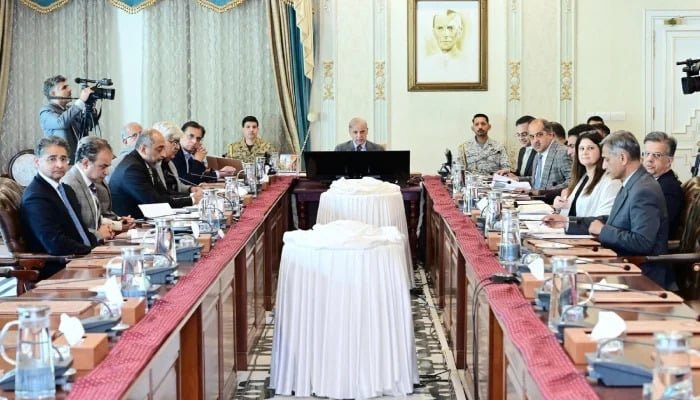
Chairing a high-level meeting on Friday to review access to credit for small and medium enterprises (SMEs), the prime minister instructed relevant authorities to make bank financing more accessible, particularly for businesses that lack conventional collateral.
He directed that export data available through the Pakistan Single Window (PSW), participation in supply chains through Exim Insurance and digital invoicing records should be considered alternative forms of collateral when businesses apply for bank loans.
The prime minister also called for banks to assess SME financing applications based on business cash flows rather than relying solely on traditional lending requirements. He directed a review of prudential regulations governing bank lending to the sector to make the financing process more flexible.
Government Seeks to Simplify SME Financing
Shehbaz Sharif stressed that improving access to SME loans in Pakistan requires cooperation between banks and government institutions. He instructed authorities to provide banks with access to relevant government-held data to accelerate the verification and loan disbursement process.
He further emphasised that banks should support small businesses through more than conventional lending facilities. This includes facilitating Letters of Credit (LCs) and bank guarantees, which are essential for businesses involved in domestic and international trade.
The prime minister also said that banks meeting their designated SME lending targets should receive encouragement and rewards to promote greater participation in financing the sector.
During the meeting, representatives of banks informed the government about measures being taken to strengthen their institutional capacity and expand lending facilities for small and medium-sized businesses.
Banks Set Rs2,000 Billion Lending Target by 2028
One of the key developments discussed during the meeting was the banking sector’s commitment to provide Rs2,000 billion in financing to SMEs by June 2028.
Banks also pledged to increase the number of SME borrowers to 775,000 as part of efforts to expand access to financial services across the country.
The targets include:
- Rs2,000 billion in total SME financing by June 2028.
- Rs886 billion in new loans.
- 449,000 new SME borrowers.
- Expansion of financial facilities to support existing and emerging businesses.
The initiative is expected to provide additional financial opportunities to entrepreneurs who struggle to obtain funding through conventional banking channels.
The prime minister described SMEs as the backbone of Pakistan’s economy, noting that a stronger business sector could contribute to economic expansion, employment generation and increased entrepreneurial activity.
He also highlighted the importance of helping businesses prepare financial documentation, understand banking requirements and identify opportunities in international markets.
PCSIR to Support Industrial Growth and Exports
In a separate meeting concerning the Pakistan Council of Scientific and Industrial Research (PCSIR), Shehbaz Sharif highlighted the institution’s potential role in strengthening industrial development and promoting export-led economic growth.
He said PCSIR could contribute to the development of small and medium-sized enterprises by providing scientific research, technical assistance and internationally recognised product certification.
The prime minister directed all PCSIR laboratories to obtain accreditation according to international standards. The move is intended to ensure that Pakistani products receive internationally recognised certification and validation, helping local manufacturers compete in global markets.
He also instructed the institution to improve its research activities and strengthen cooperation with the National Vocational and Technical Training Commission (NAVTTC) to provide industrial and technical training to young people.
Furthermore, the prime minister called for a report on the third-party validation of PCSIR and established a committee to examine the organisation’s mandate, performance, legal responsibilities and future potential.
The committee will recommend measures to improve the institution’s effectiveness and maximise its contribution to industrial development, exports and the national economy.
Power and Railway Projects Also Reviewed
Meanwhile, Federal Minister for Power Awais Ahmed Khan Leghari met Prime Minister Shehbaz Sharif and briefed him on matters concerning the Power Division.
The minister shared details about the proceedings and outcomes of the 11th session of the Pakistan-Russia Inter-Governmental Commission (IGC), which took place during his recent visit to Russia. The two sides also discussed other matters related to the ministry.
In another meeting, the prime minister directed Federal Minister for Railways Hanif Abbasi to take effective measures to ensure the timely completion of ongoing railway projects.
During their discussion at the Prime Minister’s House, both sides reviewed ongoing and proposed railway projects and other administrative matters concerning the ministry.
Focus on Businesses and Economic Development
The government’s latest directives indicate an effort to improve financing opportunities for small businesses while strengthening Pakistan’s industrial and export capacity.
The proposed changes to SME loans in Pakistan, including alternative collateral requirements and cash-flow-based assessments, could help businesses that previously struggled to qualify for bank financing.
If banks achieve their Rs2,000 billion lending commitment by June 2028, thousands of additional businesses could gain access to financial resources needed for expansion, investment and job creation.
Alongside improved financing, stronger scientific research, international certification and technical training could help Pakistani businesses become more competitive in domestic and international markets.