
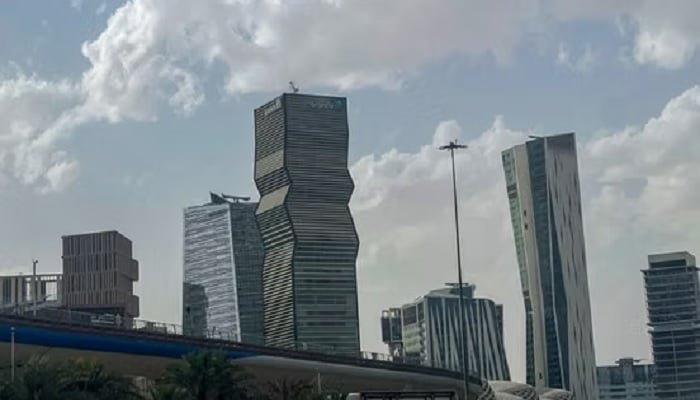
Pakistan has strongly condemned the Houthi attack on Saudi Aramco in Riyadh, calling on Yemen’s Houthi group to immediately and unconditionally stop all hostilities against Saudi Arabia. Islamabad reaffirmed its support for the Kingdom after an attempted attack damaged an administrative building belonging to the state-owned oil company, raising fresh concerns about regional security and the safety of civilian infrastructure.
The Pakistani Foreign Office issued its statement on Monday, November 9, following Sunday’s incident in the Saudi capital. Saudi authorities reported that falling shrapnel caused minor damage to the building, but no injuries or fatalities were recorded. The Houthis subsequently claimed responsibility for the attack.
Pakistan Demands Immediate End to Houthi Attacks
In its official statement, Pakistan strongly criticised the attempted attack and expressed concern over the targeting of civilian facilities.
The Foreign Office said such actions demonstrated a reckless disregard for human life and regional security. It demanded that the Houthis immediately and unconditionally cease all attacks against Saudi Arabia.
Islamabad also praised the vigilance and response of Saudi authorities in dealing with the incident, describing the attack as unjustifiable and unprovoked.
Reaffirming Pakistan’s position, the Foreign Office said the country stood firmly with the Saudi leadership and people. It also expressed support for measures necessary to safeguard the Kingdom’s security, sovereignty and territorial integrity.
The statement underlined the importance of Saudi Arabia’s security to Pakistan, adding that Islamabad’s commitment to the safety and well-being of the Saudi people remained steadfast.
The response reflects the close relationship between the two countries, particularly their longstanding cooperation on security and defence matters.
Saudi Aramco Building Damaged in Riyadh
The incident occurred at an administrative building belonging to Saudi Aramco in Riyadh’s King Abdullah Financial District (KAFD).
Saudi Arabia’s Energy Ministry confirmed that the building had been targeted in an attempted attack. Falling shrapnel caused limited damage, although authorities reported no casualties.
The Houthis later claimed responsibility. The Saudi-led coalition fighting the group in Yemen also reported that its air defences had intercepted and destroyed two ballistic missiles launched towards Riyadh.
The attack came amid an escalation in hostilities between Saudi Arabia and the Houthis, with the Yemeni group increasingly targeting Saudi infrastructure.
The incident is particularly significant because KAFD is an important financial and commercial district housing major institutions, international businesses and residential facilities. Any continued attacks in the area could create concerns among investors, businesses and residents.
Why the Attack Matters for Saudi Arabia’s Economy
The Houthi attack on Saudi Aramco has implications beyond the physical damage reported at the building.
Saudi Arabia has invested heavily in economic diversification through its Vision 2030 programme, which aims to reduce the country’s dependence on oil revenues and expand sectors such as finance, tourism, technology and international business.
The King Abdullah Financial District is an important part of this ambition. It is designed to strengthen Riyadh’s position as a regional financial centre and attract international companies and investment.
Andreas Krieg of London-based risk consultancy MENA Analytica told AFP that the incident could affect confidence in Saudi Arabia’s economic transformation.
His assessment was that attacks targeting important financial and commercial locations could increase the perceived risks of doing business in the Kingdom.
Although the reported damage was limited, repeated security incidents could influence investor confidence and increase pressure on Saudi authorities to strengthen protection around important infrastructure.
Renewed Conflict Raises Regional Security Concerns
The attack comes amid renewed fighting between Saudi Arabia and the Houthis, ending a period of relative calm that followed a United Nations-brokered truce in 2022.
Saudi authorities have faced repeated missile and drone threats, prompting greater reliance on air-defence systems and security measures. The Saudi-led coalition has reported intercepting missiles directed towards Riyadh, while the Houthis have claimed responsibility for attacks on Saudi infrastructure.
The security situation has also affected daily life. Saudi Arabia’s Education Ministry recently announced the resumption of in-person classes in Riyadh after weeks of remote learning following earlier attacks.
International involvement is another concern. Britain announced in October that it would deploy fighter jets on defensive missions to help protect Saudi cities from aerial threats. Meanwhile, reports of possible Syrian troop deployments were disputed by a diplomatic source quoted by Syria’s state news agency, which denied that Damascus had sent forces to Yemen at that time.
Pakistan-Saudi Defence Cooperation
Pakistan’s response also comes against the backdrop of increasingly formal defence ties with Saudi Arabia.
The two countries signed a Strategic Mutual Defence Agreement in September 2025, strengthening their longstanding security partnership. In August 2026, Pakistan, Saudi Arabia and Türkiye signed the Makkah Joint Defence Agreement, which states that an armed attack against any one of the three countries will be regarded as an attack against all three.
The trilateral agreement aims to strengthen collective deterrence and expand defence cooperation. Its implementation also provides a framework for closer coordination among the three countries on regional security issues.
The latest Houthi attack on Saudi Aramco therefore comes at a time when Islamabad and Riyadh are deepening their strategic relationship.
Pakistan’s condemnation adds to international concern over attacks on Saudi civilian and economic infrastructure. However, the immediate priority remains preventing further escalation and protecting people and essential facilities.
The Houthis have been urged by Islamabad to halt their attacks, while Saudi Arabia continues to strengthen its defensive response. Any further strikes could increase regional tensions and create additional risks for businesses, energy infrastructure and international shipping.
The incident highlights the importance of its relationship with Saudi Arabia and the wider security challenges facing the region. Islamabad has reaffirmed its support for the Kingdom, while calling for an end to hostilities that threaten regional stability.