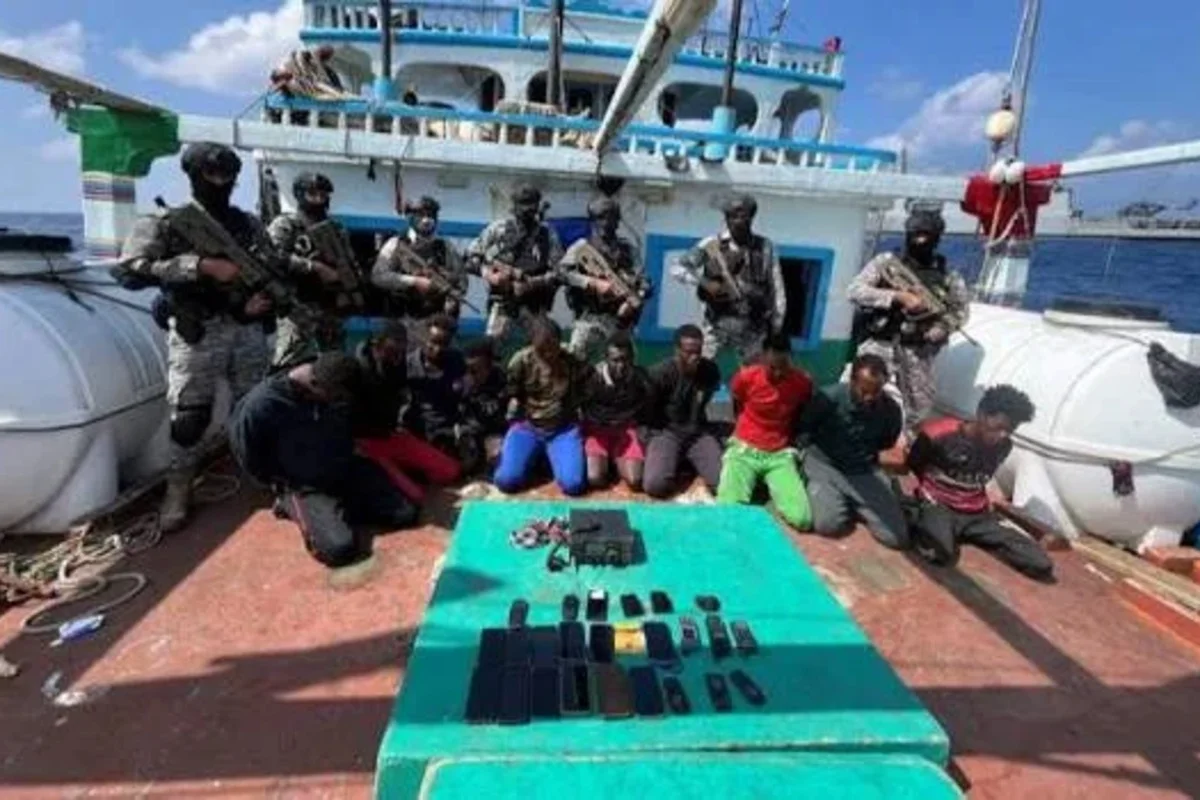
The incident in which Somali pirates hijack Iranian vessel carrying 23 people has raised fresh concerns about maritime security along Somalia’s northeastern coastline. According to the European Union’s Maritime Security Centre Indian Ocean (MSCIO), the ship was seized on Thursday in waters between the coastal towns of Bandar Bayla and Hafun. It was carrying 21 Iranian fishermen and two Somali security guards when pirates took control.
The safety and whereabouts of all 23 people remain unknown, according to an MSCIO alert issued on Saturday. The incident has prompted renewed attention from international maritime security authorities, particularly because the captured vessel could potentially be used to support further pirate operations.
12 Pirates Reportedly Boarded the Vessel
A maritime security officer from the Puntland Maritime Police Force said that 12 pirates boarded the Iranian vessel and took control of it.
The ship was reportedly operating off northeastern Somalia when the attack occurred. However, details about how the pirates approached the vessel and the circumstances surrounding the seizure have not been fully established.
The most immediate concern is the safety of those aboard. The 21 Iranian fishermen and two Somali security guards have not been confirmed safe, leaving their families and authorities awaiting further information.
The seizure also presents a potential security challenge beyond the immediate incident, as hijacked fishing vessels can sometimes be used to support attacks on other ships.
Warning Over Possible Use as a Mother Ship
The MSCIO has warned that the captured Iranian vessel could be converted into a so-called mother ship.
In maritime piracy operations, a mother ship is used as a platform to support smaller boats carrying attackers. It can allow pirates to travel farther from the coastline, remain at sea for longer periods and approach commercial vessels in areas that would otherwise be difficult to reach.
If the hijacked vessel is used for this purpose, it could increase risks for commercial shipping operating in nearby waters.
The maritime security centre has urged vessels in the area to maintain heightened vigilance and report suspicious activity. Such warnings are intended to help ships identify potential threats early and provide relevant information to security authorities.
EU Naval Forces Investigating the Incident
The European Union’s naval Operation Atalanta is investigating the hijacking.
Operation Atalanta is part of international efforts to improve maritime security in the western Indian Ocean and surrounding waters. Its activities include monitoring suspicious maritime activity and supporting efforts to protect shipping from piracy.
The investigation will be important in determining the circumstances of the seizure, locating the hijacked vessel and assessing the risks to other ships.
For now, the authorities have not confirmed the fate of the people aboard or provided details about a possible recovery operation.
The incident in which Somali pirates hijack Iranian vessel also highlights the importance of cooperation between regional maritime forces and international naval missions.
Renewed Piracy Concerns Near Somalia
The latest seizure comes amid signs of renewed piracy activity in the Gulf of Aden and the western Indian Ocean.
According to the supplied report, pirates had seized six commercial vessels since April by August. One of the incidents involved the oil products tanker Sibu 1, which was captured off Yemen.
These developments have raised concerns among shipping operators because the region is an important route for international trade. Commercial vessels transporting fuel, goods and other supplies regularly pass through waters near Somalia and the Gulf of Aden.
Although international naval patrols helped reduce piracy significantly over the years, the latest incidents indicate that the threat has not disappeared.
Previous Attack on MT Honour 25
Another serious incident was reported in September, when Puntland authorities said five crew members aboard the tanker MT Honour 25 had been killed.
Security forces later recovered the vessel and detained 16 suspected pirates, according to the report.
The incident demonstrated the potentially deadly consequences of maritime attacks and reinforced concerns about the safety of crews operating near Somalia.
Compared with ordinary maritime theft, piracy involving armed attackers can create serious risks for seafarers, shipping companies and regional security forces.
The latest Somali pirates hijack Iranian vessel incident has therefore renewed questions about whether existing security measures are sufficient to prevent attacks in the region.
Why the Hijacking Matters for International Shipping
Somalia’s coastline borders important maritime routes connecting the Indian Ocean with the Red Sea and the Gulf of Aden. These waters are particularly significant for international shipping, making security incidents a concern for countries and businesses far beyond the immediate region.
A hijacked vessel used as a mother ship could potentially expand the operating range of pirates and increase pressure on commercial shipping companies to strengthen security precautions.
Shipping operators may need to review route planning, monitoring procedures and communication with maritime security authorities when travelling through areas identified as high-risk.
The safety of the 23 people aboard the Iranian vessel remains the most urgent concern. Their recovery and the investigation into the attack will be central to the next phase of the response.
Maritime Security Remains a Major Challenge
The latest hijacking demonstrates that piracy remains a challenge in waters near Somalia despite years of international patrols and security cooperation.
The MSCIO warning, the involvement of Operation Atalanta and calls for increased vigilance show the importance of coordinated action to protect vessels and crews.
As investigations continue, authorities will be looking to establish the vessel’s location, determine the condition of those aboard and prevent its possible use in further attacks.
For international shipping, the incident is another reminder that maintaining safe maritime routes requires continuous monitoring, regional cooperation and effective security measures.