
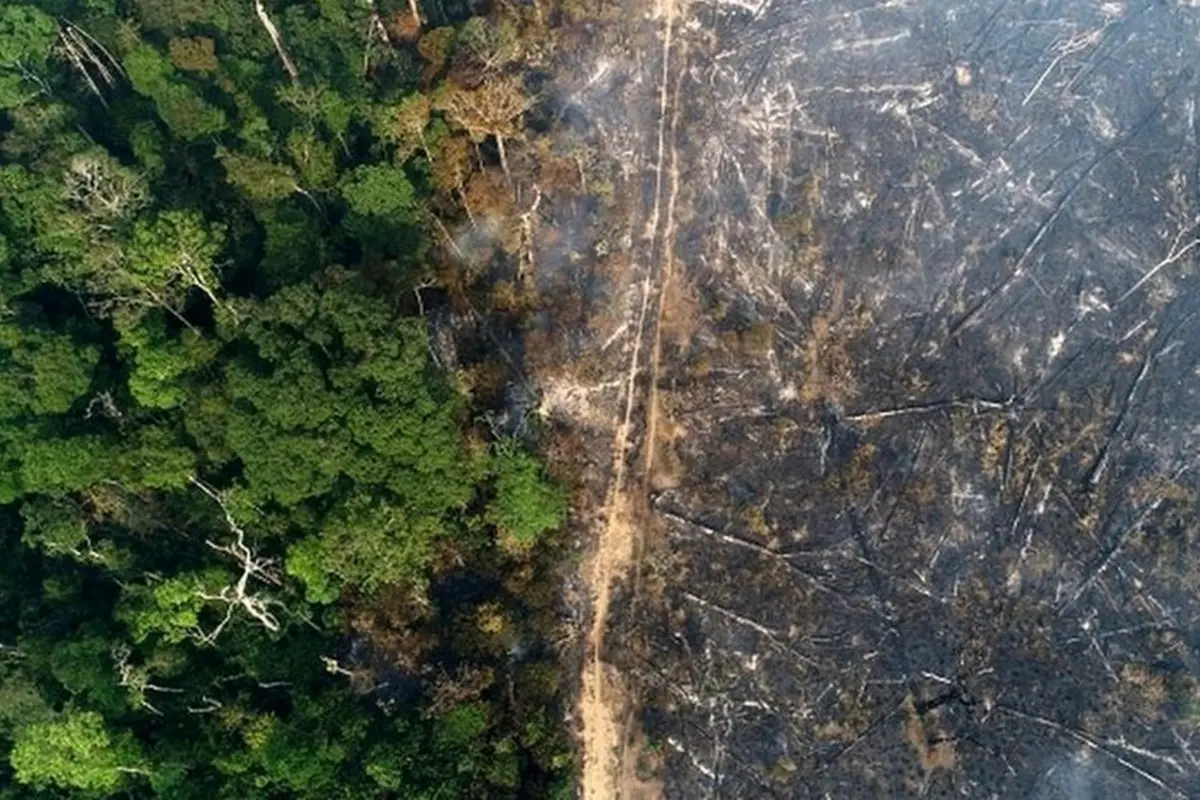
Brazil Reports Historic Decline in Forest Loss
The Amazon deforestation decline has reached a historic milestone, according to Brazil’s government, with satellite data showing a significant reduction in forest destruction across the Amazon rainforest and the Cerrado savanna. Official figures for the 12 months ending in July 2026 show that deforestation in the Amazon fell by 41.8%, marking the largest annual decline since records began in 1988.
Deforestation also decreased in the Cerrado, Brazil’s vast tropical savanna, where the rate dropped by 23.8%. The figures highlight a major change in the country’s recent forest-loss trends and have brought environmental protection back into the political spotlight ahead of the presidential election run-off scheduled for October 25.
Brazil contains approximately 60% of the Amazon rainforest, one of the world’s most important ecosystems. The region supports extraordinary biodiversity, stores vast amounts of carbon and plays a crucial role in regulating global climate patterns.
The latest figures provide an important measure of progress, although continued monitoring and long-term conservation efforts will be necessary to determine whether the reductions can be sustained.
Lula’s Promise to Protect the Amazon
President Luiz Inácio Lula da Silva made ending deforestation in the Amazon by 2030 a central environmental commitment when he took office three years ago. His administration has placed greater emphasis on forest protection following a period in which deforestation increased under former president Jair Bolsonaro.
During Bolsonaro’s 2019–2022 presidency, his administration supported greater economic activity, including mining in Indigenous territories, while reducing resources allocated to forest protection. According to official figures cited by Agence France-Presse, the Amazon lost nearly 60% more forest during those four years than in the preceding four-year period.
The contrast between the two administrations has made environmental policy a significant point of political debate.
The Amazon deforestation decline reported under Lula provides evidence of a substantial reduction in forest loss during the latest reporting period. However, the figures alone do not establish that Brazil has already achieved its longer-term conservation goals.
Meeting the 2030 target will require continued enforcement, effective monitoring and measures that address the economic activities driving forest destruction.
Why the Amazon Rainforest Matters
The Amazon is the world’s largest tropical rainforest and an essential component of the global climate system. Its trees absorb carbon dioxide as they grow, while the forest’s vegetation and soils store substantial amounts of carbon.
Large-scale forest destruction releases stored carbon and reduces the amount of carbon dioxide that forests can remove from the atmosphere. Deforestation can also disrupt rainfall patterns, damage habitats and increase pressure on wildlife populations.
The forest is home to Indigenous peoples and numerous communities whose livelihoods, cultural traditions and access to natural resources are closely connected to the surrounding environment.
Protecting the Amazon therefore involves more than preserving trees. It also means safeguarding biodiversity, supporting Indigenous rights and balancing economic development with the long-term health of the ecosystem.
The decline in forest loss is encouraging in this context, but the scale of the remaining challenge means that progress must continue over several years.
Cerrado Also Sees Lower Deforestation
The reduction in the Cerrado savanna adds another important dimension to Brazil’s environmental figures. Although the Amazon often receives the greatest international attention, the Cerrado is also ecologically significant.
Its landscapes support diverse plant and animal species and contain vegetation that stores carbon. The region has also faced pressure from agricultural expansion and land conversion.
The reported 23.8% reduction in deforestation suggests that forest-loss trends improved beyond the Amazon during the latest 12-month period.
Nevertheless, the two ecosystems have different environmental characteristics and land-use pressures. Their protection requires policies suited to local conditions, including monitoring, enforcement and more sustainable approaches to land management.
Deforestation Becomes a Key Election Issue
Environmental policy has become an important issue ahead of Brazil’s presidential run-off on October 25. Lula is facing Flávio Bolsonaro, the son of former president Jair Bolsonaro, in a closely contested election, according to opinion polls cited in the report.
Flávio Bolsonaro is expected to continue many of his father’s policies if elected, although he has pledged to combat organised crime in the Amazon.
The election could influence the direction of Brazil’s future environmental strategy, including how authorities approach forest enforcement, economic development and activities taking place in protected areas.
For voters, the issue involves balancing employment and economic opportunities with the long-term consequences of environmental degradation.
The latest Amazon deforestation decline is therefore likely to remain part of the wider discussion about Brazil’s development priorities and its responsibilities in addressing climate change.
Brazil’s reported reductions in deforestation mark a significant development for the Amazon rainforest and the Cerrado savanna. The 41.8% fall in Amazon forest loss and 23.8% decline in the Cerrado demonstrate substantial improvements during the latest reporting period.
However, maintaining this progress will require consistent policies, effective enforcement and sustained attention to the causes of forest destruction. As Brazil approaches a consequential presidential election, the future of its forests remains both an environmental priority and a major national political issue.
The country’s ability to preserve these ecosystems will have implications extending far beyond its borders, affecting biodiversity, Indigenous communities and global climate efforts.