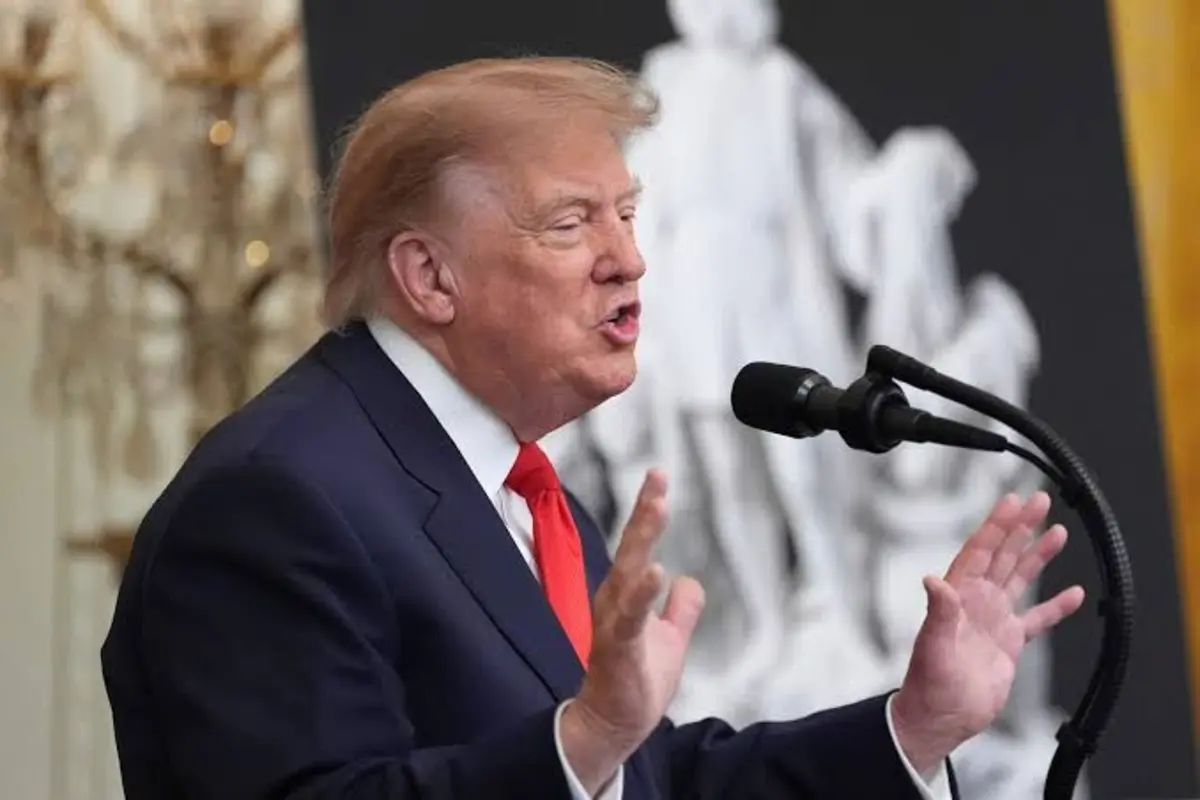
U.S. President Donald Trump has announced an agreement to increase Russian diesel supplies to American and international markets, aiming to ease rising fuel prices ahead of the November 3 congressional midterm elections. Following a discussion with Russian President Vladimir Putin, Trump said Moscow would immediately release more than 300,000 tonnes of diesel, with additional shipments planned for the coming months. The announcement comes as high fuel costs put pressure on transportation, agriculture and other industries, while raising questions about the future of Western sanctions against Russia.
Trump Announces Major Diesel Shipments
Trump described his conversation with Putin as highly successful and said the two leaders had agreed to increase diesel deliveries to the global market.
According to Trump’s announcement, Russia would initially supply more than 300,000 tonnes of diesel, followed by another 500,000 tonnes in November and one million tonnes immediately afterward. He also mentioned a further three million tonnes that could be delivered within a relatively short period, depending on the condition and capacity of Russian diesel refineries.
The proposed shipments are intended to increase fuel availability at a time when diesel prices have placed considerable pressure on American businesses and households.
Diesel is essential to freight transportation, agricultural machinery and certain home-heating systems. When its price rises, trucking companies and farmers often face higher operating costs, which can eventually contribute to increased prices for food and other consumer goods.
Trump has presented the agreement as a way to reduce these costs before the midterm elections, when voters’ concerns about affordability could influence the political balance in Congress.
However, the announcement does not guarantee an immediate or substantial reduction in prices. The actual effect will depend on how much fuel reaches the market, where it is delivered and whether other supply disruptions continue.
US Treasury Temporarily Authorises Russian Diesel
The announcement was accompanied by a decision from the U.S. Treasury Department’s Office of Foreign Assets Control (OFAC) to authorise certain transactions involving Russian-origin diesel.
The general licence, issued on October 9, permits specified activities related to the sale, delivery, offloading and importation of Russian diesel, including imports into the United States, until April 7, 2027. The authorisation creates a temporary exception for the fuel covered by its terms rather than removing every U.S. restriction on Russian energy.
The move represents a notable development in Washington’s approach to Russian petroleum products. The United States previously prohibited imports of Russian oil and petroleum products following Russia’s full-scale invasion of Ukraine in February 2022.
The temporary authorisation could allow additional supplies to reach buyers while energy markets remain under pressure. Nevertheless, its scope and conditions will determine which transactions are permitted.
The policy also raises a broader question about how governments should balance immediate economic concerns with sanctions designed to influence the behaviour of foreign states.
Will Russian Diesel Supplies Lower Fuel Prices?
The potential impact of Russian diesel supplies remains uncertain. Although additional shipments could improve availability, market analysts have questioned whether the announced volumes will be sufficient to produce a major reduction in American fuel prices.
The diesel market depends on several interconnected factors, including refinery capacity, transportation costs, storage levels and demand from industrial and agricultural customers. Disruptions to energy infrastructure or international shipping can also offset the benefits of additional production.
Furthermore, a shipment announced by a government does not necessarily translate into an immediate increase in fuel available at local petrol stations or distribution centres. Deliveries must be completed, processed and distributed through commercial supply chains.
The agreement may therefore offer some relief in particular markets without producing a dramatic decline in prices nationwide.
For American consumers, the key measure of success will be whether lower wholesale costs eventually translate into cheaper fuel and reduced business expenses.
Sanctions and Russia’s War Against Ukraine
The decision has also attracted criticism because Russia’s energy exports remain closely connected to the country’s economy and its ability to finance government spending.
Ukrainian President Volodymyr Zelensky has warned that easing restrictions on Russian petroleum sales could provide Moscow with additional revenue while the war continues. He has argued that concessions to Russia will not necessarily produce peace and could undermine efforts to pressure the Kremlin into ending the conflict.
For Kyiv, the concern is that increased access to international buyers could weaken the economic pressure Western governments have sought to maintain.
Supporters of the temporary authorisation may argue that energy affordability and supply stability require practical decisions, particularly when fuel prices threaten households and businesses.
Critics counter that the financial benefits to Russia must be considered alongside any short-term advantages for American consumers.
The dispute highlights the difficulty of separating energy policy from wider diplomatic and security objectives.
The future of Russian diesel supplies will depend on whether the announced deliveries take place as planned and how international markets respond.
Washington will need to assess whether the temporary authorisation delivers meaningful relief without undermining its broader foreign policy objectives. Russia, meanwhile, must demonstrate that its refineries and export infrastructure can support the proposed shipments.
The agreement also comes amid continuing diplomatic efforts to address the war in Ukraine, making its political implications particularly significant.
The deal’s success will be measured by its practical results: the volume of fuel delivered, its effect on prices and its consequences for relations between the United States, Russia and Ukraine. While additional supplies may help ease some market pressures, substantial and lasting price reductions remain uncertain.