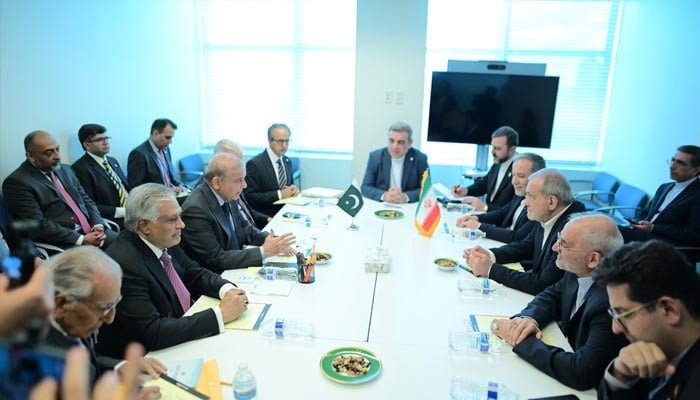
Prime Minister Shehbaz Sharif and Iranian President Masoud Pezeshkian held a Shehbaz Pezeshkian meeting on the sidelines of the 81st United Nations General Assembly in New York, with discussions centred on regional tensions, de-escalation and diplomacy. Shehbaz stressed the need for restraint and sustained diplomatic engagement, while both leaders reaffirmed their commitment to strengthening longstanding Pakistan-Iran relations.
Leaders Discuss Regional Tensions
The Shehbaz Pezeshkian meeting came at a time of heightened tensions in the Middle East and continued international efforts to find a diplomatic path forward.
According to Pakistan’s government, Prime Minister Shehbaz expressed concern over the prolonged conflict and emphasised that restraint, de-escalation and continued diplomatic engagement were necessary for lasting regional peace and stability. He also reiterated Pakistan’s willingness to play a constructive role in supporting diplomatic efforts.
Deputy Prime Minister and Foreign Minister Ishaq Dar, Defence Minister Khawaja Asif and Special Assistant to the Prime Minister Tariq Fatemi attended the meeting, along with senior officials from both countries. Iranian Foreign Minister Abbas Araghchi was also involved in the broader diplomatic engagement during the UNGA visit.
Islamabad MoU Remains Central
A key issue during the Shehbaz Pezeshkian meeting was the Islamabad Memorandum of Understanding between Iran and the United States.
Shehbaz emphasised the importance of implementing the agreement, which Pakistan helped facilitate as a mediator. Pakistani officials have continued to describe the MoU as an important framework for reducing tensions and encouraging dialogue between Washington and Tehran.
Pezeshkian, according to reports, expressed Iran’s readiness to continue working with Pakistan on the agreement. After the meeting, Shehbaz told journalists that the Iranian president had indicated that the Islamabad agreement remained acceptable to Tehran and that efforts were underway to move it forward.
The agreement has become an important part of Pakistan’s diplomatic engagement as Islamabad seeks to encourage further dialogue between the United States and Iran.
Pakistan and Iran Reaffirm Bilateral Ties
Beyond the regional crisis, the Shehbaz Pezeshkian meeting also highlighted the longstanding relationship between Pakistan and Iran.
The two leaders reaffirmed the close ties between the neighbouring countries and discussed strengthening cooperation in areas of mutual interest. Pezeshkian pointed to the shared history, culture and faith connecting the two countries and expressed Tehran’s desire to expand multifaceted cooperation with Islamabad.
Both sides also agreed on the importance of regular consultations and close coordination as regional challenges continue to develop.
Pakistan and Iran have maintained diplomatic, economic and cultural links for decades, while their shared border makes regional security and stability particularly important for both governments.
Shehbaz Highlights Diplomatic Efforts
Speaking to journalists after the meeting, Prime Minister Shehbaz said Pakistan’s political and military leadership would continue efforts aimed at supporting peace.
He also referred to diplomatic efforts surrounding tensions in the Bab el-Mandeb and said friendly countries were working together to contain further escalation.
Pakistan has previously taken part in diplomatic efforts between Washington and Tehran. Earlier in 2026, Islamabad hosted discussions connected with the US-Iran diplomatic process, while Pakistani officials repeatedly called for dialogue and restraint. The Pakistani government has continued to present mediation as part of its broader regional diplomacy.
Security Concerns Also Remain
The Shehbaz Pezeshkian meeting also took place against the backdrop of Pakistan’s own security concerns.
Speaking after the talks, Shehbaz said militants operating from Afghan territory were responsible for attacks against Pakistan and stated that Islamabad was responding firmly. Pakistan has repeatedly raised concerns about militant activity originating from Afghanistan, while Afghan authorities have disputed Islamabad’s accusations.
The issue adds another layer to Pakistan’s regional diplomatic priorities, as Islamabad seeks to manage relations with neighbouring countries while dealing with security challenges along its western border.
Iran-US Diplomacy Remains Uncertain
The latest Shehbaz Pezeshkian meeting occurred as diplomatic efforts between Iran and the United States remained under pressure. Iran has continued to call for conditions that would allow negotiations, while the United States has maintained military and economic pressure on Tehran.
Recent reports indicate that Iranian officials have signalled willingness to pursue diplomatic options, including discussions over the Strait of Hormuz and the wider conflict. Iran’s delegation has also been using the UN General Assembly as an opportunity for international diplomacy.
For Pakistan, reducing tensions between Iran and the United States has broader implications because of its geographical position, economic interests and relationships with countries across the Gulf and wider region.
A Continued Diplomatic Role
The Shehbaz Pezeshkian meeting demonstrates Islamabad’s continued emphasis on dialogue as regional tensions remain unresolved.
While the meeting did not itself produce a new agreement, both leaders reaffirmed the importance of diplomacy, bilateral cooperation and regular consultations. Pakistan’s government also reiterated its willingness to support efforts aimed at achieving regional peace.
The next stage will depend on whether the parties involved can translate diplomatic discussions into practical steps. For Pakistan, maintaining communication with Iran while engaging other regional and international partners is likely to remain an important part of its foreign-policy efforts as the Middle East situation develops.