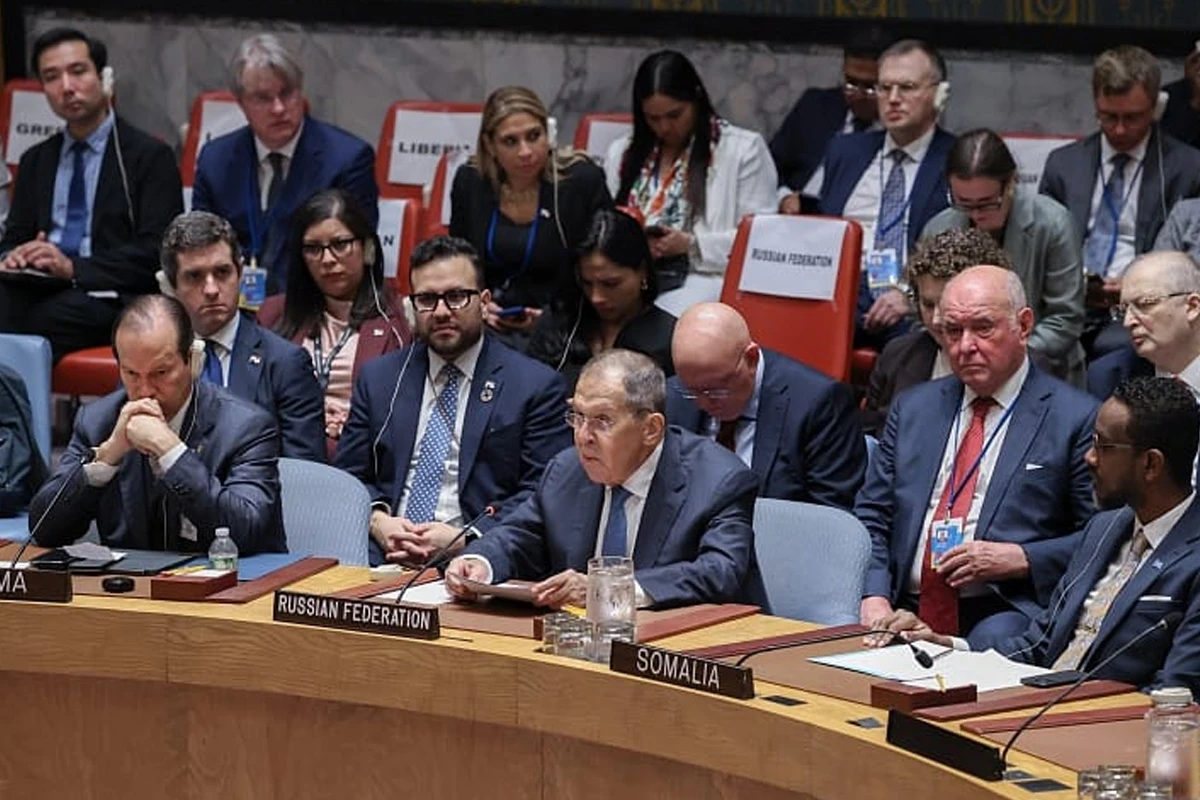
Russian Foreign Minister Sergey Lavrov has reiterated Moscow’s willingness to participate in Russia Ukraine peace talks, while making clear that Russia does not intend to suspend its military operation during negotiations. Speaking at a UN Security Council meeting on Ukraine, Lavrov presented Moscow’s interpretation of the conflict’s history and outlined conditions that Russia says could form the basis of a future settlement.
The remarks came as the United Nations continues to debate the war and diplomatic efforts surrounding it. The Security Council discussed the continuing conflict on September 23, while UN officials and member states renewed calls for an immediate ceasefire and meaningful negotiations.
Lavrov Revisits the Minsk Agreements
A major part of Lavrov’s argument focused on the Minsk agreements, which were signed in 2014 and 2015 as attempts to end fighting in eastern Ukraine.
Lavrov said Moscow believes the agreements were not properly implemented. According to his account, successful implementation would have allowed Ukraine to retain its 1991 borders, apart from Crimea.
He also linked Russia’s current position to proposals Moscow presented in December 2021 concerning European security. Russia has repeatedly argued that its concerns about regional security and NATO expansion were not adequately addressed before the full-scale invasion.
These issues remain deeply disputed. Ukraine and many UN member states maintain that Ukraine’s sovereignty and internationally recognised territorial integrity should form the basis of any peace settlement.
Russia Points to 2022 Negotiations
Lavrov also referred to negotiations between Russian and Ukrainian representatives following Russia’s full-scale invasion in February 2022.
According to the Russian foreign minister, delegations met through several rounds of discussions in Belarus and later in Istanbul. He said the Ukrainian side proposed principles that included neutrality and security guarantees, and that Russian negotiators accepted those principles.
Lavrov claimed the draft agreement was initialled by the negotiating teams but was never converted into a final treaty.
He argued that a settlement based on those discussions would have allowed Ukraine to retain most of its territory as it existed in 1991, while leaving Crimea and parts of Donbass outside Ukrainian control under the terms Moscow describes.
The history and interpretation of the 2022 negotiations remain contested, with the two sides offering different accounts of what was discussed, agreed and ultimately prevented from becoming a final settlement.
Moscow Rejects a Temporary Halt
One of the clearest points in Lavrov’s latest remarks was Russia’s position on a ceasefire during negotiations.
He said President Vladimir Putin has repeatedly stated that Moscow is prepared to negotiate, but Russia would not suspend its military operation simply because talks were taking place.
Lavrov argued that a temporary halt could allow Ukraine to rebuild its military capabilities and receive additional weapons from European countries. Moscow has previously made similar arguments when rejecting proposals for an unconditional pause in fighting.
The position contrasts with repeated calls from the United Nations and several member states for an immediate ceasefire as a way to create conditions for diplomacy. The UN has said a ceasefire could help open space for negotiations aimed at achieving a comprehensive and lasting peace.
Dispute Over Territory and Sovereignty
Lavrov also addressed the sensitive question of territories claimed by Russia, including Crimea and areas of eastern and southern Ukraine.
He argued that the Ukrainian government could not, in Moscow’s view, be considered representative of people living in territories Russia claims. He connected this argument to Moscow’s interpretation of self-determination and international law.
Ukraine and the UN position differ sharply. The United Nations continues to reaffirm Ukraine’s sovereignty, independence and territorial integrity within its internationally recognised borders. UN officials have also called for diplomatic efforts to remain consistent with the UN Charter.
Lavrov Raises Greenland Comparison
During his speech, Lavrov also raised questions about Greenland and broader principles concerning sovereignty and territorial integrity.
He suggested that international organisations should apply legal principles consistently and questioned how similar debates might affect other territorial disputes, including Scotland, Wales and Northern Ireland.
His comments appeared intended to challenge what Moscow considers inconsistent application of international principles. However, the political and legal circumstances surrounding these territories are different, making direct comparisons highly contested.
What Comes Next for Diplomacy?
The latest statements show that Moscow continues to describe negotiations as a possible path toward ending the conflict, while maintaining conditions that Ukraine and its international partners have disputed.
At the same time, international diplomatic efforts remain active. The UN has said it supports meaningful negotiations leading to an immediate ceasefire and a just, comprehensive and lasting peace.
The future of Russia Ukraine peace talks will therefore depend not only on whether negotiations resume, but also on whether Moscow and Kyiv can bridge major disagreements over territory, security guarantees, sovereignty and the sequencing of a ceasefire.
Lavrov’s UN remarks underline the significant gap between Russia’s stated negotiating position and the demands being put forward by Ukraine and many other UN member states. That gap remains one of the central obstacles to a broader diplomatic settlement.