The PTI September 27 protest has prompted fresh security and administrative measures after Khyber Pakhtunkhwa Inspector General of Police Zulfiqar Hameed directed police officers not to facilitate any march, rally or procession heading toward Islamabad. The directive follows an Islamabad High Court (IHC) order concerning the planned protest and the use of government resources in political activities.
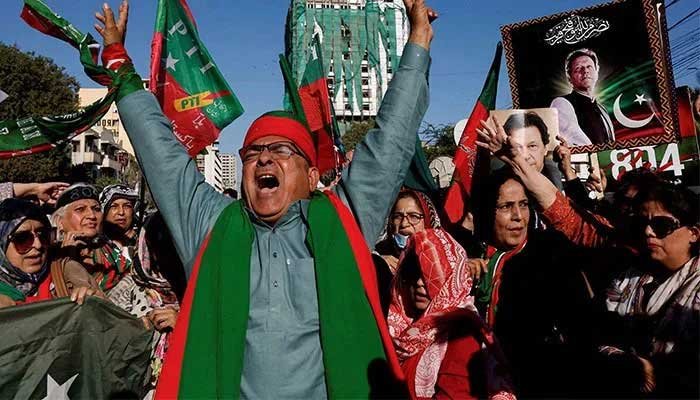
The PTI has announced a nationwide protest and a march toward the federal capital for September 27. The party has said the demonstration is intended to demand the release of its founder Imran Khan and mobilise supporters around what it describes as the supremacy of the Constitution.
KP Police Given Clear Instructions
According to the letter issued to relevant police officers, the KP police chief referred to the IHC proceedings concerning the PTI September 27 protest and instructed officers not to provide facilitation for the planned march.
The directive also required officers to immediately inform the IGP if they received instructions to facilitate the protest. Police personnel who violate the court’s directives could face disciplinary action.
The issue had already come before the IHC during hearings on a petition challenging the planned march. During proceedings, the KP police chief gave an undertaking that illegal or unconstitutional activity connected with the protest would not be permitted.
The court subsequently directed provincial governments to ensure that government funds, official machinery and public resources were not used for the planned political activity.
What the Islamabad High Court Ordered
The IHC’s detailed judgment addressed the balance between the right to protest and the rights of other citizens. The court stated that political parties and public office holders could not lawfully occupy public roads, highways, interchanges, toll plazas or public buildings in Islamabad in a way that obstructed access to essential services.
The court also held that activities infringing citizens’ fundamental rights could amount to violations of constitutional protections. Its 37-page judgment examined concerns about disruptions to routine life, traffic and business activities in the capital.
The court further directed provincial authorities to ensure that state resources were not deployed for the political protest. It also said public servants should not be compelled to participate in political activities.
PTI Maintains Protest Plans
Despite the legal and administrative developments, the PTI has maintained its plans for September 27. The party has described the planned movement as a nationwide protest and has continued preparations to mobilise supporters from different parts of the country.
The party’s stated demands include the release of Imran Khan and what it describes as the protection and supremacy of the Constitution. PTI representatives have also maintained that peaceful demonstrations are a constitutional and legal right.
Khyber Pakhtunkhwa Chief Minister Sohail Afridi has also publicly supported the planned march. In earlier statements, he described the proposed movement as a peaceful but decisive protest and said he intended to lead the march toward Islamabad.
More recently, Afridi met opposition leaders in Islamabad to discuss the upcoming PTI September 27 protest, indicating that preparations and political consultations were continuing ahead of the announced date.
Government Resources at the Centre of Dispute
One of the central issues surrounding the PTI September 27 protest is whether provincial government resources could be used to support a political demonstration.
The IHC specifically directed the chief ministers of the provinces to ensure that government vehicles, personnel, machinery, funds and other official resources were not used for the march. The court also emphasized that government employees could not be compelled to participate in political activities.
The issue has particular significance because the planned march involves supporters travelling toward the federal capital from different parts of Pakistan. Authorities have been preparing security measures in Islamabad and surrounding areas as the September 27 date approaches.
Security and Law-and-Order Concerns
The court’s proceedings also considered previous PTI protests in Islamabad, including events in 2022 and 2024. The detailed judgment referred to the security and law-and-order situations associated with those episodes while considering the potential impact of the proposed march.
Authorities have consequently focused on preventing disruptions to ordinary public life while preparing for the possibility of large gatherings.
The government has also publicly stated that court directions will be enforced. Interior Minister Mohsin Naqvi said authorities would take steps to stop people from marching toward Islamabad in violation of the court’s decision and indicated that contempt proceedings could follow violations.
With September 27 approaching, the PTI September 27 protest remains a significant political and legal development. The PTI continues to call for nationwide mobilisation, while authorities are emphasizing compliance with the IHC’s directions and restrictions on the use of official resources.
The situation involves several competing considerations, including the constitutional right to peaceful political expression, the movement of ordinary citizens, access to public services and the government’s responsibility to maintain public order.
The coming days are likely to focus on how the announced protest is organized, what measures authorities take and whether the parties involved comply with the Islamabad High Court’s directions.
The PTI September 27 protest remains scheduled by the party, while police and provincial authorities have been instructed to operate within the legal framework established by the court.