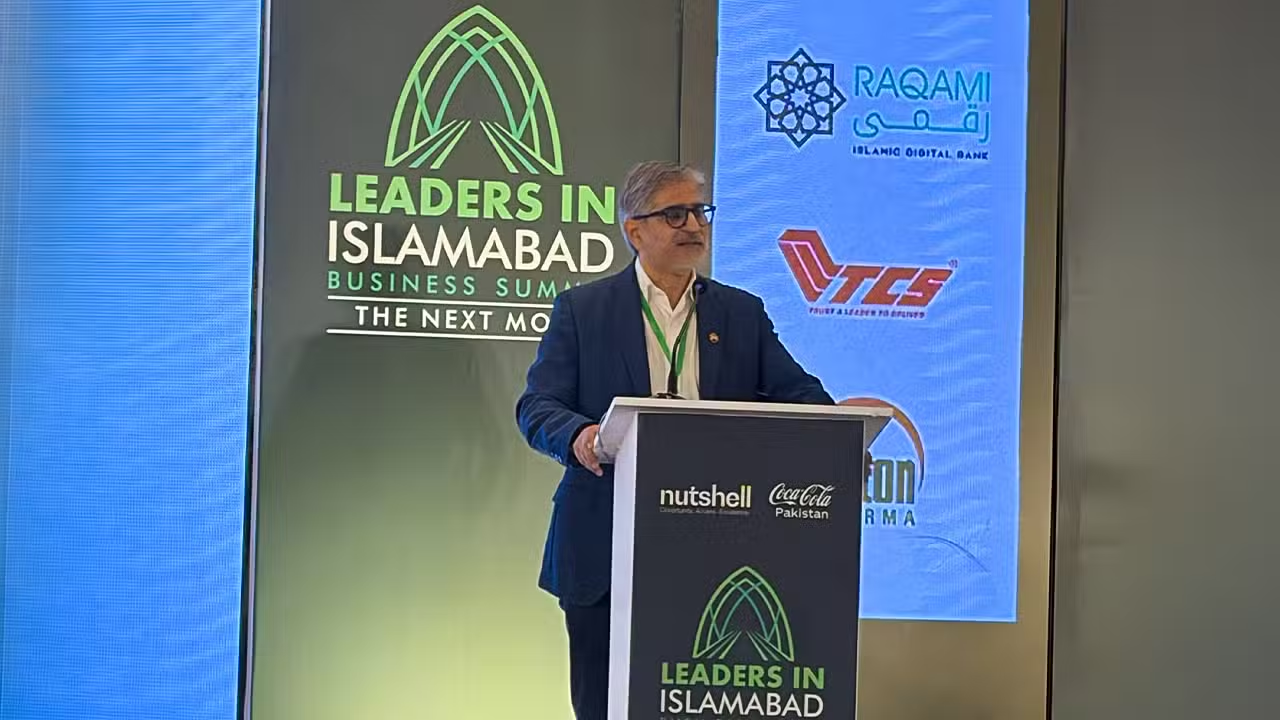
Aamir Ibrahim, CEO of JazzWorld, has identified AI factories Pakistan as an important opportunity for the country to narrow the emerging intelligence divide and participate in the rapidly growing global artificial intelligence economy. Speaking at the Leaders in Islamabad Business Summit, he called for deliberate investment in computing infrastructure, data centres, energy and connectivity to ensure Pakistan can build and export AI-powered capabilities.
During the summit’s opening session, “The Next Move: Reading the Moment,” Ibrahim joined Muhammad Azfar Ahsan, Founder and Chairman of Nutshell Group and former Minister for Investment, and Dr Faisal Hashmi, Senior Director Public Affairs, Sustainability & Communication for Pakistan and Afghanistan at The Coca-Cola Company.
The discussion focused on how Pakistan can respond to major changes taking place in the global economy, particularly the rapid expansion of artificial intelligence.
Building AI Infrastructure
Ibrahim said Pakistan needs to look beyond its traditional export sectors and develop the infrastructure required to compete in the international AI market.
He explained that an AI factory depends on several key inputs, including energy, computing power, data centres and data. These resources can then support outputs such as AI inference, tokens, software, computer code, video and audio.
The concept of AI factories Pakistan therefore extends beyond simply developing individual AI applications. It involves building the underlying infrastructure that allows companies and institutions to create, process and deliver AI-powered services at scale.
Ibrahim said significant investment is already flowing into AI infrastructure globally and argued that Pakistan has an opportunity to develop similar capabilities. He stressed the importance of taking an intentional approach and turning AI infrastructure into an export opportunity.
From AI Consumer to AI Maker
A central point in Ibrahim’s remarks was the need for Pakistan to become an “AI maker” rather than simply consuming technologies developed in other countries.
He said locally developed AI systems could be designed to understand Pakistan’s languages, culture, security requirements and specific social and economic conditions. Such capabilities could potentially serve domestic users while also creating products and services for international markets.
This approach could make AI factories Pakistan part of a broader strategy for technology exports. Instead of only importing AI tools, Pakistani companies could potentially develop software, models, inference services and other digital products for customers around the world.
Ibrahim also highlighted the concept of sovereign AI. He explained that sovereignty in artificial intelligence is not limited to keeping data within national borders. It also involves maintaining greater control over the country’s “cognitive layer” and the technologies used to process information and provide intelligence.
The Emerging Intelligence Divide
Another major concern raised during the summit was the potential emergence of an “intelligence divide.”
According to Ibrahim, the earlier digital divide largely centered on access to connectivity and information. The new divide could increasingly involve access to AI-powered capabilities.
Artificial intelligence is already being applied to areas such as education, information analysis and software development. If access to these capabilities remains concentrated among certain groups, organizations or countries, the economic and social gap could become wider.
Ibrahim argued that Pakistan should work toward making AI capabilities broadly accessible. His vision included widespread access to digital connectivity while ensuring that advanced intelligence tools are not limited to a small portion of society.
Compute, Energy and Data Centres
In his later remarks, Ibrahim returned to the importance of infrastructure. He emphasized that computing capacity, data centres, reliable energy and connectivity will be essential for Pakistan to participate meaningfully in the global AI value chain.
These requirements could become increasingly important as AI models and services demand greater computing resources. For Pakistan, developing this infrastructure could support both domestic digital transformation and new technology-based exports.
The development of AI factories Pakistan could also create opportunities for businesses, technology professionals and investors if the necessary infrastructure and skills are developed together.
Turning Strategic Potential Into Economic Growth
During the summit’s closing leadership dialogue, From Strategic Relevance to National Advantage,Ibrahim joined several senior figures, including former caretaker Prime Minister Senator Anwaar-ul-Haq Kakar, Federal Minister for Climate Change and Environmental Coordination Senator Dr Musadik Malik, former Chief of Air Staff Air Chief Marshal Sohail Aman and Pakistan Business Council Chairman Ziad Bashir.
The discussion examined how Pakistan could translate its strategic strengths into economic opportunities.
Ibrahim emphasized that AI infrastructure should be viewed as part of this wider economic strategy. Building local capabilities could help address domestic requirements while opening opportunities for international exports.
The discussion at the Leaders in Islamabad Business Summit highlighted that artificial intelligence is becoming more than a technology trend. For Pakistan, it could influence future competitiveness, exports, education, software development and access to information.
As global investment in AI continues to expand, AI factories Pakistan could become an important part of discussions about the country’s digital future. The key challenge will be developing the infrastructure, skills, energy capacity and governance needed to turn that potential into practical economic opportunities.