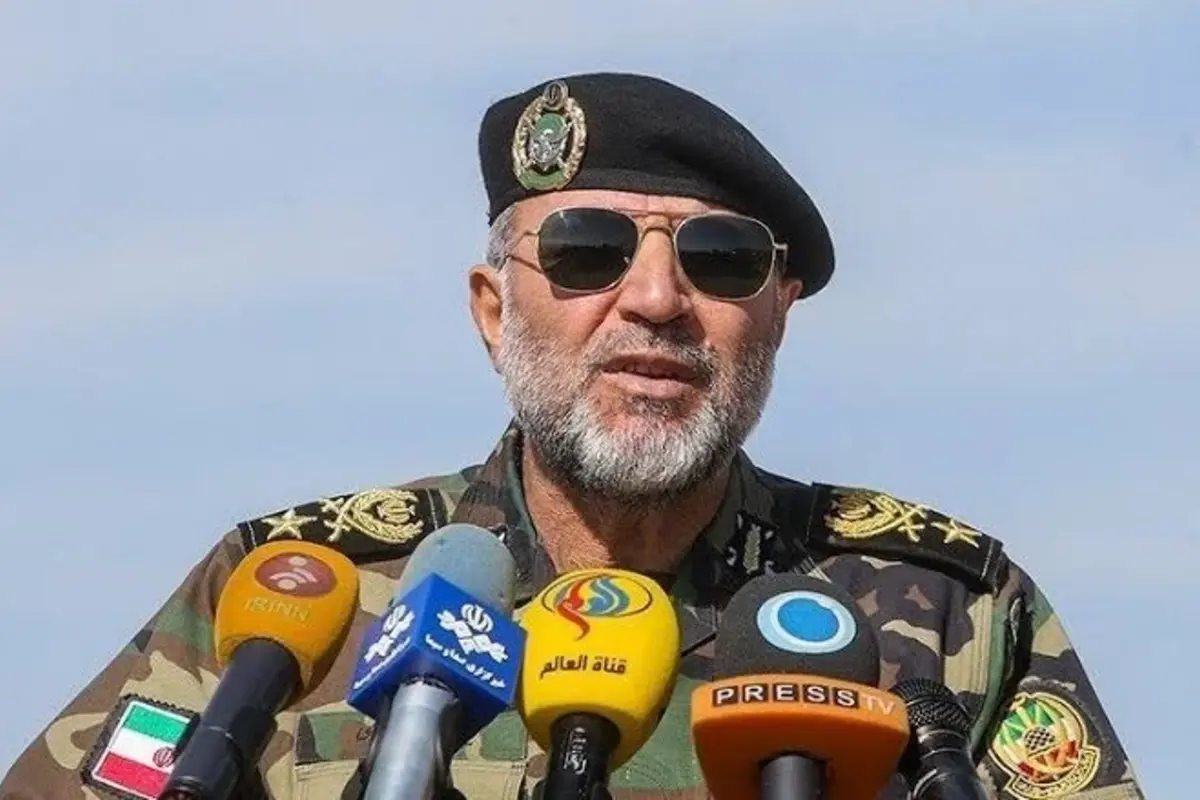
Iran’s military leadership has warned that the country’s adversaries failed to anticipate Tehran’s ability to reshape the confrontation and extend its strategic influence across the region. Deputy Chief of the General Staff of Iran’s Armed Forces Brigadier General Kioumars Heidari said the Iran Strait of Hormuz strategy had become a major factor in the confrontation, with developments around the vital waterway capable of affecting both regional security and the global economy.
Heidari said Iran’s opponents entered the confrontation after preparing extensive scenarios and calculations. However, according to the senior commander, those plans did not fully account for Iran’s ability to respond to changing circumstances or use its strategic capabilities to influence developments beyond its borders.
Strait of Hormuz Remains Strategic
The commander described the Iran Strait of Hormuz as one of the most important strategic issues in the ongoing confrontation. The waterway is a critical route for international energy shipments, making any major disruption or escalation around it a matter of concern for countries far beyond the Middle East.
Heidari argued that Iran’s ability to employ its strategic capabilities had allowed it to influence wider economic dynamics. His remarks suggest that Tehran views its geographical position and control over access to the strategic waterway as important elements of its broader security and deterrence strategy.
The significance of the Iran Strait of Hormuz extends beyond military calculations. Any major change in the security environment surrounding the waterway could have consequences for trade, energy markets and regional stability. This makes the area particularly sensitive during periods of heightened confrontation.
Adversaries Miscalculated Iran’s Response
Heidari said Iran’s adversaries had relied on extensive plans before entering the confrontation but failed to accurately assess the country’s response. He claimed that opponents repeatedly underestimated the capabilities, determination and potential of the Iranian people.
According to the commander, the confrontation was not limited to direct military pressure. Iran’s adversaries also sought to create unrest and insecurity inside the country through what he described as hybrid warfare and the activities of affiliated elements.
Hybrid warfare can involve a combination of military, political, economic, informational and other forms of pressure. Heidari presented these efforts as part of a broader attempt to weaken Iran internally while simultaneously applying pressure from outside.
He said miscalculations by Iran’s opponents had played an important role in the course of the confrontation. In his assessment, the failure to properly understand Iran’s national capabilities resulted in expectations that did not match developments on the ground.
Unity Between Iran and Armed Forces
Beyond military capabilities, Heidari emphasized what he described as the importance of national unity. He said Iran’s strength was based on solidarity between the population and the country’s armed forces.
The commander argued that maintaining internal cohesion and improving coordination were essential for confronting external pressure. He portrayed the relationship between the Iranian people and military institutions as a key factor in preventing adversaries from achieving their objectives.
This emphasis on unity reflects Tehran’s broader focus on resilience during periods of external pressure. According to Heidari, maintaining public cohesion can reduce the effectiveness of efforts aimed at creating insecurity or political instability.
The senior commander also stressed that coordination should continue to be strengthened. In his view, a combination of military readiness, institutional cooperation and public solidarity is necessary to respond effectively to evolving threats.
Wider Regional Consequences
Heidari’s comments also point to the wider regional significance of Iran’s strategic position. The Iran Strait of Hormuz remains closely connected to questions of regional security because of its importance to international shipping and energy flows.
Any escalation involving the waterway could therefore attract attention from governments and markets around the world. For Iran, however, the strategic importance of the area goes beyond its economic role. It is also viewed as an important element of the country’s ability to influence regional calculations.
Heidari’s remarks indicate that Iranian officials believe their adversaries underestimated how Tehran could use its capabilities in response to pressure. The commander presented the confrontation as one in which Iran had demonstrated an ability to adapt and challenge expectations.
Iran Signals Continued Resistance
The message from Heidari was ultimately centered on resilience, strategic capability and national cohesion. He argued that Iran’s opponents had entered the confrontation with detailed plans but failed to account for the country’s ability to respond and influence the wider regional environment.
The Iran Strait of Hormuz therefore remains an important part of the strategic picture outlined by Iranian officials. Its importance to global trade and energy means developments surrounding the waterway could have consequences well beyond the region.
For Tehran, maintaining unity between the population and armed forces remains equally important. Heidari’s remarks suggest that Iran considers internal solidarity and military coordination essential to resisting external pressure and preventing adversaries from achieving their wider objectives.
As tensions continue to shape the regional security environment, the strategic importance of Iran’s capabilities, national cohesion and the Iran Strait of Hormuz is likely to remain a central part of Tehran’s security narrative.