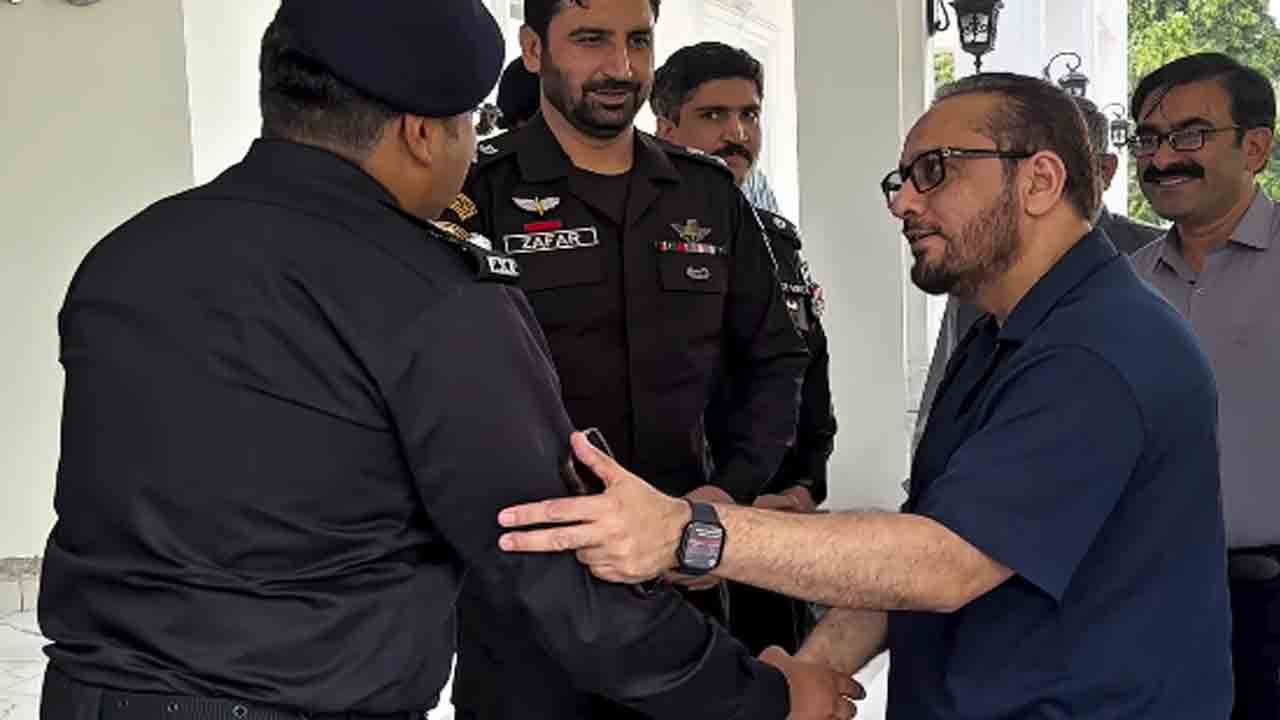
The Punjab government has announced major steps to improve Elite Police Training School medical facilities after Provincial Health Minister Khawaja Imran Nazir inspected the school’s dispensary and reviewed the healthcare arrangements available for police personnel. The minister directed officials to strengthen emergency care, improve medical equipment and ensure that trained doctors and essential medicines are available to personnel serving at the training school.
During his visit, Acting Commandant Elite Police Training School Major Zafar Iqbal, Deputy Director Administration SP Isa Sukhera, Deputy Director Training Major Ali Asadullah and Major Muhammad Asad Jamal briefed the health minister on the existing arrangements. The inspection focused on identifying gaps in healthcare services and developing measures to provide faster and more reliable treatment.
Dispensary to Be Linked With THQ Hospital
One of the key decisions was to immediately link the Elite Police Training School dispensary with the nearby Tehsil Headquarters Hospital. This arrangement is expected to make it easier for police personnel to receive specialist treatment and emergency care when their medical needs go beyond the facilities available at the training school.
Khawaja Imran Nazir also directed authorities to appoint both a female and a male doctor at the dispensary. He stressed that doctors serving police personnel should have appropriate trauma-related qualifications because members of the elite force often perform duties in high-risk environments.
The emphasis on trauma-trained doctors reflects the demanding responsibilities of personnel who may be deployed during counterterrorism operations, security emergencies and other situations where immediate medical intervention can be critical.
Modern Equipment and Medicines
The provincial health minister ordered officials to provide additional beds and modern medical equipment at the dispensary. Cardiac monitors and ECG machines were specifically included in the instructions to strengthen the facility’s ability to deal with patients requiring urgent assessment.
The minister also stressed that medicines should remain readily available. Avoiding shortages will be particularly important for a training facility where a large number of personnel may require treatment for injuries, illness or other health problems.
Improving Elite Police Training School medical facilities is therefore expected to involve not only additional staff but also better equipment, medicine supplies and stronger links with nearby healthcare institutions.
Ambulance and Medical Screening
Emergency transportation was another major area addressed during the inspection. Nazir directed officials to upgrade the school’s ambulance and contacted the Director General of Rescue 1122 during the visit to discuss the matter.
The minister also ordered immediate medical screening of personnel at the Elite Police Training School. The Chief Executive Officer of Health was directed to make the necessary arrangements without delay.
Regular health screening can help identify medical problems at an early stage and allow personnel to receive appropriate treatment before conditions become more serious. For police officers working in physically demanding roles, routine screening can also support better overall health and readiness.
Mobile Clinics and Field Hospitals
To make healthcare more accessible, the minister directed authorities to deploy clinics on wheels and field hospitals at the training school twice a week on alternate days. These services will allow personnel to receive medical attention without having to travel elsewhere for routine consultations and basic treatment.
The initiative is particularly relevant for a training environment where personnel may have demanding schedules and limited opportunities to visit hospitals during working hours.
Authorities also decided to provide medicines at the doorsteps of eligible elite force personnel. Patients identified and registered through medical screening and field hospital services will be able to receive medicines at home.
Such arrangements could reduce unnecessary hospital visits while helping ensure that patients continue their prescribed treatment.
Supporting Frontline Police Personnel
Khawaja Imran Nazir highlighted the important responsibilities performed by elite force personnel, describing them as frontline members of the security system. He specifically praised their services in counterterrorism and other sensitive operations.
Police personnel working in high-risk assignments can face physical injuries, exhaustion and other health challenges. For this reason, dependable Elite Police Training School medical facilities can play an important role in maintaining their health and operational readiness.
The government’s latest instructions indicate an effort to build a more comprehensive healthcare system around the training school. Connecting the dispensary with a THQ hospital, appointing qualified doctors, improving emergency equipment, upgrading ambulance services and introducing mobile healthcare facilities could collectively strengthen medical support.
A Wider Healthcare Priority
The measures announced at the Elite Police Training School also reflect the importance of healthcare for law-enforcement personnel. Police officers are expected to respond quickly to emergencies and work under difficult conditions, making access to timely medical treatment an essential part of their welfare.
By improving Elite Police Training School medical facilities, authorities can provide personnel with better access to emergency care, routine screening and medicines while reducing delays in treatment.
The planned improvements will ultimately depend on effective implementation, adequate staffing and regular availability of equipment and medicines. If the directives are carried out as planned, the training school could develop a stronger healthcare system capable of supporting police personnel both during training and in their demanding frontline duties.
For the elite force, better medical support is not simply a welfare measure. It is also an investment in the health, preparedness and effectiveness of personnel responsible for protecting the public.