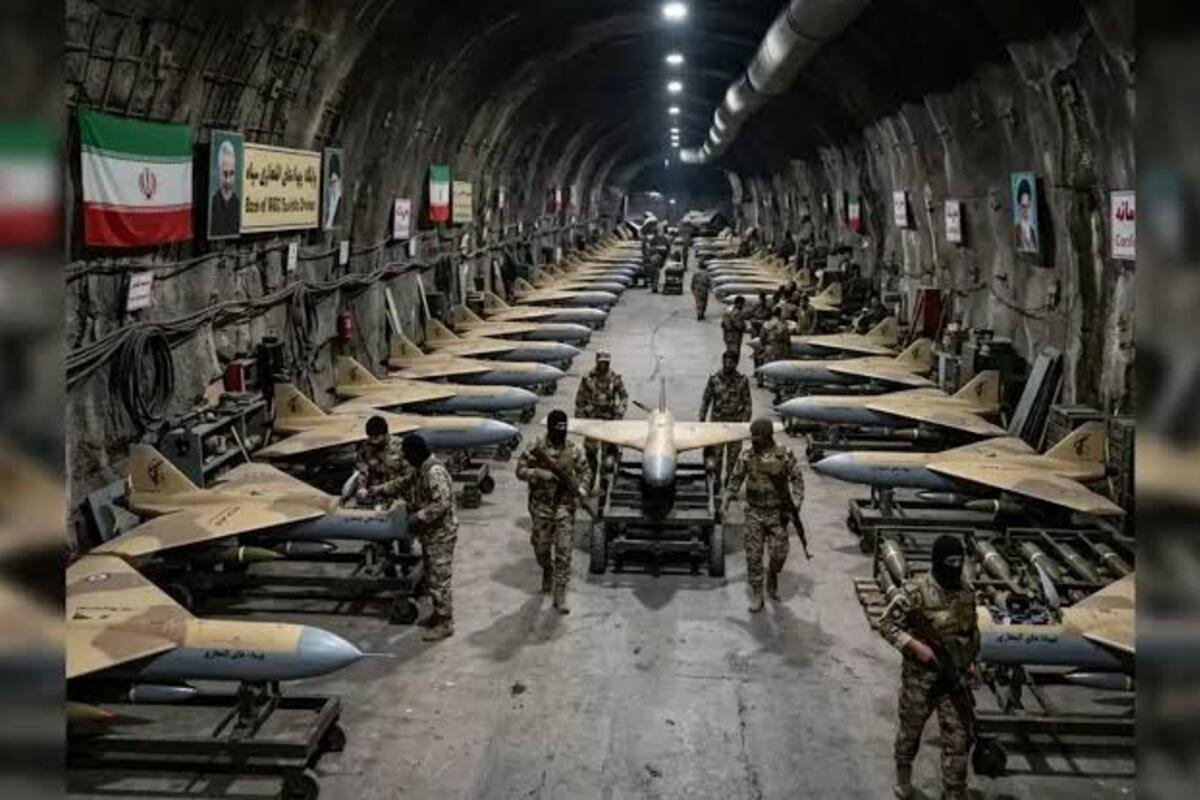
Iran’s Islamic Revolution Guards Corps (IRGC) has strongly rejected claims by US officials that Tehran possesses only a limited number of missiles, insisting that Iran missile capabilities remain intact and that the country has continued missile production despite military conflict and external pressure.
According to IRGC spokesman Brigadier General Hossein Mohebbi, earlier predictions that Iran’s missile stockpiles would eventually be exhausted have not materialized. He said the Islamic Republic has maintained its ability to manufacture missiles while also improving the technology behind its weapons systems.
The remarks come at a time of continued tension between Iran, the United States and Israel, with military confrontation increasingly accompanied by economic sanctions and political pressure.
IRGC Rejects Claims of Limited Missile Stocks
Mohebbi dismissed the idea that Iran’s missile arsenal had been significantly depleted. He said assumptions about the eventual exhaustion of Iranian missile stockpiles had proven incorrect because missile production continued during the conflict.
The statement highlights the importance Tehran places on its domestic defense industry. Iran has spent decades developing indigenous military technology, partly in response to sanctions and restrictions that have limited its access to foreign weapons and defense equipment.
According to the IRGC spokesman, Iran missile capabilities have not only been sustained but have also continued to develop. This claim challenges assessments suggesting that repeated military operations and retaliatory strikes could significantly weaken Tehran’s ability to maintain its missile forces.
For Iran, maintaining production capacity is as important as the number of missiles already stored in its arsenal. A country capable of continuing production can potentially replace weapons that have been used, reducing the long-term impact of military pressure on its strategic capabilities.
Claims of Advanced Missile Technology
Mohebbi also claimed that Iranian missiles have become more technologically advanced. According to him, Iranian systems are no longer restricted to striking only predetermined targets.
He said certain missiles can be guided and have their flight paths adjusted, allowing them to identify and track targets. If accurate, such capabilities would represent an important development in Iran’s military technology.
Modern missile systems increasingly depend on guidance, maneuverability and precision rather than simply range and explosive power. The ability to alter a missile’s trajectory during flight could make interception more difficult and potentially improve its ability to respond to changing battlefield conditions.
However, the specific technical capabilities described by the IRGC spokesman have not been independently detailed in the information provided. The statements should therefore be understood as claims made by an Iranian military official.
Still, the emphasis on technological development demonstrates how Iran missile capabilities have become a central part of Tehran’s broader strategy of deterrence.
Retaliation Following Attacks on Infrastructure
Mohebbi said attacks on Iranian infrastructure, including the South Pars gas field in Asaluyeh, prompted Iranian forces to launch retaliatory missile strikes.
According to the spokesman, Iranian forces targeted infrastructure and centers connected to US and Israeli interests in response to attacks against Iranian territory and facilities.
The exchange reflects the wider pattern of escalation in which attacks against military or strategic infrastructure can trigger retaliatory action. Energy facilities are particularly significant because they are closely connected to a country’s economy and national security.
South Pars is one of Iran’s most important energy regions, making any attack or disruption involving the area highly sensitive. Damage to such infrastructure could have consequences beyond the immediate military confrontation, affecting energy production and economic activity.
Iran’s response, according to the IRGC, was intended to demonstrate that attacks on critical infrastructure would not go unanswered.
From Military Pressure to Economic Sanctions
Mohebbi argued that Washington has increasingly relied on sanctions and economic pressure because Iran’s military strength has made it more difficult for the United States to achieve its objectives through military means.
Iran has faced various forms of US economic pressure for decades, with sanctions affecting trade, banking, energy exports, investment and access to international financial systems.
The IRGC spokesman described the latest sanctions as part of a broader strategy to pressure Tehran when military action does not produce the desired results.
From Iran’s perspective, economic pressure and military confrontation are connected parts of the same geopolitical struggle. Tehran has repeatedly argued that its defense programs are necessary to protect national sovereignty and deter potential attacks.
At the same time, the United States and its allies have long expressed concerns about Iran’s missile program and its impact on regional security.
Missile Production as a Strategic Priority
The continued development of Iran missile capabilities remains a major element of the country’s defense strategy. Iran has invested heavily in domestic production, seeking to reduce its dependence on foreign suppliers and maintain military readiness despite sanctions.
Mohebbi’s comments suggest that Tehran sees sustained production as evidence of its ability to withstand prolonged pressure. The ability to manufacture weapons during conflict can be strategically important, particularly when a country faces restrictions on importing advanced military equipment.
Iran’s missile program has also become one of its most visible military assets. Ballistic and other missile systems provide Tehran with the ability to project military power beyond its borders and establish a deterrent against potential adversaries.
As regional tensions continue, the future development of Iran missile capabilities will likely remain closely watched by the United States, Israel and other regional powers.
What the Latest IRGC Statement Means
The IRGC’s latest position sends a clear message that Iran does not believe its missile forces have been exhausted or seriously weakened. Instead, Iranian officials are presenting continued production and technological development as proof of the resilience of the country’s defense industry.
The claims also reinforce Tehran’s broader argument that military and economic pressure will not force Iran to abandon its strategic defense capabilities.
Whether these claims can be independently verified remains an important question. However, the statement itself highlights the central role that Iran missile capabilities play in the country’s security strategy.
With tensions between Tehran, Washington and Israel continuing, Iran’s missile program is likely to remain a major source of regional concern and a key factor shaping future military and diplomatic developments.