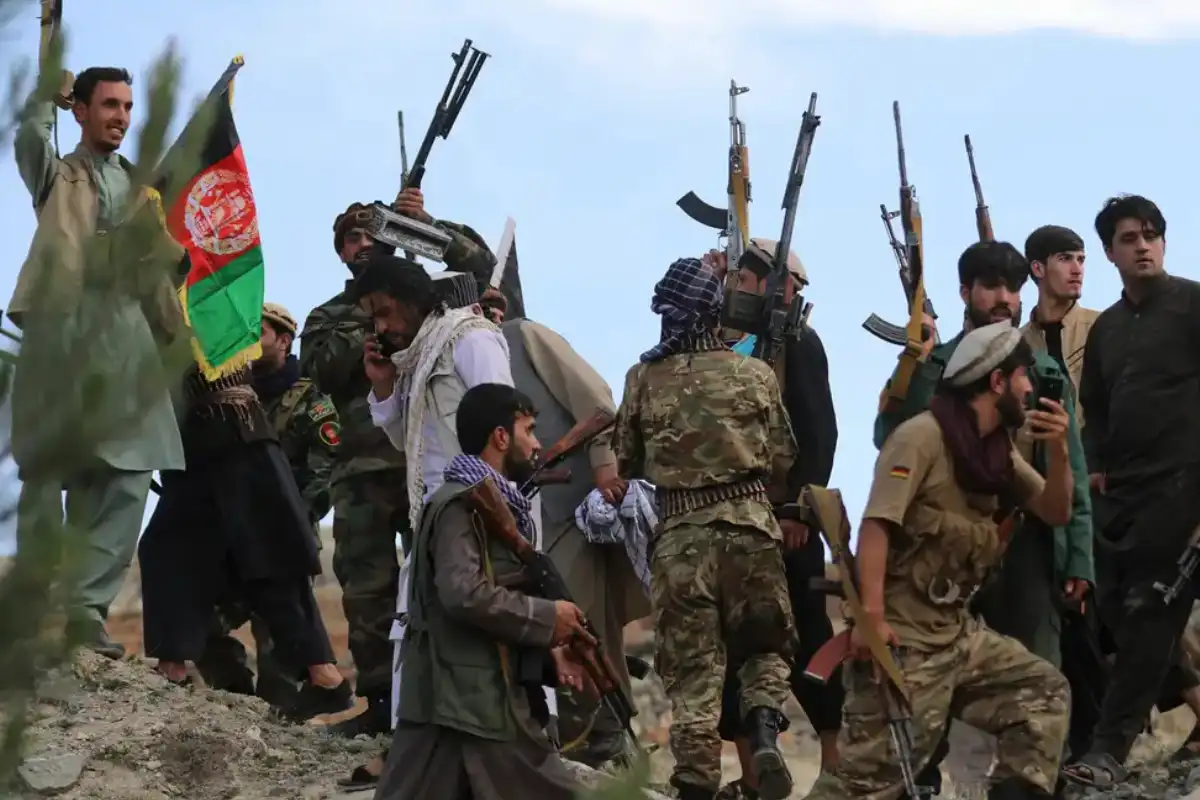
Afghan resistance groups have increased their reported armed activities against Taliban forces across several parts of Afghanistan over the past week, according to claims issued by opposition factions. The National Resistance Front (NRF), Afghanistan Freedom Front (AFF) and Afghanistan United Front (AUF) reported a series of attacks in provinces including Badakhshan, Baghlan, Kandahar and Helmand.
The reported operations involved attacks on security positions, rocket strikes and direct clashes. The resistance groups claimed that dozens of Taliban personnel were killed or wounded, although the figures have not been independently verified.
Attacks Reported in Baghlan and Kunduz
The National Resistance Front reported an operation against Taliban forces in Fering district of Baghlan on August 16. According to the group, one Taliban member was killed and two others were wounded during the confrontation.
The NRF also claimed responsibility for an attack on the Taliban’s Seventh Police Zone in Kunduz on August 15. The group said three Taliban members were killed and a military vehicle was destroyed.
These incidents indicate that opposition groups continue to target Taliban security infrastructure in northern Afghanistan, where resistance activity has periodically been reported since the Taliban returned to power.
Fighting Escalates in Badakhshan
Badakhshan emerged as one of the main areas of reported resistance activity during the week.
The Afghanistan Freedom Front said it attacked Taliban positions in Zebak district on August 16. The group claimed six Taliban members were killed and eight others injured. It also claimed Taliban forces withdrew from several locations during the fighting.
Further clashes were reported on August 19 in Faizabad, the provincial capital. The AFF said it launched rockets toward the Taliban governor’s office and a security checkpoint. According to the group, fighting continued for around 30 minutes, resulting in four Taliban deaths and five injuries.
The AFF reported another confrontation in Zebak on August 20. It claimed the fighting lasted approximately three and a half hours and resulted in six Taliban members being killed and at least 10 wounded.
The group also claimed that Taliban attempts to capture its positions were unsuccessful.
Operations in Southern Afghanistan
Resistance activity was also reported in southern Afghanistan.
The Afghanistan United Front said it attacked Taliban positions in Lashkar Gah, the capital of Helmand province, on August 18. According to the group, four Taliban members were killed and a Ranger vehicle was destroyed.
The following day, the AUF reported another attack, this time targeting the entrance of a military facility belonging to the Taliban’s 205 Corps in Kandahar.
The group claimed that five Taliban members were killed, three were injured and a military vehicle was destroyed.
The reports suggest that Afghan resistance groups are attempting to maintain pressure on Taliban forces across geographically separated areas rather than concentrating their activities in a single province.
Reported Casualties
Based on the figures provided by the resistance organizations, at least 29 Taliban members were reportedly killed and 28 wounded during the incidents described over the past week.
However, these figures should be treated cautiously because the claims come primarily from the groups involved in the attacks. Independent verification of battlefield casualty figures in Afghanistan can be difficult because access to affected areas is limited and the Taliban does not necessarily provide detailed public accounts of every security incident.
Consequently, the reported numbers provide an indication of the scale claimed by the resistance groups rather than an independently confirmed casualty count.
A Wider Challenge for the Taliban
The latest incidents highlight continuing security challenges facing the Taliban government more than three years after it returned to power.
Although the Taliban has maintained control over Afghanistan’s major cities and most of the country’s territory, armed opposition groups have continued to carry out attacks in some areas. The NRF has been particularly active in northern Afghanistan, while the AFF and AUF have also claimed operations against Taliban targets.
The nature of these attacks varies. Some involve small-scale assaults on security positions, while others reportedly involve rockets and extended ground clashes.
For the Taliban, repeated attacks create security and political challenges. Maintaining stability remains important for a government seeking international recognition and attempting to demonstrate that it can control the country’s security environment.
The increase in reported operations does not necessarily mean that Afghanistan is entering a nationwide armed conflict. The incidents remain geographically concentrated, and the Taliban continues to exercise control over the overwhelming majority of the country.
Nevertheless, the activities of Afghan resistance groups demonstrate that armed opposition has not disappeared. Continued attacks could place additional pressure on Taliban security forces, particularly in areas where local geography and existing political grievances provide opportunities for resistance factions.
The reported clashes point to a persistent but fragmented security challenge. Whether these groups can expand their operations, coordinate more effectively or gain broader local support will determine how significant the resistance becomes in Afghanistan’s evolving political and security landscape.