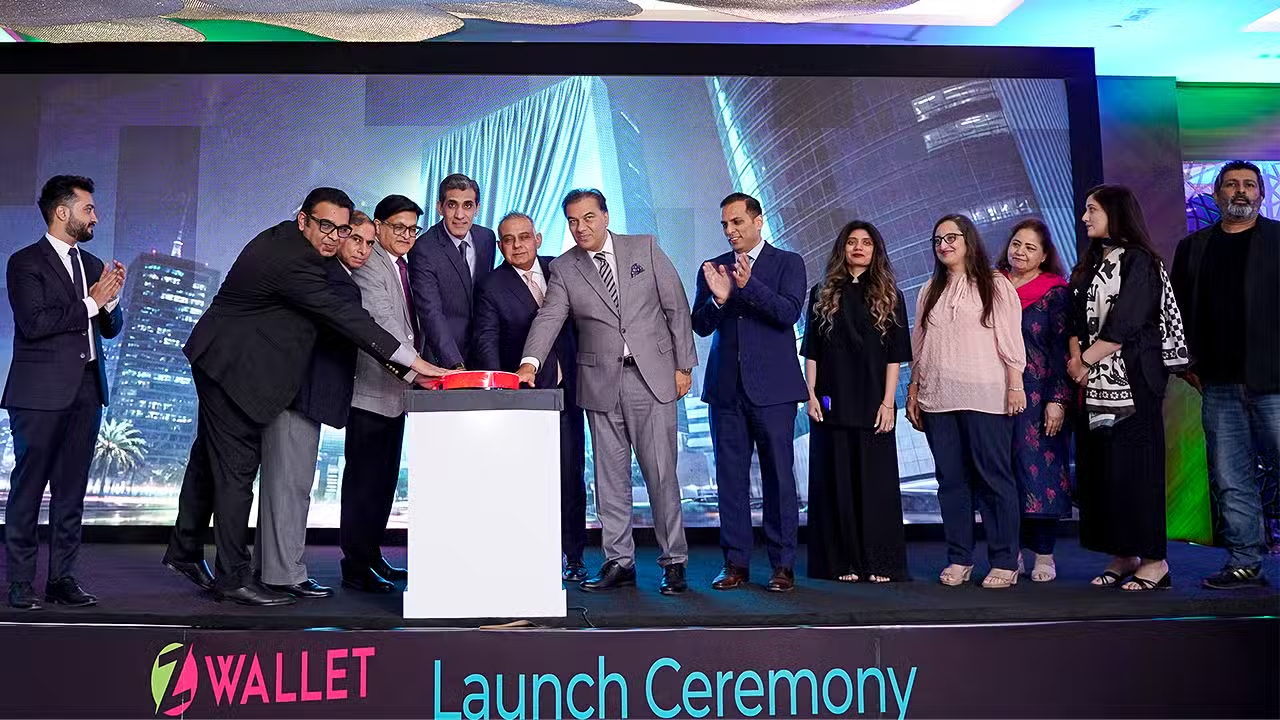
Zong has partnered with Zindigi, powered by JS Bank, to launch Z-Wallet, a new embedded-finance service that brings digital banking directly into the My Zong App. The initiative gives millions of Pakistani users access to essential financial services without requiring them to download or switch to a separate banking application.
Banking Comes to My Zong App
The launch represents a significant development in Pakistan’s growing digital-finance ecosystem. Through Z-Wallet, My Zong App users can access selected banking services using a platform they already use for their telecommunications needs.
My Zong App has more than 22 million monthly active users, giving the new service a substantial potential customer base. Instead of requiring users to maintain another application for basic financial transactions, Zong has integrated banking functionality into its existing digital platform.
The service is powered by Zindigi’s regulated Banking-as-a-Service infrastructure and operates under the regulatory framework of the State Bank of Pakistan.
What Services Does Z-Wallet Offer?
The initial Z-Wallet offering provides several everyday financial services through a single login and PIN.
Users can transfer money between banks through RAAST, Pakistan’s instant payment infrastructure. The wallet also supports utility and internet bill payments as well as mobile top-ups.
These features are designed to make routine transactions faster and more convenient, particularly for customers who already depend on the My Zong App for managing their mobile services.
The financial ecosystem is expected to expand in the future. Planned additions include nano lending, a Z-Debit Card and specialized Zong bundles.
If these services are introduced as planned, the platform could evolve from a basic payment facility into a wider digital-finance ecosystem.
Partnership Between Telecom and Banking
The launch demonstrates how telecommunications and financial technology companies are increasingly working together to provide integrated digital services.
Zong contributes its large customer base, technology platforms and nationwide digital reach, while Zindigi provides the regulated financial infrastructure required to deliver banking services.
This model is known as embedded finance, where financial products are incorporated directly into non-banking digital platforms.
Instead of visiting a separate banking application, customers can access financial services within platforms they already use for communication, shopping, transportation or other daily activities.
For Pakistan, this approach could help encourage wider adoption of digital payments and financial services.
Early Customer Response
The initial performance of Z-Wallet has provided encouraging signs for the partnership.
Following its soft launch, approximately 22,000 verified wallets were reportedly onboarded, while more than 12,000 transactions were processed within a few weeks.
The early activity occurred before significant marketing investment, suggesting that some existing My Zong App users were interested in accessing financial services through the platform.
Zong also reports more than 500,000 new My Zong App downloads every month. This expanding user base provides a significant channel through which the wallet can potentially reach new customers.
Supporting Digital Financial Inclusion
One of the major objectives behind Z-Wallet is improving access to digital financial services.
Pakistan has a large and increasingly connected population, but access to convenient formal financial services remains an important challenge.
Embedding financial tools into an application already used by millions could reduce some of the barriers associated with adopting digital banking.
Users do not necessarily need to become familiar with an entirely new platform to make payments or transfer funds. Instead, financial functions become part of an existing digital experience.
The approach could be particularly useful as more Pakistanis become comfortable with mobile-based transactions and cashless payments.
Zong’s Broader Digital Transformation
The launch also reflects Zong’s transition from a traditional telecommunications operator toward a broader technology services enterprise.
The company is expanding its digital products and services while exploring areas beyond conventional connectivity.
By adding financial services to the My Zong App, Zong is positioning the platform as a more comprehensive digital destination.
The company also plans to incorporate artificial intelligence and intelligent technologies across its digital ecosystem, with the aim of improving customer interactions and creating more personalized experiences.
A Growing Embedded-Finance Market
The development of Z-Wallet reflects a broader global trend in which financial services are increasingly becoming part of everyday digital platforms.
Embedded finance can allow companies to offer payments, lending, cards and other financial products without requiring customers to interact with a traditional standalone financial institution at every stage.
For consumers, the major advantage is convenience. For businesses, it creates opportunities to develop new services around existing customer relationships.
In Pakistan, partnerships between technology companies and regulated financial institutions could play an important role in expanding the digital economy.
The success of Z-Wallet will depend on how quickly customers adopt the service and how effectively Zong and Zindigi expand its features.
The planned debit card, lending services and specialized bundles could significantly broaden its usefulness.
With millions of My Zong App users and a rapidly growing digital economy, the partnership has the potential to make financial services more accessible to a much wider audience.
The launch ultimately represents more than the addition of a new wallet. It signals a shift toward a connected digital ecosystem where telecommunications, payments and financial services can operate together within a single platform.