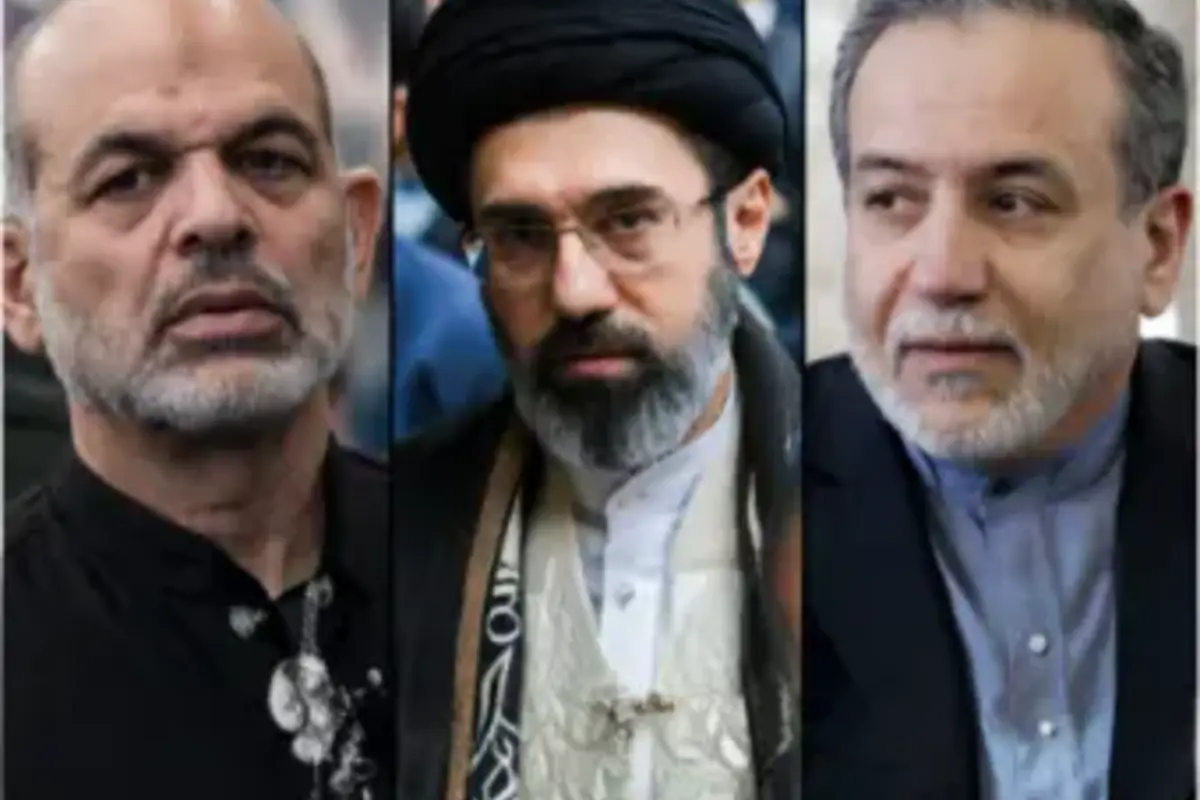
Iran’s Leader and Commander-in-Chief of the Armed Forces, Ayatollah Seyyed Mojtaba Hosseini Khamenei, has appointed Ahmad Vahidi as the new commander of the Islamic Revolution Guards Corps (IRGC). The appointment was announced Monday as part of a wider reshuffle involving six senior military positions and comes amid heightened regional tensions.
In an official decree, Khamenei promoted Vahidi to the rank of major general and highlighted his extensive military experience and record of service. He succeeds Major General Mohammad Pakpour, whose death was described by Iranian authorities as a martyrdom at the hands of the Zionist-American enemy.
New Role Comes at Critical Time
The appointment of Ahmad Vahidi places an experienced military official at the head of one of Iran’s most important security institutions.
In his decree, Khamenei instructed the new commander to focus on strengthening Iran’s military capabilities and maintaining a high level of readiness. The stated objective is to strengthen deterrence while preserving the ability to respond effectively during what Iranian authorities describe as a strategic confrontation with hostile powers.
The IRGC plays a central role in Iran’s national security structure and oversees a wide range of military and strategic responsibilities. Its forces operate alongside Iran’s regular military and have significant responsibilities in areas including missile capabilities, regional security and strategic defense.
Focus on Military Readiness
Khamenei called on Ahmad Vahidi to maintain what he described as “smart readiness” for powerful military operations. The directive reflects Iran’s emphasis on preparedness at a time when tensions across West Asia remain high.
The new commander will also be expected to strengthen the IRGC’s organizational and command structures. According to the appointment decree, these structures should be based on a combination of scientific knowledge, modern management skills and the organization’s ideological principles.
The Leader also stressed the importance of cultural development within the IRGC, calling for greater emphasis on piety, awareness and revolutionary commitment among commanders and personnel.
Vahidi’s Military Background
Ahmad Vahidi brings decades of experience in Iran’s military and government institutions.
He holds a bachelor’s degree in electronic engineering as well as advanced qualifications in strategic studies. His career within the IRGC began during the early years of the Islamic Republic, and he served as the organization’s deputy intelligence chief between 1985 and 1988.
His experience later expanded beyond military intelligence. Vahidi served as Iran’s interior minister, giving him experience in both security affairs and civilian administration.
That combination of military and governmental experience is likely to be important as he takes responsibility for leading the IRGC during a period of heightened regional uncertainty.
Leadership Change After Pakpour’s Death
The appointment follows the death of Major General Mohammad Pakpour, who had served as IRGC commander before his reported killing.
Iranian authorities described Pakpour’s death as the result of an attack by what they called the Zionist-American enemy. His death created the need for a rapid leadership transition at the top of the IRGC.
By selecting Ahmad Vahidi, Iran’s leadership has chosen an official with long-standing experience in the country’s security establishment.
The transition also comes as Iran continues to emphasize the need for stronger military preparedness and deterrence. Iranian officials have repeatedly argued that maintaining credible defensive and strategic capabilities is essential to protecting national sovereignty.
Broader Regional Significance
The appointment of Ahmad Vahidi could attract attention beyond Iran because of the IRGC’s role in the country’s regional security policy.
The organization has been involved in Iran’s broader military and strategic activities across West Asia, making changes to its senior leadership closely watched by neighboring countries and international governments.
Vahidi’s previous experience in intelligence, military affairs and government administration could shape his approach to the IRGC’s future priorities.
However, the precise policies and operational changes under his leadership will become clearer over time as the new commander establishes his priorities.
A New Chapter for the IRGC
For Ahmad Vahidi, taking command of the IRGC represents one of the most significant positions of his long military career.
His appointment signals continuity in Iran’s emphasis on military preparedness while bringing an experienced figure back into a senior operational role. The leadership will expect him to strengthen the organization’s capabilities, improve command structures and maintain readiness amid continuing regional tensions.
The coming months will therefore be important for assessing how Vahidi approaches his new responsibilities and whether his leadership brings significant changes to the IRGC’s military and organizational priorities.