Iran US military tensions have intensified following fresh claims by the Iranian Army that it targeted key facilities at the US-operated Ahmad al-Jaber Air Base in Kuwait. The announcement comes amid an ongoing exchange of accusations and military actions between Tehran and Washington, further raising concerns about regional stability. While Iranian officials described the operation as a response to recent US strikes, the claims have not been independently verified by US or Kuwaiti authorities.
Iran Claims Strike on US-Operated Air Base
According to the Iranian Army’s Public Relations Office, the latest operation was conducted as part of the 27th phase of Operation Sa’eqeh. The military stated that loitering drones targeted aircraft shelters, satellite communication systems, and equipment storage facilities at Ahmad al-Jaber Air Base.
Iran described the installation as an important hub supporting US air operations, surveillance activities, and regional military logistics. Officials claimed the strike was intended to weaken operational capabilities while responding to recent US military actions against Iranian territory.
At the time of the announcement, there was no official confirmation from the United States or Kuwait regarding the reported damage.
Rising Conflict Between Tehran and Washington
The latest developments add another chapter to the growing confrontation between Iran and the United States.
Iranian officials have accused Washington of carrying out military strikes in southern Iran earlier this month, including an attack on residential areas. Tehran argues these actions violated previous understandings and prompted retaliatory military operations.
In response, Iran says it has launched a series of missile and drone attacks under Operation Nasr 2 and Operation Sa’eqeh, targeting US-operated military facilities across the region.
These exchanges have significantly increased concerns about the possibility of broader regional instability.
Civilian Casualties Fuel Tensions
Iran also condemned what it described as a US strike on a residential building on Qeshm Island.
According to Iranian officials, the attack killed three members of the same family, including a mother, father, and their young child. Two other children were reportedly rescued from the rubble and transported to a hospital for medical treatment.
Iranian authorities described the incident as a violation of humanitarian principles and accused Washington of targeting civilian infrastructure.
The United States has not publicly confirmed the claims surrounding the reported strike.
Satellite Images Raise New Questions
Adding another layer to the situation, recently released satellite imagery has attracted international attention.
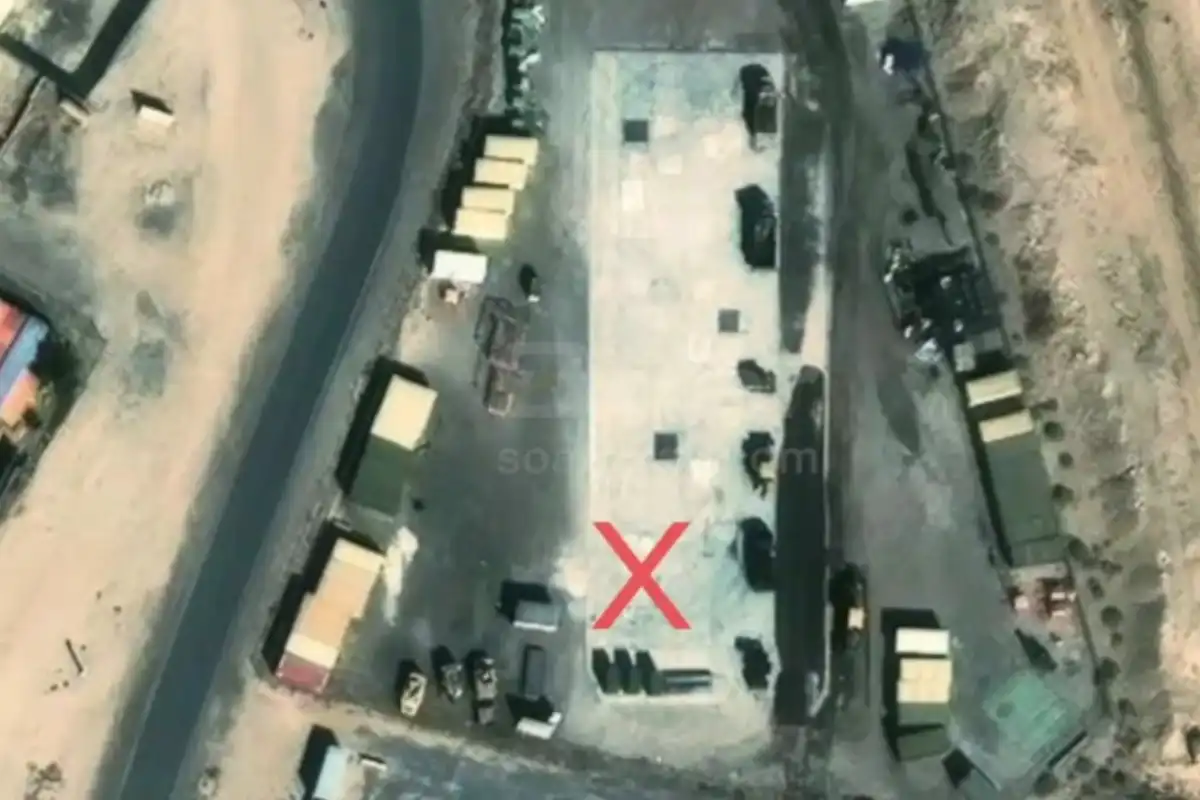
According to analysis conducted by Soar Atlas, fresh images appear to show possible damage at Ali Al Salem Air Base, another military installation in Kuwait used by US forces.
The assessment suggested that part of a storage area appeared blackened compared to previous imagery, potentially indicating recent damage.
However, satellite imagery alone cannot determine the exact cause of the changes, and no official military confirmation has been issued regarding the findings.
Strategic Importance of Kuwait
Kuwait remains one of the United States’ most important military partners in the Gulf region.
Several American military installations operate within the country, supporting logistics, surveillance, training, and regional security operations.
Because of its strategic location, Kuwait has long played a critical role in US military planning across the Middle East.
Any reported attack involving facilities in Kuwait naturally attracts international attention due to the potential implications for regional security and energy markets.
Reports of Possible US Force Adjustments
Recent media reports have suggested that Washington is reviewing its military footprint in Kuwait.
According to reports citing US officials, the Pentagon had already been evaluating the possibility of reducing troop levels before the latest escalation with Iran.
The review reportedly reflects changing regional security assessments and evolving military priorities.
Analysts believe any future adjustments would likely focus on maintaining operational flexibility while reducing unnecessary risks to deployed personnel.
No final decisions have been officially announced regarding the long-term presence of US forces in Kuwait.
Regional Security Remains Fragile
The latest claims highlight how quickly security conditions can change across the Gulf region.
Military facilities, commercial shipping routes, and energy infrastructure remain sensitive areas whenever tensions rise between regional powers.
Neighboring countries continue monitoring developments closely, as any significant escalation could affect diplomatic relations, trade, and broader regional stability.
International observers continue encouraging restraint and dialogue to prevent further deterioration of the security situation.
Importance of Independent Verification
As with many developments during periods of conflict, several claims made by both sides remain independently unverified.
Military statements released during ongoing confrontations often present each side’s perspective while complete information may not yet be available.
Independent verification from neutral organizations, satellite analysis, and official investigations is typically necessary before drawing firm conclusions regarding reported military damage or casualty figures.
Such verification helps provide greater clarity as events continue to unfold.
Global Attention on the Crisis
The confrontation between Iran and the United States continues to receive close international attention.
Governments around the world remain concerned about the potential impact on regional peace, global energy supplies, and international security.
Diplomatic efforts aimed at reducing tensions remain important as both countries continue exchanging statements and military claims.
The coming days may determine whether the situation moves toward de-escalation or experiences further military confrontation.
The latest Iran US military tensions have intensified following Iranian claims of drone strikes on key facilities at the US-operated Ahmad al-Jaber Air Base in Kuwait and reports suggesting possible damage at another American military installation. While Iranian officials describe the attacks as retaliation for recent US military actions, these claims have not been independently verified.
With regional security already under pressure, developments in the Gulf continue to be closely monitored by governments and international observers. Whether diplomatic efforts succeed in reducing tensions or further confrontations emerge will likely shape the next phase of this increasingly complex geopolitical crisis.