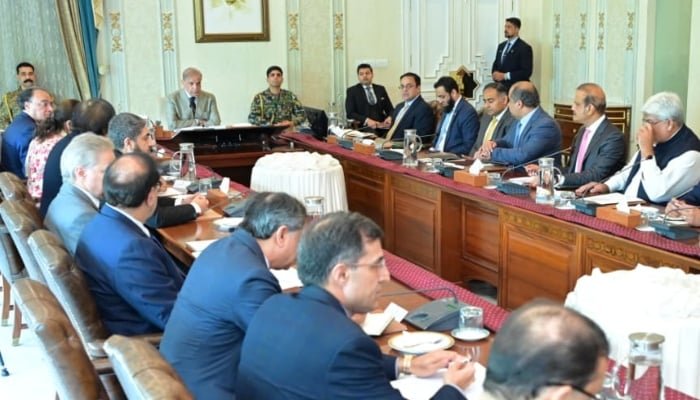
Pakistan Business Reforms remain a key priority for the federal government as Prime Minister Shehbaz Sharif reaffirmed his commitment to creating a more business-friendly environment across the country. During a high-level meeting reviewing the performance of the Federal Board of Revenue (FBR), the prime minister emphasized that the business community is the backbone of Pakistan’s economy and deserves every possible support to expand production, increase exports, and strengthen economic growth.
The meeting focused on improving tax administration, enhancing cooperation with businesses, and implementing reforms that encourage investment while making the taxation system more transparent and efficient. These initiatives reflect the government’s broader strategy to improve the country’s economic outlook and restore investor confidence.
Business Community Recognized as a Key Economic Driver
Prime Minister Shehbaz Sharif stressed that businesses play a vital role in generating employment, increasing industrial production, and contributing to national development. He stated that sustainable economic progress depends on a thriving private sector supported by practical government policies.
As part of the latest Pakistan Business Reforms, the prime minister instructed the FBR to maintain regular engagement with business leaders and resolve their legitimate concerns without unnecessary delays. Strengthening communication between tax authorities and the private sector is expected to improve trust and encourage greater compliance.
He also directed senior FBR officials to visit Karachi during the first week of every month. Since Karachi serves as Pakistan’s commercial and financial hub, these visits aim to provide businesses with direct access to decision-makers and create opportunities for resolving tax-related issues promptly.
Simplifying the Tax System
One of the government’s primary objectives is to simplify Pakistan’s tax framework. Complex procedures often discourage investment and increase the cost of doing business. By making taxation more transparent and easier to understand, authorities hope to improve compliance while reducing administrative burdens for companies.
The latest Pakistan Business Reforms also include plans to recognize businesses that consistently comply with tax laws. Officials believe that publicly acknowledging responsible taxpayers can encourage a stronger culture of voluntary compliance and reward companies that contribute positively to the national economy.
Such recognition may also motivate more businesses to maintain accurate records and fulfill their tax obligations regularly.
Focus on Investment and Exports
Increasing exports remains one of the government’s major economic priorities. Pakistan continues working to strengthen its export-oriented industries by improving the overall business climate and encouraging domestic and foreign investment.
The prime minister reiterated that creating a supportive environment for businesses will help industries expand production, compete more effectively in international markets, and generate valuable foreign exchange earnings.
The ongoing Pakistan Business Reforms are designed to improve investor confidence by ensuring policy consistency, reducing unnecessary bureaucracy, and providing businesses with greater operational certainty.
FBR Reform Efforts Continue
The meeting also reviewed ongoing modernization efforts within the Federal Board of Revenue. Officials briefed participants on several initiatives designed to improve tax collection through the use of digital monitoring systems across key industries.
Production monitoring systems have already been installed in sectors including:
- Sugar
- Cement
- Tobacco
- Tiles
- Fertilizer
Authorities are now expanding these systems to the textile and beverage industries, which represent important contributors to Pakistan’s industrial output.
The use of technology is expected to improve transparency, reduce tax evasion, and ensure more accurate reporting of production activities.
Strong Revenue Growth Through Monitoring
Government officials shared encouraging figures demonstrating the impact of production monitoring systems.
According to the briefing:
- The sugar industry generated an additional Rs42 billion in tax revenue over the past year.
- The cement sector contributed approximately Rs38 billion in additional collections.
- Production monitoring in the beverages industry resulted in an extra Rs15 billion in tax revenue.
These improvements highlight how digital systems can strengthen tax administration without placing unnecessary pressure on compliant businesses.
The success of these initiatives supports the broader objectives of Pakistan Business Reforms, which seek to modernize revenue collection while promoting fairness throughout the taxation system.
Positive Economic Outlook
Prime Minister Shehbaz Sharif expressed confidence that Pakistan’s economy is moving toward greater stability after facing significant economic challenges in recent years.
He stated that the current year is expected to witness stronger economic growth, increased business activity, and improved investment opportunities. The government’s ongoing reforms are intended to create an environment where both local and international investors feel more confident about expanding their operations in Pakistan.
Economic stability also plays an important role in creating employment opportunities, strengthening industrial output, and improving living standards for citizens.
Strengthening Public-Private Cooperation
The government’s emphasis on regular dialogue between policymakers and the business community reflects a growing recognition that sustainable economic development requires close cooperation between the public and private sectors.
Business organizations have consistently called for predictable policies, transparent regulations, and simplified tax procedures. Addressing these concerns through practical reforms can help create a more competitive business environment while supporting long-term economic growth.
The continued implementation of Pakistan Business Reforms demonstrates the government’s intention to balance improved revenue collection with policies that encourage entrepreneurship, industrial expansion, and investment.
The latest government initiatives represent another important step toward strengthening Pakistan’s economic foundation. By simplifying taxation, recognizing compliant businesses, modernizing revenue collection, and maintaining direct engagement with the private sector, the government aims to create a more competitive and investor-friendly economy.
As Pakistan Business Reforms continue to advance, businesses, investors, and consumers alike stand to benefit from greater transparency, improved governance, and stronger economic growth. If these reforms are implemented consistently and supported by continued collaboration between government institutions and the private sector, Pakistan will be better positioned to achieve sustainable development, higher exports, and long-term economic prosperity.