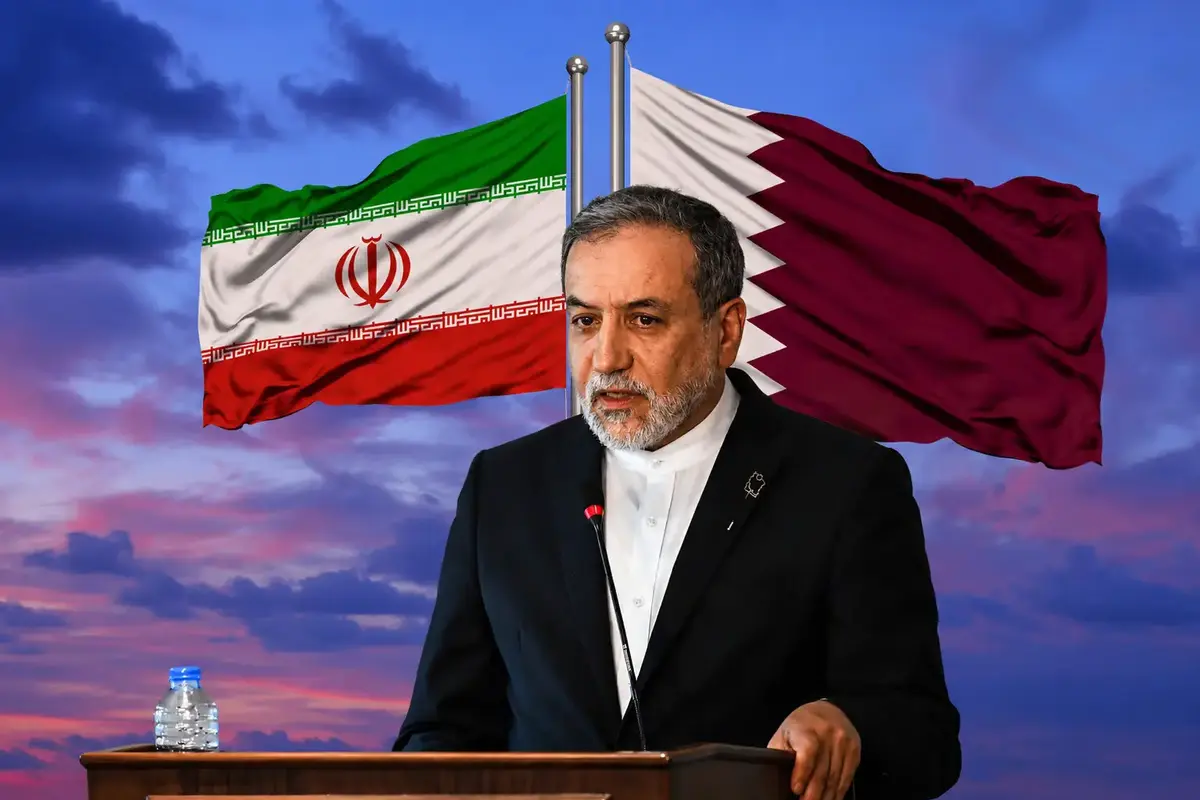
Iran Qatar Relations have come under renewed international attention following Iranian Foreign Minister Abbas Araghchi’s visit to Doha to offer condolences after the passing of Qatar’s former Emir, Sheikh Hamad bin Khalifa Al Thani. The diplomatic visit took place against the backdrop of rising regional tensions, making it one of the most closely watched developments in the Middle East.
The late Sheikh Hamad bin Khalifa Al Thani, father of Qatar’s current ruler Sheikh Tamim bin Hamad Al Thani, was widely recognized for his role in shaping modern Qatar and strengthening the country’s regional and international influence. Following his passing, leaders from across the Middle East sent messages of sympathy, reflecting his lasting impact on the region.
During his visit to Doha, Iranian Foreign Minister Abbas Araghchi met Qatari officials to formally convey condolences on behalf of the Iranian government. Diplomatic visits following the death of prominent leaders are a longstanding tradition in international relations, serving as an opportunity to express respect while maintaining dialogue between neighboring countries.
However, the timing of the visit drew significant attention because it coincided with a period of heightened military tensions involving Iran and the United States.
On the same day as the diplomatic outreach, Iran announced that it had launched missile strikes targeting what it described as American military assets in Qatar. According to the Islamic Revolutionary Guard Corps (IRGC), the missiles were aimed at Al Udeid Air Base, the largest United States military installation in the Middle East.
The developments placed Iran Qatar Relations under increased scrutiny, as diplomatic engagement occurred alongside a major regional security incident. Although the military operation was described by Iranian officials as being directed at U.S. forces rather than Qatar itself, the incident raised questions about regional stability and future diplomatic engagement.
Al Udeid Air Base has long served as a key strategic facility for American military operations across the Middle East. Located in Qatar, the base supports regional security missions, logistical operations, and international military cooperation. Its strategic importance means that any military activity involving the facility attracts considerable international attention.
The combination of diplomacy and military escalation created a complex situation for regional observers. While Iran continued diplomatic engagement with Qatar through official channels, the missile strikes introduced new concerns regarding security dynamics in the Gulf region.
The latest developments demonstrate the delicate balance that characterizes Iran Qatar Relations. Although the two neighboring countries maintain diplomatic and economic ties, they also operate within a region shaped by broader geopolitical rivalries involving multiple international and regional powers.
Over the years, Iran and Qatar have maintained regular diplomatic communication despite differences in regional policies. Both countries share the world’s largest natural gas field, making energy cooperation an important aspect of their bilateral relationship. Economic collaboration and maritime coordination have often continued even during periods of wider regional tension.
At the same time, Qatar hosts important international military facilities and maintains strong security partnerships with Western allies, including the United States. This unique position often requires Doha to carefully balance its diplomatic relationships with neighboring countries while protecting its national interests.
The recent events have once again highlighted the complexity of Gulf diplomacy. Governments across the region continue to face the challenge of maintaining dialogue while responding to evolving security developments.
Analysts believe that Iran Qatar Relations will continue to play an important role in regional diplomacy due to both countries’ strategic geographic locations and economic importance. Maintaining open communication channels remains essential for reducing misunderstandings and supporting regional stability during times of heightened tension.
The passing of Sheikh Hamad bin Khalifa Al Thani also serves as a reminder of his significant contributions to Qatar’s transformation into a major regional diplomatic and economic power. Under his leadership, Qatar expanded its international influence through diplomacy, investment, media, and energy development.
His legacy continues under the leadership of Sheikh Tamim bin Hamad Al Thani, who has maintained Qatar’s active role in regional mediation efforts and international diplomacy. Qatar has frequently hosted negotiations involving regional and global stakeholders, reinforcing its position as an important diplomatic actor.
Meanwhile, international observers continue monitoring developments following Iran’s military actions and their potential impact on Gulf security. Regional governments have consistently emphasized the importance of avoiding further escalation while encouraging diplomatic solutions to ongoing disputes.
The future of Iran Qatar Relations will likely depend on continued dialogue, careful diplomatic engagement, and efforts to prevent regional tensions from undermining bilateral cooperation. Both countries have previously demonstrated an ability to maintain communication even during difficult periods, suggesting that diplomatic channels remain an important tool for managing differences.
As the Middle East continues to navigate complex political and security challenges, the latest developments underscore the importance of balancing diplomacy with regional stability. Iran’s condolence visit to Doha highlighted longstanding diplomatic ties, while the broader security situation illustrated the delicate environment in which Gulf nations operate. Moving forward, Iran Qatar Relations will remain closely watched as both countries work to protect their interests while contributing to broader efforts aimed at maintaining peace and stability across the region.