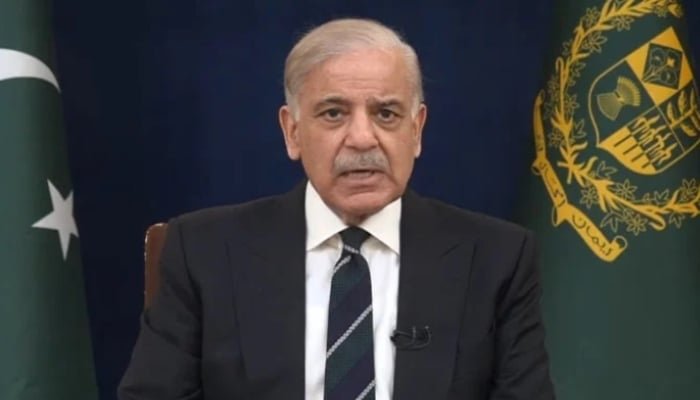
Pakistan Saudi Relations once again came into focus after Prime Minister Shehbaz Sharif strongly condemned the recent missile attacks targeting Saudi Arabia and reaffirmed Pakistan’s unwavering support for the Kingdom’s security. His statement highlighted the close strategic partnership between the two countries and emphasized Islamabad’s commitment to regional peace, stability, and mutual cooperation during a period of heightened tensions in the Middle East.
In a public statement, Prime Minister Shehbaz Sharif described the attacks as a clear violation of Saudi Arabia’s sovereignty and territorial integrity. He stressed that such actions have the potential to destabilize an already sensitive region and called for continued efforts to maintain peace and security.
The latest developments followed Saudi Arabia’s announcement that its coalition forces had successfully intercepted ballistic missiles launched toward the Kingdom’s southern region. According to Saudi authorities, the missiles were fired by Houthi forces operating from Yemen. The interception prevented the projectiles from reaching their intended targets, demonstrating the country’s ongoing defensive capabilities.
The response from Islamabad reflects the deep diplomatic and security partnership that has defined Pakistan Saudi Relations for decades. Pakistan has consistently expressed support for Saudi Arabia’s security and has maintained close cooperation with the Kingdom on regional stability, defence collaboration, and diplomatic engagement.
Prime Minister Shehbaz Sharif reiterated that Pakistan stands in complete solidarity with Saudi Arabia during this challenging period. He emphasized that Islamabad remains committed to supporting all sincere efforts aimed at promoting peace, dialogue, and stability across the Middle East.
The relationship between Pakistan and Saudi Arabia extends well beyond diplomatic statements. The two countries have developed strong political, economic, religious, and defence ties over many decades. High-level exchanges between government officials, military cooperation, and economic partnerships have continued to strengthen their bilateral relationship.
One of the most significant developments in Pakistan Saudi Relations occurred in September 2025, when both countries signed a mutual defence pact. Under the agreement, any aggression directed against one country is regarded as a concern for both, reinforcing their long-standing security partnership. The agreement marked a new phase in bilateral defence cooperation and demonstrated the high level of trust shared by both governments.
The defence partnership became more visible in April when Pakistan deployed fighter aircraft and military personnel to Saudi Arabia as part of joint defence cooperation under the bilateral agreement. Pakistani aircraft arrived at King Abdulaziz Air Base, supporting collaborative military activities focused on strengthening regional security and defence readiness.
Military cooperation has remained one of the strongest pillars of Pakistan Saudi Relations. Over the years, both countries have collaborated in military training, defence planning, security consultations, and joint exercises. Such cooperation contributes to stronger operational coordination while promoting regional stability.
Economic ties also play an important role in the bilateral relationship. Saudi Arabia remains one of Pakistan’s key economic partners, supporting investment initiatives, development projects, and employment opportunities for millions of Pakistani expatriates working in the Kingdom. Remittances sent by overseas Pakistanis in Saudi Arabia continue to make an important contribution to Pakistan’s economy.
The close relationship is also rooted in cultural and religious connections. Every year, hundreds of thousands of Pakistani pilgrims travel to Saudi Arabia to perform Hajj and Umrah. Religious cooperation and people-to-people connections have further strengthened mutual understanding between the two nations.
The recent missile incident also highlights the broader security challenges facing the Middle East. Ongoing conflicts, political tensions, and cross-border attacks continue to create uncertainty across the region. In such circumstances, diplomatic coordination between regional partners becomes increasingly important for preventing further escalation.
The latest statement by Prime Minister Shehbaz Sharif demonstrates Pakistan’s consistent foreign policy approach toward supporting peaceful solutions while standing by its strategic allies. Islamabad has repeatedly emphasized dialogue, diplomacy, and regional cooperation as essential tools for reducing tensions and maintaining long-term stability.
The continued development of Pakistan Saudi Relations reflects shared interests that extend beyond immediate security concerns. Both countries regularly cooperate through international organizations, support regional diplomatic initiatives, and maintain close consultation on issues affecting the Islamic world.
Security analysts believe that strong bilateral partnerships contribute to greater regional resilience during periods of instability. Continued cooperation in defence, intelligence sharing, diplomacy, and economic development allows both countries to address common challenges more effectively while supporting broader regional peace efforts.
Pakistan and Saudi Arabia are expected to continue expanding cooperation across multiple sectors, including trade, investment, defence technology, energy, and regional diplomacy. High-level engagements between political and military leadership are likely to remain an important feature of their relationship.
The recent developments reaffirm the strength of Pakistan Saudi Relations, demonstrating how strategic partnerships are built on trust, shared interests, and consistent cooperation. Pakistan’s strong support for Saudi Arabia following the latest missile attacks reflects not only longstanding diplomatic ties but also a broader commitment to regional peace and collective security. As both nations continue working together, their partnership is expected to remain an important pillar of stability, cooperation, and mutual respect in the Middle East and the wider Muslim world.