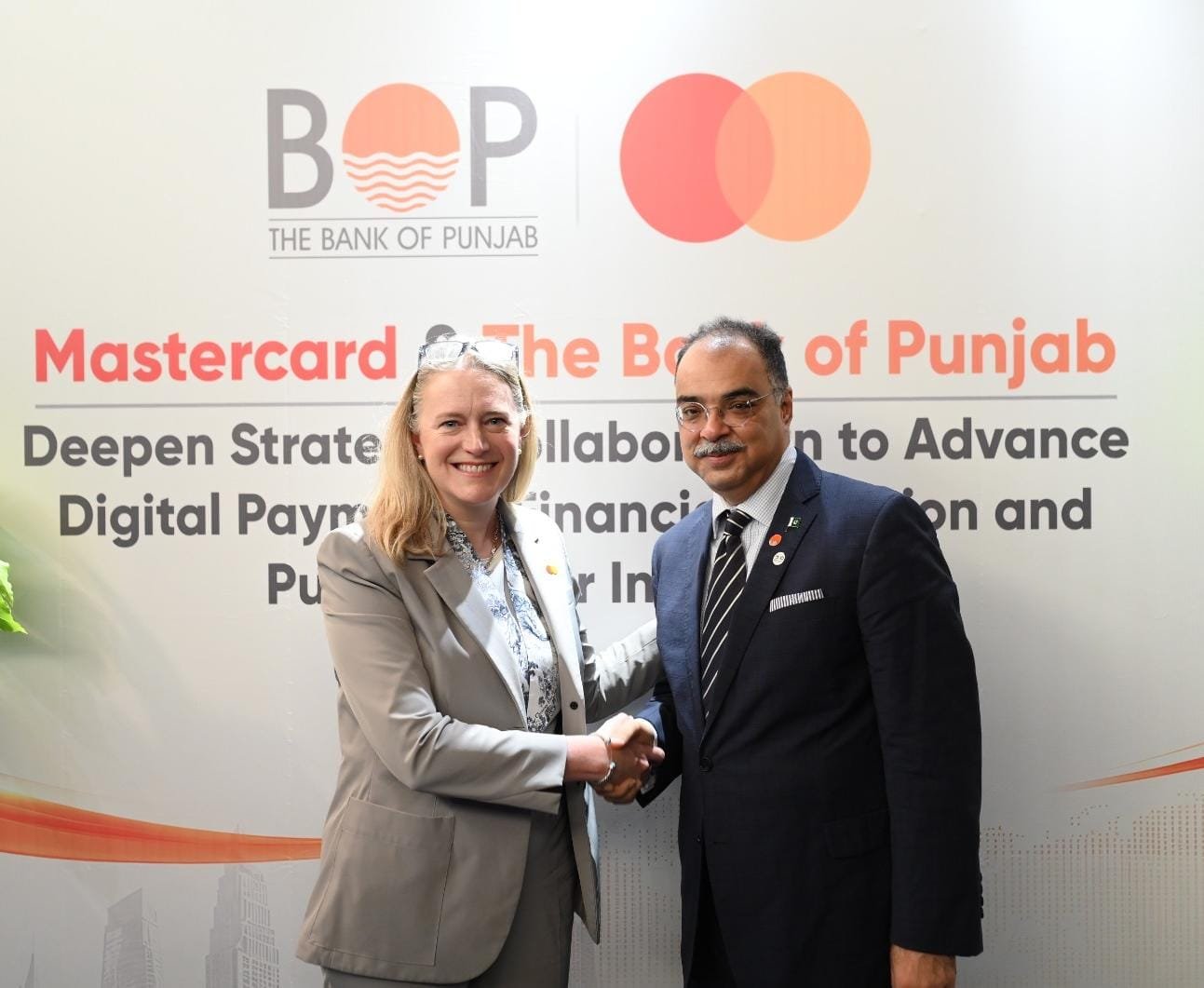
The future of Pakistan Digital Payments received a significant boost as Mastercard and The Bank of Punjab (BOP) reaffirmed their strategic partnership to accelerate the country’s transition toward a cashless and financially inclusive economy. By expanding their collaboration, both organizations aim to strengthen digital payment infrastructure, improve financial accessibility, and introduce innovative payment solutions that benefit individuals, businesses, and government institutions across Pakistan.
The meeting, held in Karachi, brought together senior leadership from Mastercard and The Bank of Punjab to discuss new opportunities for promoting secure digital transactions. Their discussions focused on expanding financial inclusion, supporting government initiatives, modernizing payment systems, improving public transportation payments, and enhancing cross-border remittance services.
As digital technology continues to reshape the financial sector, the importance of Pakistan Digital Payments has grown rapidly. Consumers increasingly expect faster, safer, and more convenient ways to make transactions, while businesses seek efficient payment solutions that improve customer experience. Financial institutions are responding by investing in modern payment technologies that reduce dependence on cash and promote digital financial services.
One of the major areas of collaboration between Mastercard and BOP is financial inclusion. Millions of people across Pakistan, particularly in rural areas, still have limited access to formal banking services. Digital payment solutions provide an effective way to bridge this gap by allowing individuals to receive financial assistance, make purchases, and manage funds securely through banking channels.
The partnership has already played an important role in supporting several government-backed financial programs in Punjab. Mastercard-enabled debit and credit cards issued by The Bank of Punjab have been successfully used in initiatives such as the CM Punjab Asaan Karobar Card, Kissan Card, and Livestock Card. These programs have provided transparent and accessible financing to entrepreneurs, farmers, and livestock owners, helping them participate more actively in the formal economy.
Another successful initiative highlighted during the meeting was the Ramzan Nigehban Programme. Through Mastercard-enabled debit cards, eligible beneficiaries received financial assistance in a secure and transparent manner. Digital distribution reduced administrative challenges, minimized delays, and ensured that assistance reached recipients more efficiently than traditional cash-based methods.
The continued expansion of Pakistan Digital Payments also supports greater transparency in public service delivery. Digital transactions create accurate financial records, reduce the risks associated with cash handling, and improve accountability within government programs. These benefits contribute to stronger governance while increasing public confidence in financial assistance initiatives.
Public transportation is another sector expected to benefit from this partnership. Mastercard and BOP are collaborating on digitizing one of Punjab’s largest transit systems, covering 13 cities. The project aims to introduce contactless fare payments, allowing commuters to use bank-issued payment cards for faster and more convenient travel.
Modern transit payment systems have become a standard feature in many developed economies. Introducing similar technology in Pakistan can improve commuter convenience, reduce cash handling, shorten boarding times, and support the government’s broader vision of building smarter urban infrastructure.
Cross-border remittances also formed an important part of the discussions. Millions of overseas Pakistanis send money home every year, making remittances a vital contributor to the national economy. By combining Mastercard’s global payment network with BOP’s expanding international banking services, both organizations hope to make international money transfers faster, safer, and more accessible for families across Pakistan.
The growing importance of Pakistan Digital Payments extends well beyond banking. Digital transactions encourage e-commerce growth, strengthen small businesses, and support entrepreneurship by giving merchants access to secure payment options. As more businesses accept digital payments, consumers gain greater convenience while companies benefit from improved operational efficiency and wider market reach.
For businesses, adopting digital payment systems also reduces the costs associated with handling cash and simplifies financial management. Contactless cards, mobile payments, and online payment platforms allow transactions to be completed quickly while enhancing security for both merchants and customers.
Continued investment in payment technology will remain essential for Pakistan’s digital transformation. Financial institutions, technology providers, and government agencies all have important roles to play in expanding digital infrastructure, improving financial literacy, and encouraging wider adoption of electronic payment methods.
The strengthened partnership between Mastercard and The Bank of Punjab reflects a shared commitment to supporting long-term economic development through innovation. By expanding access to secure financial services, modernizing payment systems, and encouraging greater digital adoption, both organizations are helping create a stronger and more connected financial ecosystem.
The progress of Pakistan Digital Payments represents an important milestone in the country’s journey toward a modern digital economy. As secure payment technologies become more widely available, individuals, businesses, and government institutions will benefit from greater convenience, transparency, and financial inclusion. With continued collaboration between leading financial organizations and public institutions, Pakistan is well positioned to accelerate its transition toward a cashless future while creating new opportunities for sustainable economic growth and digital innovation.