The topic of India nuclear capabilities has gained international attention after a recent report suggested that the country significantly expanded its nuclear arsenal over the past year. According to data cited from the Stockholm International Peace Research Institute (SIPRI), India has reportedly added around 10 new nuclear warheads, increasing its estimated stockpile to nearly 190 warheads.
The report also highlights India’s growing focus on sea-based nuclear deterrence, signaling a strategic shift in how the country plans to strengthen its long-term defense posture in the region.
India Expands Its Nuclear Arsenal
SIPRI’s latest findings indicate that India continues to modernize and expand its nuclear forces as part of broader defense planning. The increase in estimated warheads reflects ongoing investment in strategic weapons systems and military infrastructure.
Experts monitoring India nuclear capabilities believe the country is moving toward maintaining a more operationally ready nuclear force. This shift may involve faster deployment systems, improved missile technology, and enhanced command structures designed to support deterrence.
The reported increase in nuclear assets also places India closer to countries like the United Kingdom in terms of estimated nuclear stockpile size, underlining its growing strategic significance.
Focus on Sea-Based Nuclear Deterrence
One of the most important developments highlighted in the report is India’s expansion of its sea-based nuclear capabilities. Analysts believe this reflects an effort to establish a stronger and more survivable second-strike capability.
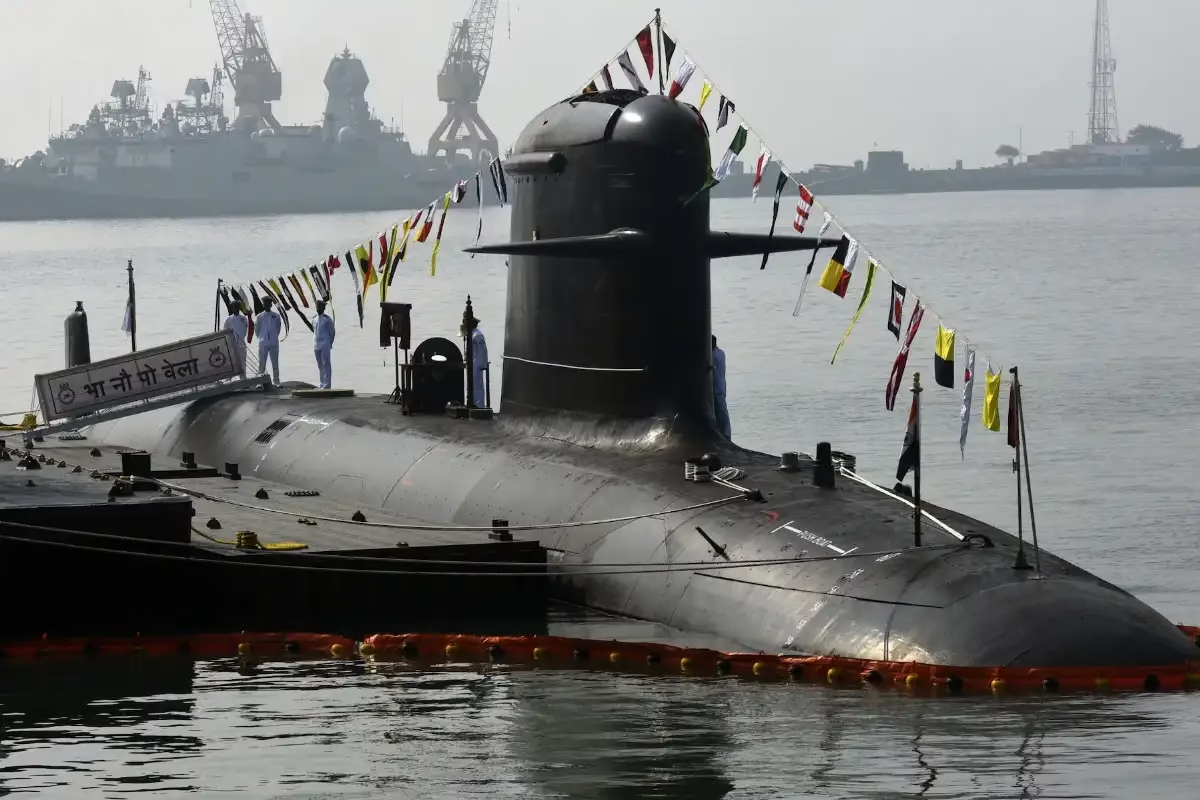
The report states that India has added two nuclear-capable submarines to its naval fleet. These submarines are believed to be capable of carrying and launching nuclear missiles from the sea.
Strengthening India nuclear capabilities through naval assets is viewed as a major strategic move because submarines provide mobility, concealment, and greater survivability during potential conflicts.
Sea-based deterrence is considered one of the key elements of a modern nuclear triad, alongside land-based missiles and air-delivered nuclear weapons.
Operational Deployment of Nuclear Missiles
Another significant point raised in the report is the operational deployment of nuclear-capable missiles on naval submarines. This suggests that India is moving beyond testing and development into active military readiness.
Defense analysts note that the deployment of submarine-launched nuclear systems increases strategic flexibility and enhances deterrence capabilities. It also demonstrates India’s intent to modernize its military infrastructure in response to changing regional and global security dynamics.
The evolution of India nuclear capabilities is therefore not only about increasing stockpile numbers but also about improving operational effectiveness and deployment readiness.
Strategic Implications for South Asia
The expansion of nuclear forces in South Asia often attracts close international attention because of the region’s sensitive security environment. India’s reported military modernization may influence defense calculations across neighboring countries.
While the SIPRI report suggests that Pakistan’s nuclear arsenal remained stable during the same period, experts believe regional strategic balance remains a key concern for policymakers and defense analysts.
The discussion around India nuclear capabilities also raises broader questions about arms competition, deterrence strategies, and long-term regional stability.
Security experts argue that transparency, communication, and diplomatic engagement remain essential for avoiding misunderstandings and maintaining strategic balance in the region.
The Role of Nuclear Deterrence
India has consistently maintained that its nuclear program is based on deterrence and national security considerations. Like other nuclear-armed states, the country views strategic capability as a way to prevent conflict through the principle of deterrence.
The modernization of India nuclear capabilities may therefore be interpreted as part of its effort to strengthen national defense while adapting to evolving security challenges.
At the same time, international observers continue to monitor how nuclear modernization programs affect regional military dynamics and global non-proliferation efforts.
Global Attention on Nuclear Modernization
India is not the only country modernizing its nuclear forces. Several major powers are currently upgrading missile systems, submarines, and strategic defense technologies.
However, South Asia remains particularly important because of its geopolitical complexity and the presence of multiple nuclear-armed states in close proximity.
The latest developments related to India nuclear capabilities have therefore become part of a larger global conversation about strategic stability, defense modernization, and nuclear deterrence in the 21st century.
As military technologies continue to evolve, nuclear strategy is also changing rapidly. Countries are increasingly investing in advanced missile systems, cyber defense, artificial intelligence, and naval deterrence capabilities.
India’s reported focus on sea-based deterrence suggests that its defense planning is becoming more sophisticated and long-term in nature.
The future trajectory of India nuclear capabilities will likely continue to shape regional security discussions, strategic partnerships, and international policy debates for years to come.
For now, analysts and policymakers across the world are closely observing how these developments influence the balance of power and overall stability in South Asia.