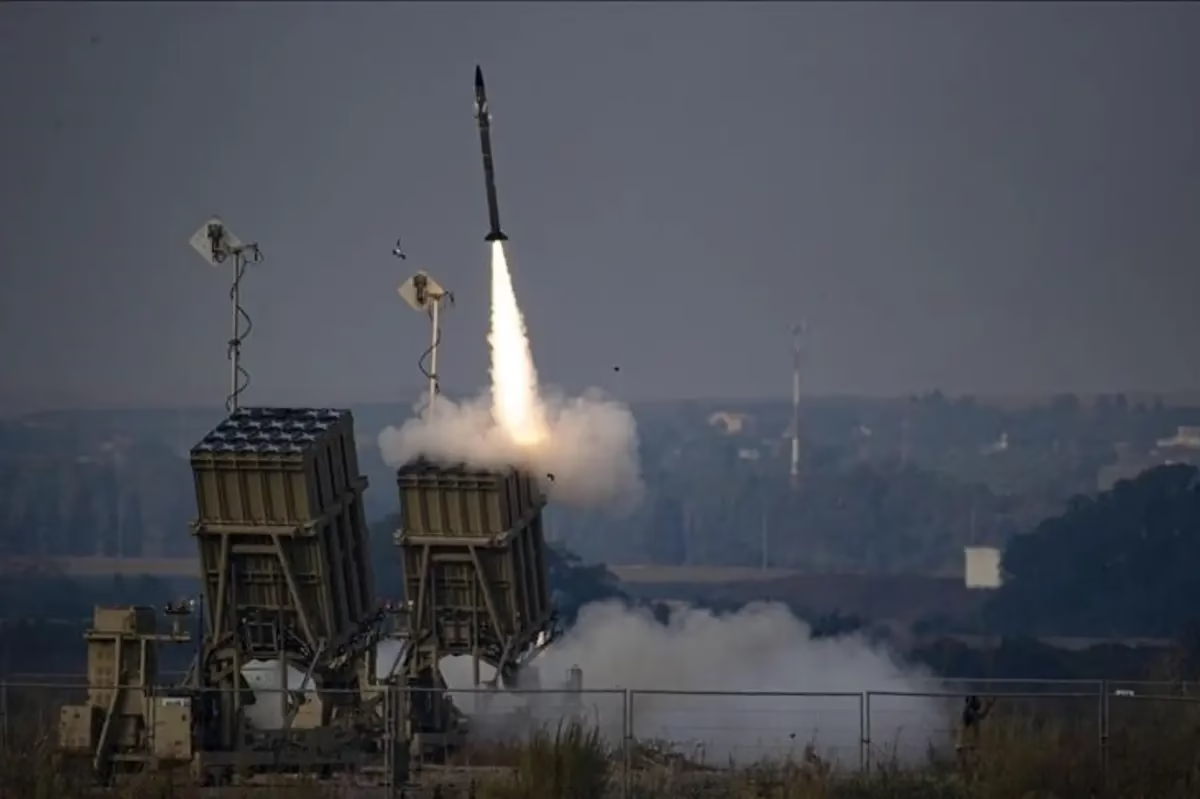
The recent Hezbollah drone interception near the Lebanon-Israel border has once again raised concerns about growing instability in the Middle East. Hezbollah announced that its fighters targeted several Israeli military positions and successfully shot down two Israeli Hermes 450 drones during military operations near the occupied territories. The incident has quickly become a major topic in regional security discussions, especially as tensions continue to rise across the border.
According to statements released by Hezbollah, the group launched rocket and artillery attacks on Israeli military gatherings positioned near the eastern outskirts of Yohmor al-Shaqif. Hezbollah claimed the strikes directly hit their intended targets and caused casualties among Israeli troops. Although Israeli authorities have not fully confirmed the reported losses, the development has intensified fears of further escalation.
The Hezbollah drone interception operation specifically focused on Israeli Hermes 450 drones, which are widely used for surveillance and tactical missions. These drones are considered an important part of Israel’s intelligence and military strategy in the region. By claiming to have intercepted and destroyed two such aircraft, Hezbollah attempted to demonstrate its growing air defense capabilities.
The Hermes 450 drone is known for long-endurance surveillance missions and advanced reconnaissance technology. It is frequently deployed near sensitive border areas to monitor militant activity and gather intelligence. The reported destruction of these drones highlights how battlefield technology continues to play a central role in modern regional conflicts.
In addition to drone operations, Hezbollah also announced attacks on an Israeli military installation near the occupied city of Tiberias. Rockets were reportedly launched toward the site, though there were no immediate reports regarding casualties or major infrastructure damage. The group described the attacks as part of its ongoing resistance operations against Israeli military activity near Lebanon’s borders.
The Hezbollah drone interception incident comes during a period of already heightened regional instability. Over recent months, military confrontations across the Middle East have increased due to conflicts involving Gaza, Lebanon, Syria, and tensions connected to Iran and Israel. Analysts warn that even limited clashes along the Lebanon-Israel border carry the risk of developing into a wider confrontation.
Military experts say the use of drones has transformed warfare in the Middle East. Surveillance drones provide real-time intelligence, target tracking, and operational coordination for armed forces. At the same time, armed groups have increasingly invested in air defense systems capable of detecting and neutralizing unmanned aircraft. Hezbollah’s claims suggest that non-state actors are becoming more advanced in counter-drone warfare.
The Hezbollah drone interception also carries symbolic importance. Successfully targeting Israeli drones allows Hezbollah to send a message both domestically and internationally about its military preparedness. Supporters of the group see such operations as proof of deterrence capabilities, while critics fear they could trigger retaliation and deepen regional instability.
Border communities on both sides continue to live under constant uncertainty. Residents in southern Lebanon and northern Israel have faced repeated security alerts, military movements, and fears of cross-border attacks. The ongoing tension has disrupted daily life, affected businesses, and created concerns about humanitarian consequences if violence escalates further.
Regional observers believe diplomacy remains essential to prevent the situation from spiraling into a larger conflict. International organizations and foreign governments have repeatedly called for restraint from all parties involved. However, achieving long-term stability remains difficult due to decades of political disputes, territorial disagreements, and military confrontations in the region.
The Hezbollah drone interception story also reflects the broader evolution of asymmetric warfare. Armed groups no longer rely only on traditional weapons but increasingly use advanced technologies, intelligence systems, and precision tactics. This shift is changing the balance of power and making conflicts more unpredictable.
Security analysts note that drone warfare is likely to remain a key feature of Middle Eastern conflicts in the coming years. Countries and armed organizations are investing heavily in surveillance systems, missile defense technology, and electronic warfare tools designed to disrupt enemy drones. As these technologies become more widespread, incidents similar to this may become increasingly common.
Meanwhile, global attention remains focused on whether the latest confrontation will remain limited or expand into broader military action. Both Hezbollah and Israel have exchanged accusations and warnings in the past, with each side claiming defensive intentions while preparing for potential escalation.
The Hezbollah drone interception has therefore become more than just a single military event. It represents the growing complexity of modern conflict in the Middle East, where advanced technology, political rivalries, and regional security concerns continue to collide.
As tensions remain high, international observers are closely monitoring developments near the Lebanon-Israel border. Whether diplomatic efforts can reduce hostilities or whether further clashes will occur remains uncertain. For now, the latest incident serves as another reminder of how fragile stability in the region continues to be.