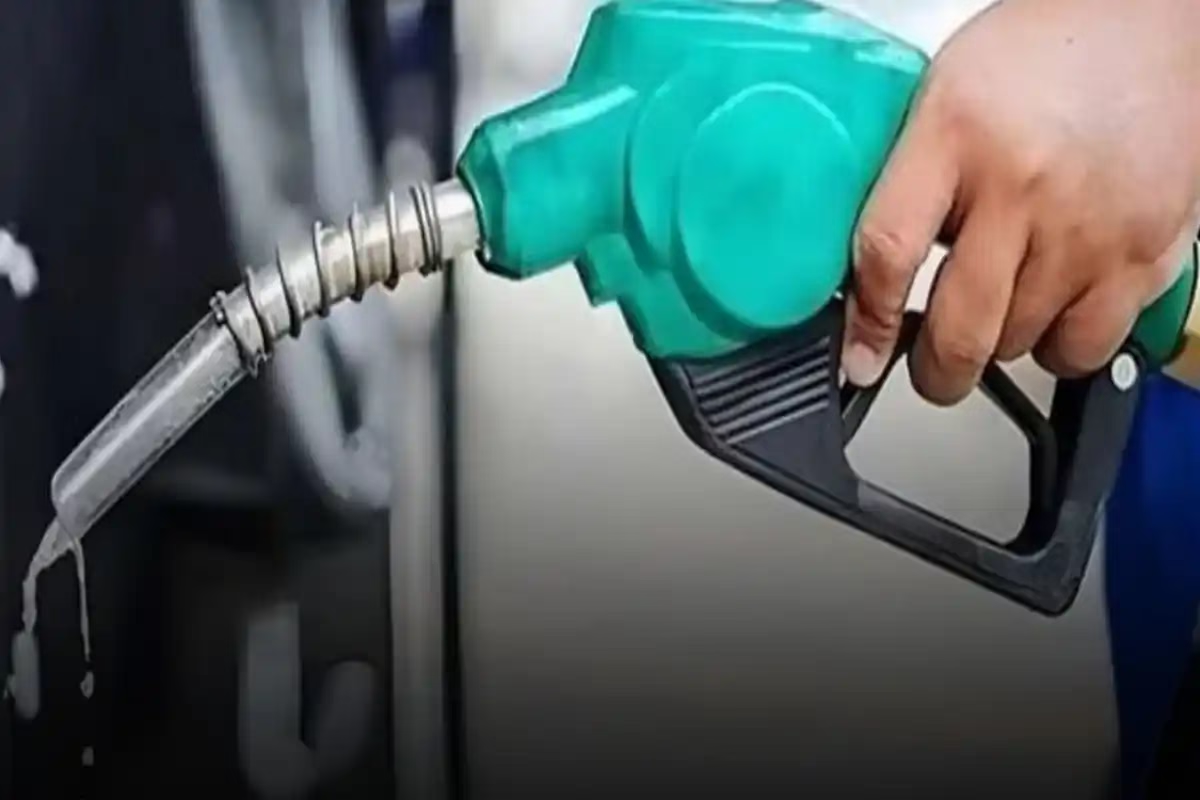
The possibility of another petrol price increase in Pakistan is creating concern among consumers as global oil markets continue facing uncertainty due to tensions in the Middle East and fears of supply disruptions. Market analysts believe fuel prices may rise again during the government’s next biweekly review.
At present, petrol in Pakistan is priced at Rs409.78 per litre, while High-Speed Diesel (HSD) costs Rs409.58 per litre following the latest revision implemented on May 16, 2026. However, experts warn that rising international crude oil prices may push domestic fuel prices even higher in the coming days.
The expected petrol price increase in Pakistan is largely linked to instability in global energy markets. Ongoing geopolitical tensions in the Middle East, concerns about oil shipping routes, and fluctuations in international supply chains are all contributing to higher crude oil prices worldwide.
Pakistan, which heavily relies on imported petroleum products, is particularly vulnerable to these global market changes. Any increase in international oil prices directly affects local fuel costs, transportation expenses, and overall inflation within the country.
According to market reports, fuel prices could rise by Rs5 to Rs15 per litre in the upcoming adjustment if international oil prices continue climbing. Some estimates even suggest petrol prices could cross Rs430 per litre if global conditions worsen significantly.
The discussion around the petrol price increase in Pakistan has also intensified because of ongoing economic reforms connected to the International Monetary Fund (IMF). Analysts believe the government may further increase the petroleum levy as part of IMF-related fiscal measures aimed at boosting revenue collection.
Higher fuel prices have become a major challenge for ordinary citizens already struggling with inflation and rising living costs. Petrol and diesel prices directly affect transportation fares, food prices, industrial production, and the cost of essential goods throughout the country.
Experts say global demand for diesel is also placing additional pressure on oil-importing nations like Pakistan. As economies worldwide recover and industrial activities expand, energy demand continues to rise, contributing to market volatility.
The expected petrol price increase in Pakistan could particularly impact middle-class and lower-income households, which spend a significant portion of their income on transportation and daily necessities. Rising fuel costs often trigger a chain reaction that affects nearly every sector of the economy.
Pakistan’s fuel pricing mechanism is regulated by Oil and Gas Regulatory Authority, commonly known as OGRA. The authority reviews petroleum prices every two weeks based on changes in international crude oil rates and fluctuations in the Pakistani rupee against the US dollar.
Currency depreciation can further worsen the situation because Pakistan purchases petroleum products in dollars. If the rupee weakens while global oil prices rise, local fuel costs increase even more rapidly.
The latest concerns regarding the petrol price increase in Pakistan also reflect broader economic pressures facing the country. Pakistan continues dealing with external financing challenges, trade deficits, and high import costs, all of which influence energy pricing decisions.
Economists warn that continuous fuel price hikes can slow economic activity by increasing business operating costs and reducing consumer purchasing power. Industries dependent on transportation and logistics are often among the first sectors affected by rising fuel prices.
Public transport operators may also raise fares if petrol and diesel become more expensive. This could place additional financial pressure on students, office workers, and daily wage earners who rely heavily on public transportation systems.
The debate over the petrol price increase in Pakistan has become politically sensitive as well. Fuel pricing decisions often attract strong public reactions because they directly affect household budgets and inflation levels. Governments typically face criticism whenever sharp increases in petrol prices are announced.
At the same time, officials argue that Pakistan has limited options due to its dependence on imported energy and international market fluctuations. Subsidizing fuel prices on a large scale would place additional strain on the country’s already fragile financial position.
Energy experts believe Pakistan needs long-term solutions to reduce vulnerability to international oil price shocks. Expanding renewable energy, improving public transportation, and increasing domestic energy production are often suggested as ways to reduce dependence on imported fuel.
The recent volatility in oil markets highlights how global geopolitical events can quickly affect local economies. Even conflicts or tensions occurring far from Pakistan can lead to higher transportation and energy costs within the country.
For now, consumers and businesses are closely watching upcoming government announcements regarding the next fuel price review. The final decision will depend on international crude oil trends, currency exchange rates, and broader fiscal policies.
As uncertainty continues in global energy markets, the possibility of another petrol price increase in Pakistan remains a major concern for households, transport operators, and businesses already dealing with rising inflation and economic pressure.