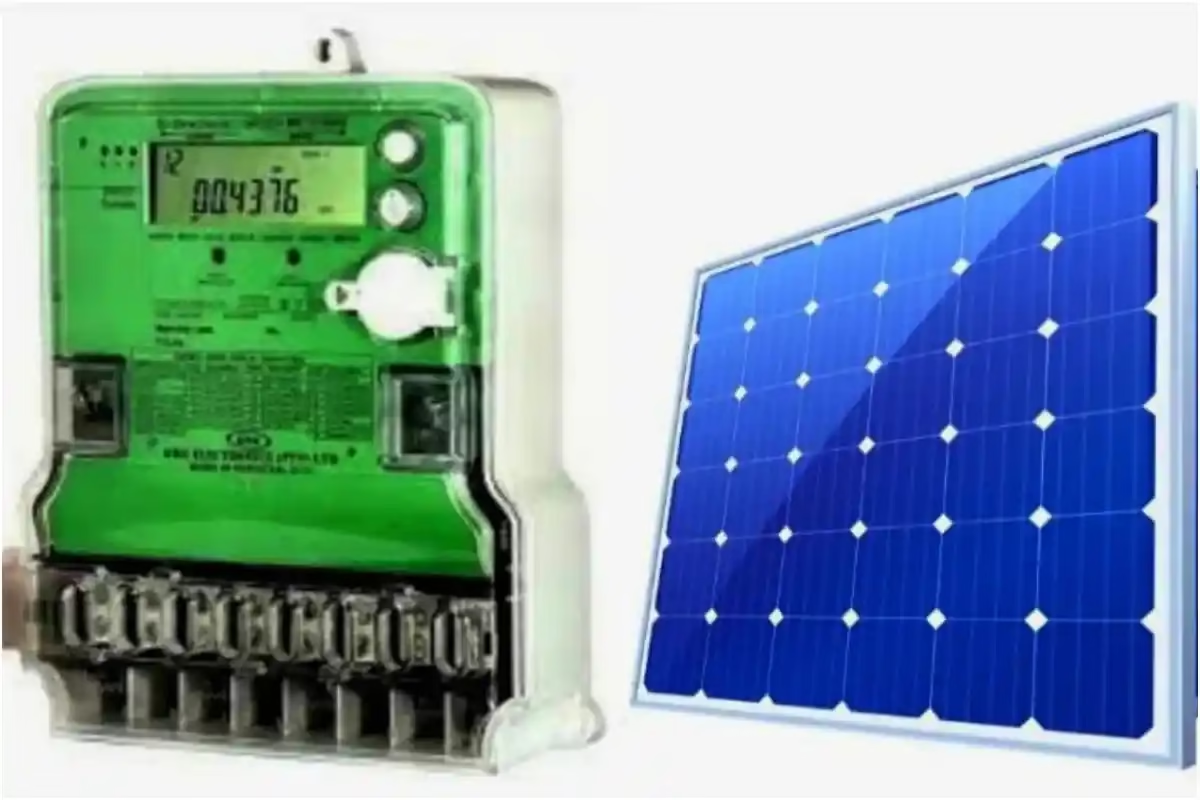
Pakistan’s updated solar net metering policy has come under international attention after the International Monetary Fund (IMF) raised concerns regarding the country’s current approach to solar energy billing and electricity subsidies.
The IMF recently pointed out that Pakistan’s revised system still allows existing solar consumers to continue using traditional net metering, while new users are now being shifted toward a net billing structure. According to the IMF, net billing is considered more aligned with international energy market practices and is viewed as a financially sustainable approach for electricity systems.
The debate surrounding the solar net metering policy has become increasingly important as Pakistan experiences rapid growth in rooftop solar adoption. Rising electricity prices, frequent power shortages, and declining solar panel costs have encouraged thousands of households and businesses to invest in solar energy systems across the country.
Under the updated framework introduced by National Electric Power Regulatory Authority, existing solar consumers will continue operating under their previous net metering agreements. Their licences and contract conditions will remain unchanged until the completion of the agreed licence period.
However, all new solar users will now fall under the net billing system instead of traditional net metering. This distinction has effectively created two separate categories of solar consumers within Pakistan’s energy market.
The IMF’s concerns regarding the solar net metering policy mainly focus on what it describes as continued cross-subsidisation within the national electricity grid. Under traditional net metering systems, solar users can export excess electricity back to the grid and receive credits against their electricity bills.
Critics argue that this system sometimes shifts financial pressure onto consumers who do not own solar systems because grid maintenance costs are spread unevenly. The IMF believes net billing can help create a more balanced and sustainable energy pricing structure.
Under net billing, electricity exported to the grid is compensated at a different rate from the electricity consumed from the grid. This approach is widely used in several international markets and is often considered easier for utilities to manage financially.
The ongoing discussion around Pakistan’s solar net metering policy reflects broader challenges facing the country’s energy sector. Pakistan has long struggled with circular debt, rising fuel import costs, and inefficiencies within the electricity distribution system.
As renewable energy adoption accelerates, policymakers are attempting to balance consumer incentives with the financial stability of the national power infrastructure. Authorities want to encourage clean energy investments while ensuring the electricity grid remains economically sustainable.
Supporters of the current solar net metering policy argue that protecting existing solar users is necessary to maintain public confidence in renewable energy investments. Many households and businesses invested significant amounts of money in solar systems based on earlier government policies and expected long-term financial benefits.
Changing agreements retroactively could damage investor trust and discourage future renewable energy adoption. For this reason, the government decided to allow existing net metering consumers to retain their previous terms and conditions.
At the same time, officials believe shifting new consumers toward net billing may help reduce long-term pressure on the electricity system. Policymakers are attempting to gradually reform the sector without creating sudden disruptions for current solar users.
Pakistan has witnessed a sharp increase in solar installations in recent years. High electricity tariffs and unreliable power supply have pushed many consumers toward rooftop solar systems as a cost-saving solution. The falling global price of solar technology has further accelerated this trend.
The IMF’s comments on the solar net metering policy also highlight how international financial institutions are increasingly involved in Pakistan’s energy reforms. As part of broader economic stabilization efforts, the IMF often encourages policies aimed at reducing subsidies and improving financial efficiency in public sectors.
Energy experts believe Pakistan’s transition toward renewable energy remains essential despite the policy debate. The country has significant solar energy potential due to its climate and geographical conditions. Expanding renewable energy could help reduce dependence on imported fuels and improve environmental sustainability.
However, experts also warn that poorly designed energy policies could create financial imbalances within the national grid. Maintaining a stable electricity infrastructure while encouraging clean energy adoption remains one of the biggest policy challenges facing the government.
The future direction of the solar net metering policy will likely depend on how successfully authorities manage this balance between renewable energy incentives and electricity sector reforms. Policymakers must consider consumer confidence, investor interest, and the financial realities of Pakistan’s power system.
For now, existing solar consumers will continue enjoying their current agreements, while new users adapt to the revised net billing framework introduced by NEPRA. The government appears focused on gradually aligning Pakistan’s solar policies with international standards without creating immediate disruption.
As solar energy continues expanding across the country, the debate over the solar net metering policy is expected to remain an important issue for consumers, regulators, investors, and international financial institutions alike.