The sharp rise in Gulf war oil prices is becoming one of the biggest economic concerns in the world right now. After reports of drone strikes on a UAE nuclear facility and continued tensions in the Middle East, global markets reacted immediately. Oil prices surged, gold climbed higher, and investors rushed toward safer assets as fears of a larger regional conflict intensified.
Financial experts believe the situation is no longer being treated as a temporary geopolitical issue. Instead, markets are preparing for the possibility of a prolonged Gulf conflict that could disrupt energy supplies, increase inflation, and slow down global economic growth.
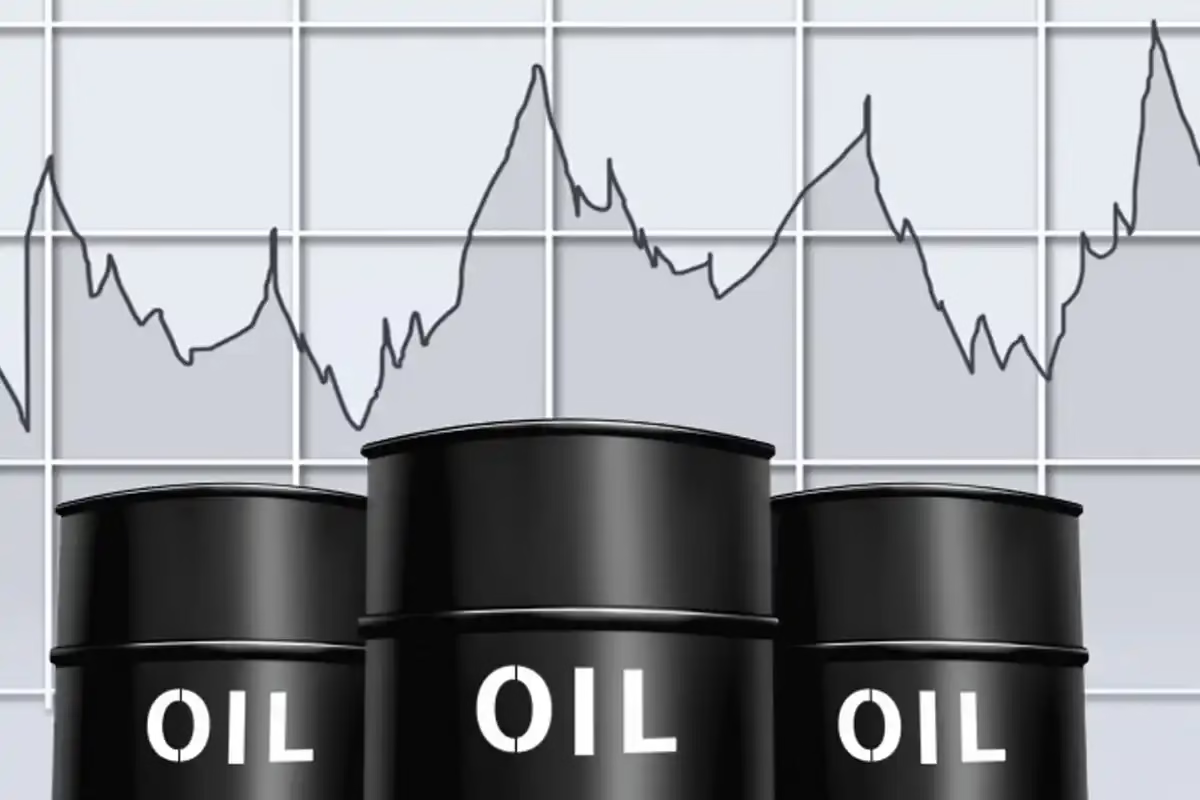
Brent crude oil crossed $110 per barrel, while US crude also moved above $106. Analysts from several international firms now warn that oil could rise to between $130 and $150 per barrel if tensions continue to escalate in the Gulf region.
Why Oil Prices Are Rising So Quickly
The Middle East remains one of the world’s most important oil-producing regions. Any threat to shipping routes or production facilities immediately impacts global supply expectations. The recent conflict has raised concerns about disruptions in the Strait of Hormuz, a key route through which a major portion of the world’s oil passes every day.
Because of these fears, Gulf war oil prices have become highly volatile. Traders are pricing in the risk of supply shortages, which is pushing crude prices higher with every new development.
Experts say the current market reaction is not based on speculation alone. Oil inventories are reportedly falling faster than expected, and if shipping disruptions continue, shortages could become a real problem by the end of the summer.
This uncertainty has also increased demand for gold, which is traditionally considered a safe investment during periods of political instability and economic stress.
Inflation Risks Are Growing Again
One of the biggest concerns linked to rising Gulf war oil prices is inflation. Higher oil prices affect almost every part of the economy because transportation, manufacturing, electricity generation, and food distribution all depend heavily on fuel.
Economists warn that if oil reaches $150 per barrel, inflation rates in major economies could rise sharply again. Countries in Europe and North America have spent the last two years trying to control inflation through higher interest rates and tighter monetary policies.
A sudden energy crisis could reverse much of that progress.
Higher fuel costs usually lead to more expensive goods and services. Airlines increase ticket prices, shipping companies raise transportation costs, and businesses pass additional expenses on to consumers. This creates financial pressure on households already struggling with high living costs.
The United Kingdom and parts of Europe could reportedly face inflation levels close to 10 percent if the conflict continues for several months.
Bond Markets Signal Investor Anxiety
The effects of Gulf war oil prices are already visible in global bond markets. Investors are demanding higher returns on government bonds because they expect inflation to remain elevated for longer than previously predicted.
US Treasury yields have climbed significantly in recent days, showing that markets are becoming nervous about future economic conditions.
Higher bond yields also create problems for governments and businesses because borrowing money becomes more expensive. Countries with large debts, especially developing economies, may face additional pressure if interest rates remain high for a long period.
Emerging markets that rely on imported fuel could suffer the most. Many of these countries are already dealing with currency weakness and economic uncertainty. Rising energy costs would increase import bills and put further pressure on their economies.
Stock Markets Face Uncertainty
While some energy companies have benefited from the oil rally, broader stock markets remain under pressure. Investors are becoming cautious because geopolitical conflicts often create uncertainty for businesses and consumers alike.
Technology stocks have continued to perform relatively well, mainly due to ongoing excitement around artificial intelligence. However, analysts warn that the overall market remains fragile despite gains in a few major companies.
If the Gulf crisis worsens, many industries could experience slower growth, including airlines, transportation, tourism, and manufacturing.
The situation has also forced governments and central banks to reconsider their economic strategies for the rest of the year.
Global Leaders Under Pressure
Finance ministers from leading economies are now discussing possible responses to the crisis. Governments may need to coordinate efforts to stabilize energy markets and prevent inflation from spiraling further out of control.
At the same time, diplomatic pressure is increasing to avoid a wider regional war. Many countries understand that prolonged instability in the Gulf could damage the global economy at a time when growth is already slowing.
The continued rise in Gulf war oil prices is becoming more than just an energy issue. It now threatens global trade, financial stability, and consumer confidence worldwide.
The future direction of oil prices depends largely on whether tensions in the Gulf ease or escalate further. If diplomatic efforts succeed and shipping routes remain secure, markets could stabilize relatively quickly.
However, if attacks continue and energy infrastructure becomes a larger target, analysts believe oil prices could remain elevated for months.
For consumers around the world, the effects may soon become visible through higher fuel costs, increased grocery prices, and more expensive everyday goods. Businesses and governments are watching developments closely because the outcome of this crisis could shape the global economy for the rest of the year.
As uncertainty continues, one thing is clear: the impact of Gulf war oil prices is no longer limited to the Middle East. It has become a global economic challenge with consequences reaching far beyond the region.