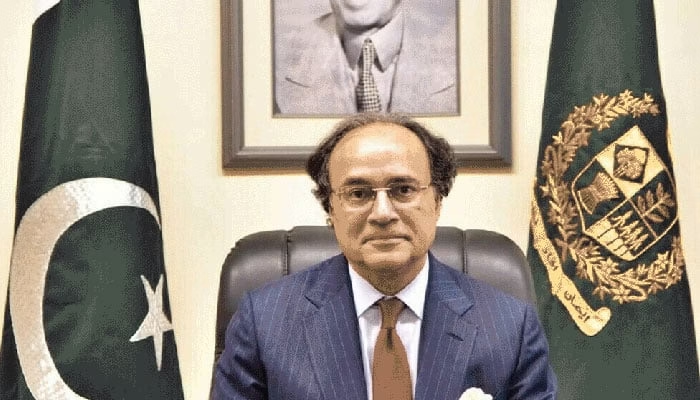
Pakistan Iran peace talks have once again drawn international attention after Interior Minister Mohsin Naqvi arrived in Tehran to support diplomatic efforts between Iran and the United States. The visit comes at a crucial time when negotiations between Tehran and Washington remain fragile despite an existing ceasefire. Pakistan’s growing diplomatic role in the region is now being closely watched as Islamabad positions itself as a mediator focused on regional stability and conflict prevention.
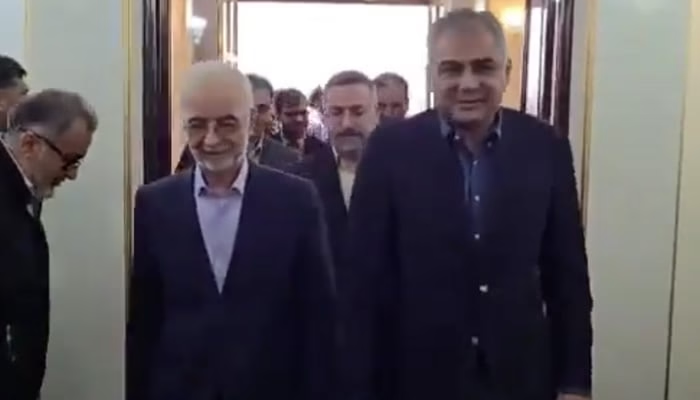
According to Iranian media reports, Mohsin Naqvi began a two-day official visit aimed at promoting peace and encouraging dialogue between both countries. Iranian Interior Minister Eskandar Momeni welcomed the Pakistani delegation and appreciated Pakistan’s efforts in reducing tensions between Iran and the US.
The latest development highlights Pakistan’s increasing involvement in regional diplomacy. Over the past few months, Islamabad has played a visible role in encouraging communication channels between Tehran and Washington, especially after tensions escalated earlier this year.
The ongoing Pakistan Iran peace talks gained importance after military tensions involving Iran, Israel, and the United States created fears of a larger regional conflict. A ceasefire announced in April helped reduce direct confrontation, but uncertainty still surrounds the future of negotiations.
Pakistan’s mediation efforts have included high-level meetings involving political and military leadership. Earlier this year, Asim Munir visited Tehran with a delegation that included Mohsin Naqvi. During that visit, the delegation met several senior Iranian officials, including President Masoud Pezeshkian and Foreign Minister Abbas Araghchi.
These meetings focused on reducing regional tensions and reviving diplomatic negotiations between Iran and the United States. Pakistan’s leadership has repeatedly emphasized the importance of dialogue instead of military confrontation, especially in a region already facing economic and political instability.
The Pakistan Iran peace talks are significant because both countries share long borders, economic interests, and regional security concerns. Stability in Iran directly affects Pakistan’s security, trade, and energy interests. Any prolonged conflict in the Middle East can create economic pressure across South Asia through rising oil prices, trade disruptions, and regional uncertainty.
Pakistan’s role as a mediator also reflects its broader foreign policy strategy of maintaining balanced relations with regional and global powers. Islamabad has attempted to avoid taking sides while encouraging peaceful engagement between rival nations.
During Naqvi’s latest visit, both sides reportedly discussed possible ways to restart stalled negotiations. Iranian officials indicated that communication from Washington suggested interest in continuing talks. However, tensions remain high after statements from senior Iranian figures warned that the ceasefire could collapse if diplomatic progress fails.
Iranian Parliament Speaker Mohammad Bagher Ghalibaf recently stated that the United States must accept Tehran’s proposal for peace if it wants long-term stability. He warned that rejecting Iran’s conditions would only create further political failure and instability.
The current situation demonstrates how sensitive regional diplomacy has become. While military conflict has slowed since the ceasefire, deep mistrust still exists between Iran and the United States. Both sides continue to negotiate from positions shaped by years of political hostility and security concerns.
Pakistan Iran peace talks could become an important diplomatic channel if both Tehran and Washington remain willing to engage through mediation. Analysts believe Pakistan’s involvement gives both sides a neutral platform for communication, especially since Islamabad maintains working relations with Iran, the United States, and Gulf countries.
Another important factor is the growing importance of regional cooperation in addressing economic challenges. Countries across the region are increasingly aware that prolonged instability harms trade, investment, tourism, and energy development. Diplomatic solutions are therefore becoming more attractive than military escalation.
Pakistan’s mediation efforts may also strengthen its international diplomatic standing. By facilitating communication during a sensitive geopolitical situation, Islamabad can present itself as a responsible regional actor focused on peacebuilding and conflict resolution.
At the same time, the situation remains extremely delicate. Any new military incident or political disagreement could quickly damage ongoing diplomatic progress. The ceasefire currently in place is still described by many observers as fragile, meaning continued dialogue remains essential.
The Pakistan Iran peace talks also reflect a changing regional landscape where middle powers are taking more active roles in diplomacy. Rather than relying entirely on global powers, regional countries are increasingly attempting to solve conflicts through direct engagement and negotiation.
For now, Mohsin Naqvi’s visit to Tehran signals that Pakistan intends to continue supporting diplomatic efforts between Iran and the United States. Whether these discussions eventually lead to a lasting agreement remains uncertain, but ongoing communication itself is being viewed as a positive step toward reducing tensions.
As the Middle East continues facing political uncertainty, Pakistan’s diplomatic involvement could play a meaningful role in encouraging stability, preventing escalation, and keeping peaceful negotiations alive.