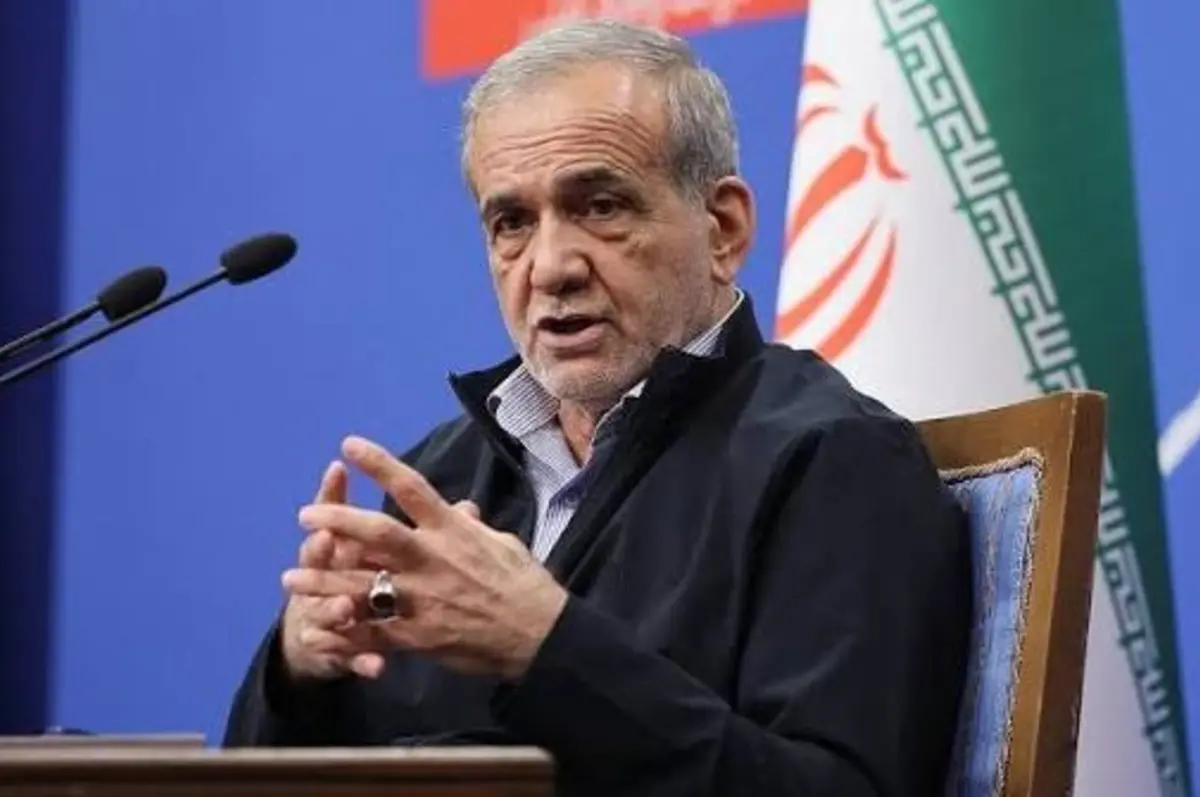
Iranian President Masoud Pezeshkian has vowed that Tehran will continue resisting foreign aggression until its adversaries experience what he described as complete regret,rejecting US President Donald Trump’s claims that Washington is moving toward victory in its war against Iran. The latest Pezeshkian Iran war remarks underline Tehran’s determination to defend its sovereignty while refusing to accept military or economic pressure from the United States.
Pezeshkian made the comments in a post on X on Tuesday, saying Iran had consistently opposed war and supported stability in the region. However, he stressed that the country would not surrender its sovereignty or rights in response to foreign aggression.
Pezeshkian Rejects US Victory Claims
The Iranian president’s statement came after Trump claimed on Truth Social that oil prices would fall sharply once the United States “win the war with Iran.”
Trump predicted that gasoline prices in the United States could eventually fall to $3 per gallon and potentially below $2. He also repeated his assertion that Iran would never obtain a nuclear weapon.
The US president presented lower energy prices and his position on Iran’s nuclear ambitions as indications of what he described as an approaching American victory.
Pezeshkian, however, rejected that assessment. His response made clear that Tehran does not view the confrontation in terms of surrender or capitulation. Instead, the Iranian government continues to present resistance as necessary to protect the country’s independence and national interests.
The Pezeshkian Iran war dispute therefore reflects two sharply different interpretations of the confrontation, with Washington emphasizing pressure and potential victory while Tehran stresses resistance and sovereignty.
Iran Says Sovereignty Is Non-Negotiable
Pezeshkian said Iran would continue its resistance with strength in defense of the Iranian nation. His remarks emphasized that Tehran considers national sovereignty and its rights non-negotiable despite military and economic pressure.
Iran has repeatedly maintained that it does not seek war and wants stability in the region. At the same time, Iranian officials have argued that the country has the right to defend itself when faced with external aggression.
This position has become a central part of Tehran’s messaging throughout the confrontation. Rather than accepting pressure as a reason to change its policies, Iranian leaders have portrayed resistance as a means of protecting the country’s independence.
The Pezeshkian Iran war response follows that same approach, combining a rejection of conflict with a clear warning that Iran will not surrender under pressure.
Trump Links War to Oil Prices
Trump’s latest comments also highlighted the economic consequences of the conflict. He suggested that a US victory would lead to a major decline in oil prices and lower gasoline costs for American consumers.
Energy markets have remained closely connected to tensions involving Iran because of the country’s importance to regional oil supplies and strategic waterways. Any prolonged confrontation could potentially affect energy markets, transportation costs and broader economic conditions.
Trump’s comments focused on the potential benefits of lower fuel prices in the United States. However, his remarks also reinforced Washington’s confidence in its military and economic pressure campaign against Tehran.
Iranian officials, meanwhile, continue to reject the idea that pressure will force the country to abandon its stated positions.
Continued Tensions Between Washington and Tehran
The Pezeshkian Iran war confrontation comes after years of tension between Iran and the United States over nuclear policy, regional security and economic sanctions.
Washington has used sanctions and other forms of pressure in an effort to restrict Iran’s activities. Tehran has consistently criticized these measures, arguing that they violate Iran’s rights and attempt to force the country into submission.
The current military confrontation has intensified those disagreements. Iranian officials have repeatedly insisted that external pressure will not determine the country’s political decisions.
Pezeshkian’s latest remarks reinforce that message, indicating that Tehran intends to continue resisting rather than accepting what it views as imposed conditions.
Regional Stability Remains a Concern
Although Iran says it has opposed war, the continued confrontation has created broader concerns about stability across the Middle East.
Iran occupies a strategically important position in the region, and tensions involving the country can have consequences beyond its borders. Military escalation can also affect energy markets and international efforts to maintain regional stability.
Pezeshkian’s statement attempted to draw a distinction between Iran’s opposition to war and its willingness to defend itself. He presented Tehran’s position as one of resistance rather than a desire for prolonged conflict.
The Pezeshkian Iran war remarks therefore serve both as a response to Trump and as a message to Iran’s domestic and international audiences.
No Sign of Capitulation
Pezeshkian’s latest comments suggest that Iran is not prepared to accept the idea that military pressure will force it to surrender its sovereignty or rights.
While Trump continues to frame the confrontation around American strength and an eventual victory, Iran’s leadership is emphasizing resistance, national unity and defense.
The competing messages indicate that major differences remain between Washington and Tehran. Neither side appears willing to accept the other’s interpretation of the conflict, making diplomacy and regional stability increasingly important.
The Pezeshkian Iran war response signals that Tehran intends to continue resisting what it describes as foreign aggression. The Iranian president’s rejection of Trump’s victory claims also shows that the political dispute remains deeply connected to questions of sovereignty, security and Iran’s determination to maintain its stated national interests.