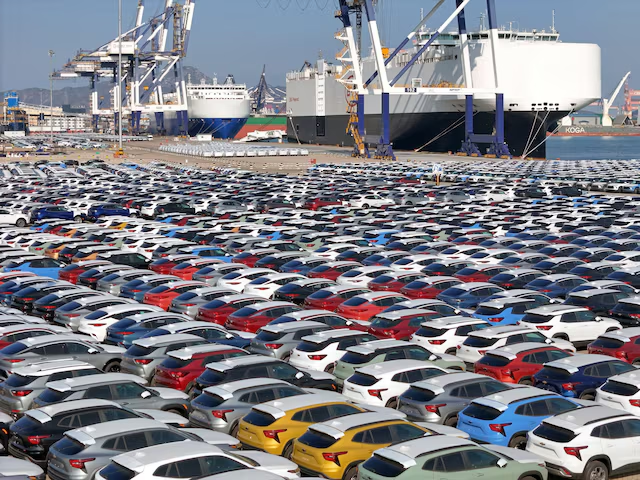
Pakistan is planning a major automotive zone at Port Qasim in Karachi as part of efforts to strengthen vehicle trade, improve logistics and increase foreign exchange earnings. Federal Minister for Maritime Affairs Muhammad Junaid Anwar Chaudhry announced that the proposed facility will initially cover 150 acres and can be expanded in phases according to market demand.
The project is expected to bring several automotive-related activities together in one location, creating a dedicated ecosystem for vehicle imports, refurbishment, display and exports.
150-Acre Automotive Zone
The proposed automotive zone at Port Qasim will be developed within the Port Qasim industrial corridor, giving businesses direct access to one of Pakistan’s major maritime gateways.
The first phase will include 264 operational units divided across five specialized segments. These will consist of 30 commercial units, 84 refurbishment workshops, 60 vehicle display units, 20 machinery yards and 70 auto spare-parts units.
By bringing these businesses together, the project aims to create an integrated platform where vehicles can move through different stages of the trade process without requiring extensive inland transportation.
The phased development model is also intended to ensure that investment in the zone remains aligned with actual market demand.
Focus on Import, Refurbishment and Export
A central component of the proposal is the Import-Refurbishment-Export, or AIRE, framework. The project is being presented as Pakistan’s first dedicated AIRE facility for the automotive sector.
Under this model, imported vehicles could enter through Port Qasim, undergo refurbishment or related processing within the zone and then be prepared for domestic sale or export.
Such an arrangement could help reduce logistical complications while creating opportunities for companies involved in vehicle repair, parts supply, machinery, trading and export services.
The automotive zone at Port Qasim could therefore serve as more than a conventional vehicle marketplace. Its objective is to develop a specialized industrial and commercial ecosystem connected directly to maritime infrastructure.
Potential for Foreign Exchange Earnings
According to the project concept, the proposed AIRE Park could generate exports worth around $500 million annually and produce an estimated net foreign exchange surplus of approximately $200 million.
For Pakistan, increasing foreign exchange earnings remains an important economic priority. A successful vehicle refurbishment and export industry could provide another source of export revenue while supporting businesses throughout the automotive supply chain.
The project could also create opportunities for companies to target regional markets where demand exists for competitively priced refurbished vehicles and automotive components.
However, achieving these targets would depend on investment, regulatory clarity, infrastructure quality and the ability of businesses operating within the zone to compete internationally.
Strategic Location Near Major Shipping Routes
The location of the automotive zone at Port Qasim is one of its key advantages.
Port Qasim is positioned along the Arabian Sea shipping corridor, providing connections toward South Asian, Gulf and East African markets. Direct access to maritime transportation could make it easier for businesses to import vehicles and components while exporting finished products.
Reducing the distance between automotive businesses and port facilities could also lower inland transportation requirements and potentially improve delivery times.
For exporters, these logistical advantages can be particularly important because transportation costs and delays can significantly affect international competitiveness.
Supporting Pakistan’s Automotive Industry
The proposed zone could benefit a wide range of businesses beyond vehicle importers and exporters.
Refurbishment workshops would provide specialized services, while spare-parts suppliers could support repair and maintenance operations. Machinery yards could provide equipment for businesses operating within the facility, and vehicle display units could help connect suppliers with customers.
The concentration of related businesses in one location could encourage collaboration and create opportunities for new companies to enter the automotive value chain.
The automotive zone at Port Qasim could also contribute to employment generation by creating demand for technicians, mechanics, logistics specialists, sales professionals and other skilled workers.
Expansion Based on Market Demand
Federal Minister Muhammad Junaid Anwar Chaudhry said the project would be expanded in phases after completion of the initial stage.
This approach could help authorities avoid developing excessive capacity before sufficient demand exists. If the first phase attracts strong investment and business activity, additional facilities could be added according to market requirements.
Port Qasim Authority Chairman Rear Admiral (Retd) Syed Moazzam Ilyas said the phased model could eventually provide a template for similar automotive zones in other parts of Pakistan.
A Potential New Hub for Vehicle Trade
The proposed automotive zone at Port Qasim represents an attempt to combine Pakistan’s automotive and maritime sectors in a single specialized platform.
If implemented effectively, the project could reduce logistics costs, support vehicle refurbishment, encourage exports and generate foreign exchange. It could also strengthen Pakistan’s position in regional automotive trade by using the country’s strategic access to international shipping routes.
The project’s success, however, will depend on efficient implementation, transparent regulations, reliable infrastructure and sustained private-sector participation.
The 150-acre plan marks an ambitious step toward creating a dedicated automotive trade hub in Karachi. With phased expansion and a strong focus on exports, the automotive zone at Port Qasim could become an important part of Pakistan’s future automotive and logistics landscape.