The AJK Elections 2026 have become the center of a heated political debate as the Pakistan Muslim League-Nawaz (PML-N) and Pakistan Peoples Party (PPP) continue to exchange accusations of electoral rigging. Following the completion of the first phase of voting in Azad Jammu and Kashmir, leaders from both parties have intensified their criticism of each other, making the upcoming phases of the election even more politically significant.
First Phase Results Spark Political Tensions
The first phase of the AJK Elections 2026 was held across the Mirpur Division, where voters elected representatives for 13 constituencies of the Azad Jammu and Kashmir Legislative Assembly.
According to the announced results, the PML-N secured victory in nine constituencies, while the PPP won four seats. Although the PML-N emerged as the leading party in the first phase, the outcome quickly became the subject of political controversy.
The PPP questioned the transparency of the electoral process and alleged that irregularities had influenced the results. These claims were strongly rejected by the PML-N, leading to an escalating political exchange between the two coalition partners at the federal level.
Maryam Nawaz Rejects Rigging Allegations
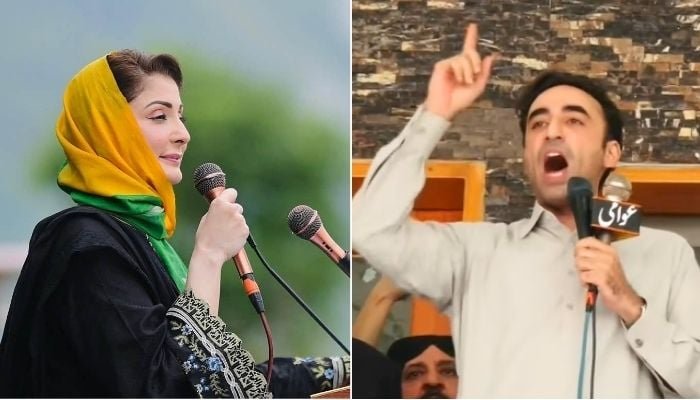
Punjab Chief Minister Maryam Nawaz responded to the allegations through a statement on social media.
She dismissed the PPP’s claims of electoral manipulation and argued that the accusations were surprising coming from a party that had itself faced criticism over election practices in the past.
Maryam maintained that the election results reflected the will of the people and rejected suggestions that her party had benefited from unfair practices.
Her response further intensified the political rivalry ahead of the remaining phases of the AJK Elections 2026.
Bilawal Bhutto-Zardari Criticizes PML-N
Meanwhile, PPP Chairman Bilawal Bhutto-Zardari addressed a public gathering in Muzaffarabad, where the second phase of voting is scheduled to take place.
During his speech, Bilawal accused the PML-N of having a long history of benefiting from disputed elections. He alleged that the party had repeatedly come to power through manipulated electoral processes rather than public support.
Without directly naming former Prime Minister Nawaz Sharif, Bilawal also criticized the party’s political history and questioned the legitimacy of its leadership.
He claimed that several current officeholders owed their positions to controversial election outcomes rather than voter confidence.
Appeal to PTI Supporters
Bilawal also addressed Pakistan Tehreek-e-Insaf (PTI) supporters during his speech.
He urged the party not to boycott the remaining election phases, arguing that participation in the democratic process is more effective than staying away from the polls.
According to Bilawal, avoiding elections only creates opportunities for rival political parties and reduces voter representation.
He encouraged all political stakeholders to actively participate in strengthening democratic institutions.
Focus Shifts to Upcoming Phases
While the first phase has concluded, attention is now turning toward the remaining rounds of voting.
The second phase of the AJK Elections 2026 is scheduled to take place in Muzaffarabad Division, followed by the final phase in Poonch Division.
Political observers expect campaigning to become more competitive as major parties attempt to secure additional seats before the formation of the next Azad Jammu and Kashmir government.
The remaining constituencies could significantly influence the final balance of power in the Legislative Assembly.
Importance of Peaceful Elections
Elections play a central role in strengthening democratic institutions and ensuring public participation in governance.
Political competition is a natural part of any democratic process. However, allegations of electoral irregularities often increase political tensions, making transparency and public confidence especially important.
Election authorities are responsible for conducting polls fairly while addressing complaints through legal and constitutional mechanisms.
Observers continue to emphasize the importance of allowing official institutions to investigate any reported concerns through established procedures.
Political Climate in Azad Jammu and Kashmir
Azad Jammu and Kashmir remains an important political region where elections often attract national attention.
Major political parties view AJK elections as an opportunity to strengthen their public support and expand their political influence.
Campaigns frequently focus on development projects, infrastructure, education, healthcare, employment opportunities, and regional governance.
As election activities continue, candidates are expected to increase public outreach across the remaining constituencies.
With two phases of voting still to come, political competition is expected to remain intense.
Both the PML-N and PPP are likely to continue campaigning aggressively while defending their respective positions regarding the first phase of the elections.
Election officials are expected to maintain strict security arrangements and ensure that future polling proceeds peacefully and transparently.
The final outcome will determine not only the composition of the Legislative Assembly but also the political direction of Azad Jammu and Kashmir over the coming years.
The AJK Elections 2026 have entered a politically charged stage following the first phase of voting. The exchange of allegations between the PML-N and PPP has added further attention to an already significant electoral contest. While both parties continue defending their positions, the focus now shifts to the remaining phases of the election.
As voters prepare to cast their ballots in the upcoming rounds, maintaining transparency, peaceful polling, and public confidence will remain essential. Regardless of political disagreements, the democratic process and the decisions of the electorate will ultimately shape the future leadership of Azad Jammu and Kashmir.